







































































What is the difference between a cardboard mailer and a poly mailer?
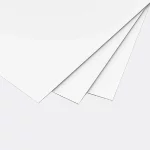
A cardboard mailer is a paper-based shipping package with defined panels, while a poly mailer is a flexible plastic-film envelope. Cardboard holds a shape better than film. Poly film follows the contents instead of creating a rigid panel. Start with the product: a flat item that must stay straight needs a different package discussion from an item that can flex.
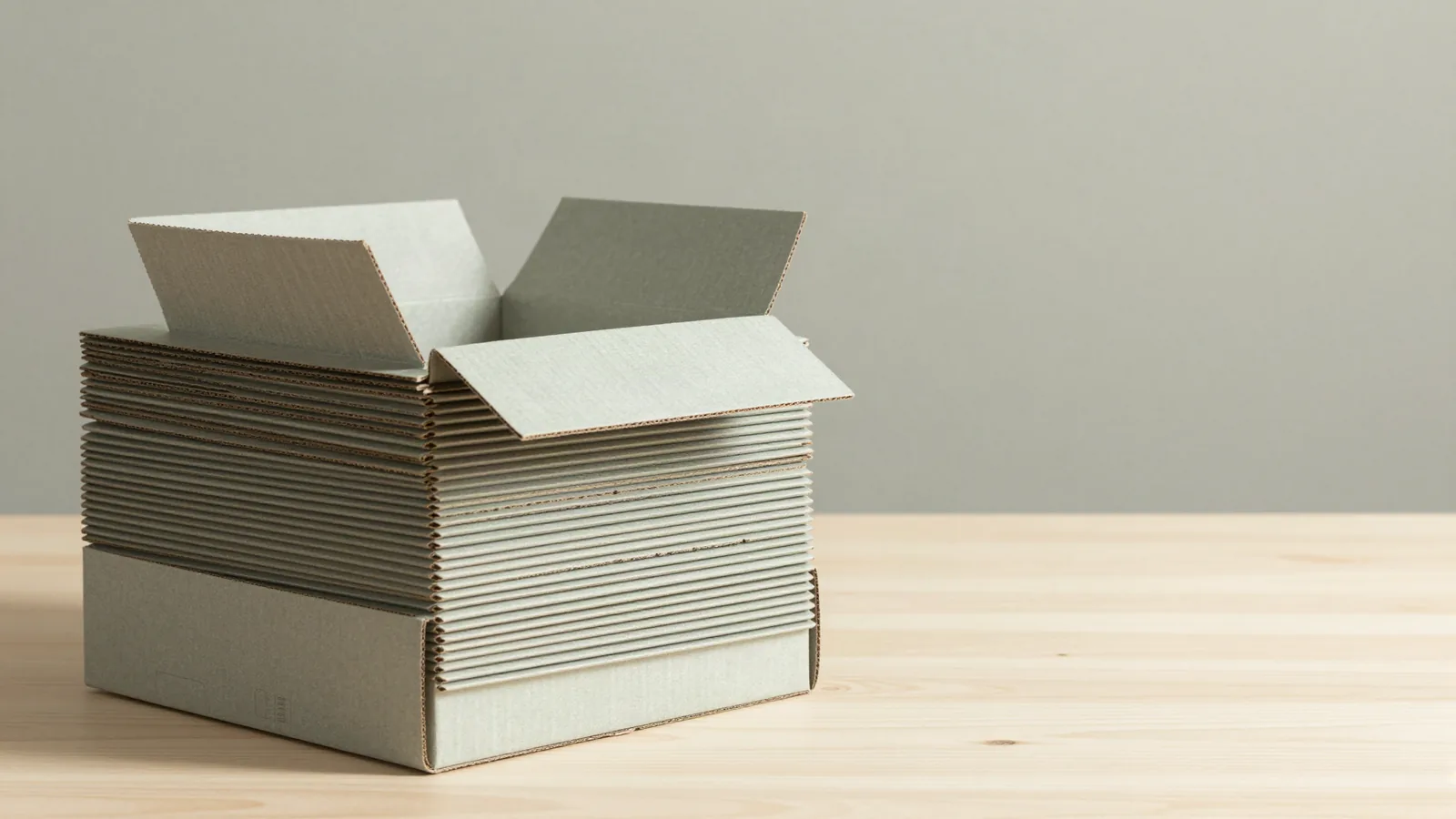
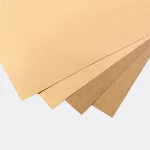
Cardboard mailer can describe folding paperboard or corrugated board. Corrugated board has a fluted paper layer between liner sheets, so its construction differs from a single paperboard sheet. The package style, board construction, closure, and interior fit should appear together in the specification.
Can a custom cardboard mailer be rigid?
A custom cardboard mailer can be more rigid than a poly mailer because paperboard and corrugated board hold shaped panels. That support helps when the product should stay flat or arrive with a defined presentation. It does not fix a poor size choice. A mailer that is too loose lets the product move, while one that is too tight can make loading and closing difficult.
GSM means grams per square meter, the weight convention used for paper and paperboard. GSM helps compare paper-based stock, but it is not a complete stiffness rating. Thickness, board structure, panel size, scores, folds, and inserts also affect the finished mailer.
| Format | What it is | What to check |
|---|---|---|
| Paperboard mailer | Folded printable board | GSM, thickness, scores, and closure |
| Corrugated mailer | Fluted paper between liner sheets | Flute, wall construction, and finished caliper |
| Poly mailer | Flexible plastic-film envelope | Whether the product can flex during handling |
| Mailer with insert | Outer package with an internal piece | Product clearance and movement inside the package |
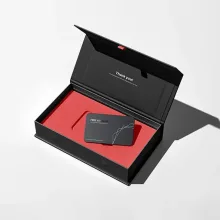
For a paper-based box direction, review kraft cardboard boxes. The outer package still needs inside dimensions that leave room for the product, closure, and any protective component.
When is corrugated mailer material useful?
Corrugated mailer material is useful when the package needs more structure than a single sheet or flexible film can provide. The fluted medium creates separation between the liners and contributes to board thickness and stiffness. A flute label alone is not the full specification. Finished caliper, wall construction, product weight, and package dimensions still need review.
Small products often need a tighter fit than a general mailer provides. Compare custom cardboard jewelry boxes for compact presentation and custom cardboard gift boxes when the box structure and printed surface carry more of the presentation work. These product formats do not replace the shipping fit check.
How should I choose between cardboard and poly mailers?
Choose cardboard when the product needs a shaped package, printable panels, or resistance to bending. Choose poly film when a flexible envelope matches the product and the package does not need a rigid panel. If the product can move inside the package, an insert may solve the problem better than adding board weight.
- Measure the product before selecting the mailer footprint.
- Record packed weight and whether the product can bend.
- Compare GSM with thickness and corrugated construction, not by itself.
- Check the closure, scores, and insert clearance.
- Review a physical sample when fit or stiffness is hard to judge on screen.
A dieline is the flat cutting and scoring template for the package. Custom Packaging Lane provides free design support and sends a digital proof before printing. That proof is where you catch missing bleed, type too close to a score, or an insert cut too tightly to the product.
What cardboard mailer specifications should I confirm?
Confirm the product dimensions, packed weight, material family, GSM or caliper, corrugated flute if applicable, closure, artwork, finish, and insert requirements. The production clock starts after proof approval, not when the order is first discussed.
Low-resolution art, RGB files converted for press, missing bleed, and type set too close to a score can all create avoidable corrections. Review the flat dieline and the assembled package view before approving the proof.
Custom Packaging Lane has an MOQ of 100 units. Pricing is from $0.49 per unit at volume, quoted to spec. Production is typically 8 to 10 business days after proof approval, plus delivery. Free US shipping is available.
A $19.99 sample kit gives you physical material and construction samples to compare before approval. For the broader project path, use custom packaging solutions. When internal positioning is the main issue, review custom cardboard boxes with inserts.
Frequently Asked Questions
Is cardboard better than a poly mailer?
A cardboard mailer is better when a product needs a shaped package or resistance to bending, while a poly mailer is better when a flexible film envelope fits the product. Cardboard mailers use paperboard or corrugated construction. Poly mailers use plastic film. The choice depends on product shape, flex tolerance, package footprint, closure, and any insert.
What is corrugated mailer material?
Corrugated mailer material is paperboard with a fluted paper layer between liner sheets. The flute creates separation and contributes to board thickness and stiffness. A flute label does not give the full finished specification, so a corrugated mailer quote should also identify wall construction, finished caliper, dimensions, closure, and the product being packed.
Does GSM measure cardboard strength?
GSM measures the weight of paper or paperboard per square meter, not the complete strength of a cardboard mailer. Stiffness also depends on thickness, board construction, panel size, scores, folds, and inserts. Use GSM as one comparison field, then review the full structure and product fit before approving the cardboard mailer.
What should a cardboard mailer box specification include?
A cardboard mailer box specification should include the product dimensions, packed weight, paperboard or corrugated construction, GSM or caliper, flute if applicable, closure, artwork, finish, and insert requirements. The digital proof should confirm the dieline, bleed, scores, and interior fit before printing. Those details are more useful than the word cardboard alone.
What is the MOQ and production timing for custom mailers?
Custom Packaging Lane has an MOQ of 100 units for custom mailers. Pricing is from $0.49 per unit at volume, quoted to spec. Production is typically 8 to 10 business days after proof approval, plus delivery. Free US shipping and free design support are available, and the sample kit costs $19.99.