



























































What are the types of cardboard materials?
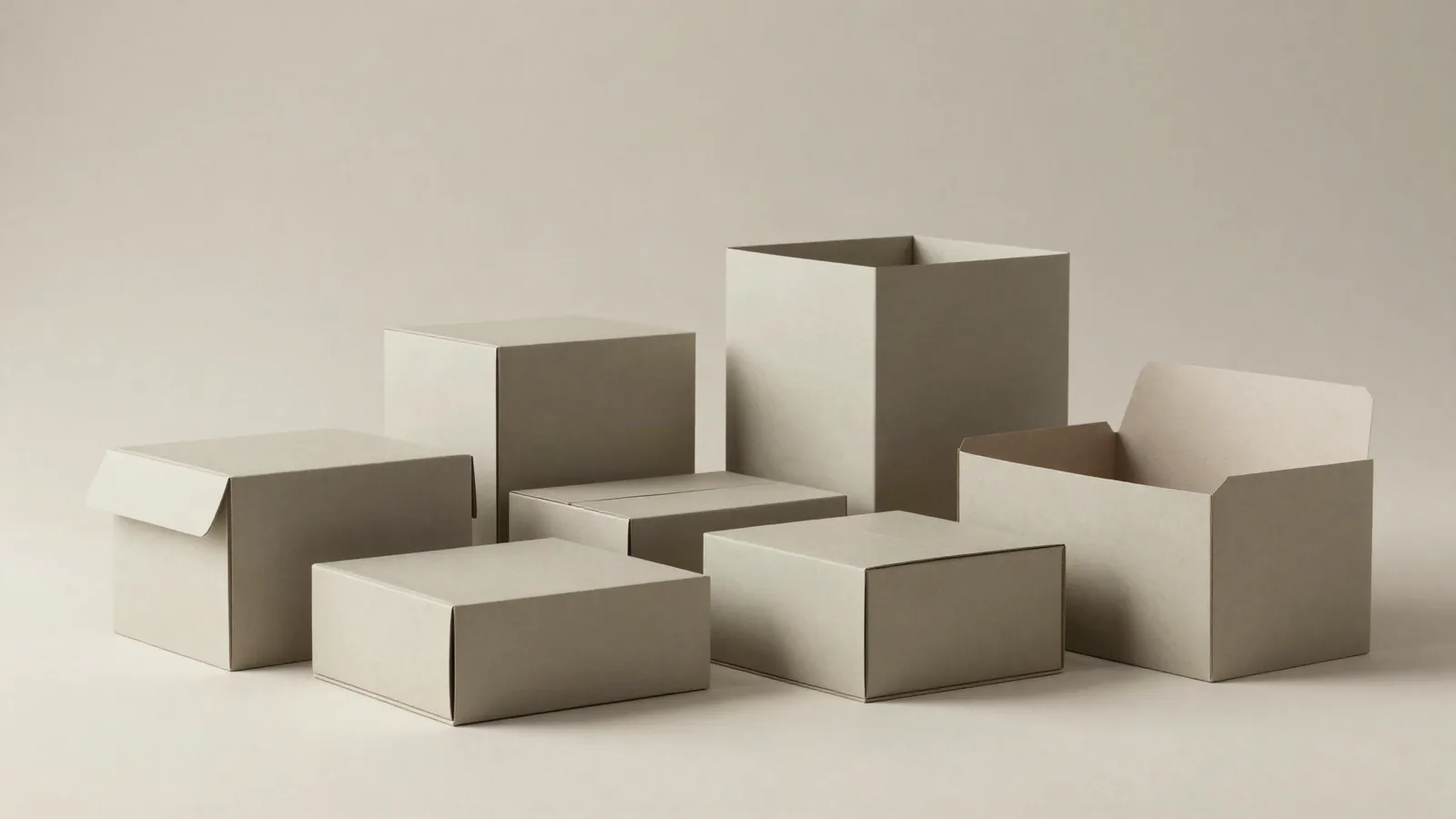
The main types of cardboard materials for boxes are folding paperboard, kraft-style paperboard, corrugated board, rigid box construction, and wound board used for tubes. Cardboard is a broad buyer term. Paperboard is a flat sheet that is printed, cut, scored, and folded. Corrugated board has flat liners around a fluted middle. A rigid box uses chipboard wrapped in printed paper and holds its shape without a fold.
CPL's catalog connects those material directions to actual formats. Compare kraft cardboard boxes, custom cardboard jewelry boxes, and custom cardboard gift boxes before choosing a board from a color name alone.
| Material direction | Construction | What to check |
|---|---|---|
| Folding paperboard | Flat sheet with scores, cuts, and glue tabs | Print base, fold sequence, and closure |
| Kraft-style paperboard | Paperboard with a natural brown or printed material-led surface | Ink contrast, finish, and score behavior |
| Corrugated board | Fluted medium between flat liners | Flute profile, thickness, stacking, and packing method |
| Rigid box construction | Chipboard wrapped in printed paper | Lid fit, tray depth, edges, and insert clearance |
| Cardboard tube | Wound board formed into a round wall | End closure, wall feel, and product loading |
Each construction solves a different box problem. The product, opening method, board request, finish, and packing process have to be specified together.
How does kraft board differ from printed paperboard?
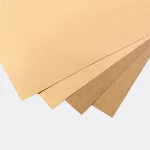
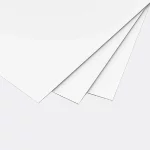
Kraft-style board often has a brown surface with a visible fiber look, while white paperboard gives artwork a lighter print base. The surface changes how ink contrast, photographs, and small type appear.
Kraft is a board direction, not a complete box specification. Confirm whether the box is uncoated, printed, laminated, or finished in another way. A package with dark artwork may need a different print approach from a package that uses the board color as part of the design.
When does corrugated board make more sense than folding paperboard?
Corrugated board makes more sense when the package needs a fluted middle with more thickness and stacking support than a flat folding carton. Folding paperboard makes more sense when printed panels, clean scores, and a compact presentation structure lead the job.
Flute profile changes the board's thickness, cushioning, and stacking behavior. E-flute is thinner and prints finer detail than B-flute. Treat those as typical industry distinctions, then match the flute to the product, packing method, and delivery conditions stated in the brief.
What is rigid box construction?
A rigid box is chipboard wrapped in printed paper, so it holds shape without folding flat at the finished package stage. The construction suits formats where the lid, tray, drawer, or interior arrangement needs a firm presentation.
Compare custom cardboard drawer boxes with custom cardboard boxes with lid and tray when the opening action matters. A box with an insert needs the interior dimensions drawn before the wrapper and board are finalized. See custom cardboard boxes with inserts for that format.
How should board choice affect the dieline?
A dieline is the flat cutting template a printer uses to cut and crease the box. Board choice affects the score depth, fold sequence, glue tabs, edge treatment, and the amount of room around the product.
Keep type away from scores, add bleed to printed panels, and check that a closure does not land on a weak fold. RGB artwork can shift when it is converted for press. The digital proof should show the board direction, artwork, scores, folds, glue areas, and any insert before production.
What should you confirm before ordering cardboard packaging?
Confirm the material and format against the product before the quote is finalized.
- Product dimensions, packing method, and desired opening action.
- Paperboard, kraft-style, corrugated, rigid, or tube construction.
- Artwork coverage, finish, score map, glue areas, and insert requirements.
- Quantity, delivery destination, and any food-contact question.
Ask us about food-contact options when the box will be used with a food-related product. The board name alone does not answer that question.
What are CPL's order, price, and timing details?
Custom Packaging Lane is a US-based packaging supplier. The minimum order quantity is 100 units. Pricing is from $0.49 per unit at volume, quoted to spec. Production is typically 8 to 10 business days after proof approval, plus delivery. Free US shipping and free design support are available. The $19.99 sample kit is credited toward the first order. Visit custom packaging solutions when you need a broader packaging starting point.
What happens after you send a cardboard packaging brief?
Send the product dimensions, material direction, artwork, finish, quantity, and opening style. Free design support includes drawing the dieline, then CPL sends a digital proof before anything prints. The production clock starts at proof approval, not when the first inquiry is sent. Approve the construction only after the board, scores, print, finish, and product fit are visible in the proof.
Frequently Asked Questions
What is paperboard used for in custom boxes?
Paperboard is a flat sheet that can be printed, cut, scored, and folded into a box. It suits folding cartons, gift boxes, jewelry boxes, drawer sleeves, and boxes with inserts when the package needs printed panels and a foldable structure. Board weight, score layout, finish, and product fit should be set on the project proof.
Is kraft board the same as corrugated board?
Kraft board and corrugated board are different constructions. Kraft-style board is a paperboard surface used for a foldable box. Corrugated board has one or more fluted layers between flat liners, which changes thickness and stacking behavior. Tell CPL whether the package is a folding presentation box or a shipping structure before the board is selected.
Which cardboard style fits a presentation-focused product?
Gift boxes, jewelry boxes, drawer boxes, and lid-and-tray boxes fit presentation-focused projects because their folds and opening actions shape how the product is shown. The product dimensions and interior arrangement still decide the format. A digital proof should show the closed box, opening sequence, and any insert before production.
Can cardboard boxes include inserts?
Cardboard boxes can include folded paperboard inserts or other interior components when the box and insert are drawn as one construction. The insert should hold the product at its contact points, leave room for removal, and keep the lid or closure clear. Provide product dimensions and box interior dimensions before the dieline is prepared.
What is the minimum order for custom cardboard packaging?
The minimum order quantity for custom cardboard packaging is 100 units. Pricing is from $0.49 per unit at volume, quoted to spec. Free US shipping and free design support are available. Production is typically 8 to 10 business days after proof approval, plus delivery. The $19.99 sample kit is credited toward the first order.