













































































A cardboard thickness chart is useful when every row says what was measured, where it was measured, and which construction it belongs to. Caliper, flute, wall, and rigid stock are related fields, but they are not interchangeable. The chart should move a buyer from terminology to the exact board specification used for the package being quoted.
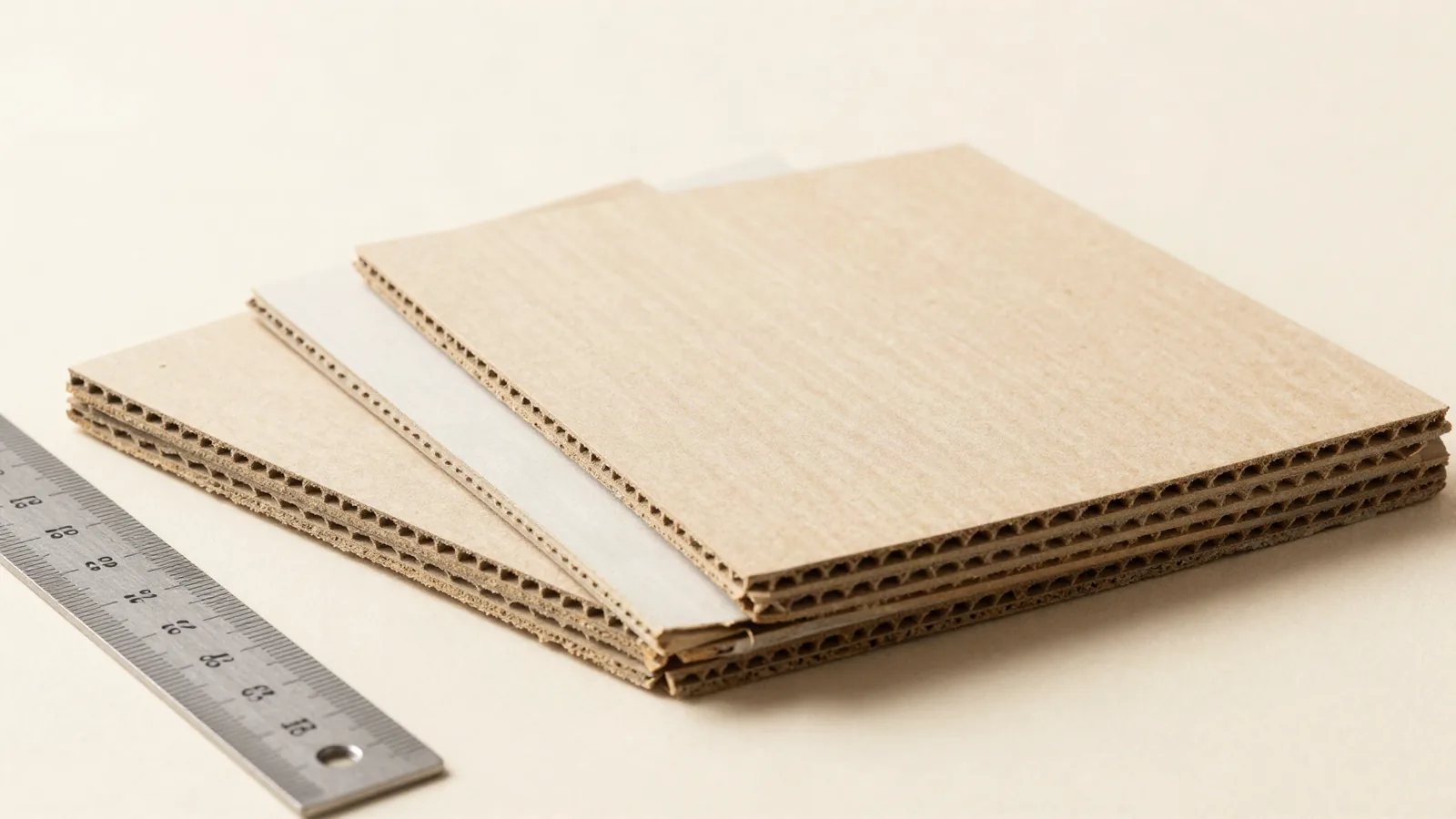
Caliper is the measured thickness of the board. Flute is the formed paper medium inside corrugated board. Wall describes the layer arrangement, such as single wall or double wall. Rigid stock describes a board core and its finished wrapped panel. A row that says only E flute, B flute, single wall, or rigid does not answer the finished thickness question.
What does each row in a cardboard thickness chart mean?
| Row label | What it identifies | What the row must include |
|---|---|---|
| Caliper | Measured board thickness | Unit, measurement point, and board state |
| Flute | Corrugated medium profile | Profile name and associated construction |
| Wall | Number of fluted layers | Single wall or double wall, plus liners |
| Rigid stock | Presentation-board construction | Core, outer surface, and finished panel reference |
Read each row with its source document. A public reference chart can explain the terms, but the current board sheet or written production specification should control the value used for a quote. That distinction keeps a general reference from becoming an unsupported project fact.
How is a cardboard caliper chart read?
Read a cardboard caliper chart by matching the thickness value to its unit, board name, measurement point, and material state. A flat sheet, assembled panel, and wrapped rigid structure are different objects. If the chart does not identify the object measured, the number is incomplete for packaging work.
Keep added components separate. An insert, tray, wrap, or laminated surface can change the fit without changing the main board row. Record the main board and each added component so the chart shows the material stack instead of hiding it inside one broad thickness label.
What should a flute thickness chart explain?
A flute thickness chart should show how the corrugated profile relates to the finished board, not treat the flute name as total caliper. Liners, paper selection, adhesive, wall construction, and converting all contribute to the finished board. A flute label answers one construction question. Finished caliper answers another.
For corrugated board thickness, ask Custom Packaging Lane to place the flute profile beside the finished caliper in the current production sheet. If a public industry range is used for orientation, label it as a general reference and keep it separate from the quoted board specification.
How do you prevent mismatched measurement rows?
Give every chart row a source label, product family, sheet version, unit, measurement point, and material state. This prevents a value from a presentation carton from being copied into a shipping-box row or a value from a wrapped panel from being treated as flat stock.
Keep the chart with the quote and dieline. If the construction changes, update the row. The digital proof is also where artwork, bleed, scores, glue tabs, and panel relationships should be checked before the clock starts on production.
Where should a production value be recorded?
Record the exact value beside the construction it describes, then keep the source document attached to the quote or production brief. Use custom cardboard cereal boxes as a printed carton reference, custom cardboard drawer boxes as a multi-part presentation format, and cardboard boxes with lid and tray when the board and interior pieces need separate discussion.
What should I send for a charted board comparison?
Send the product and packed dimensions, package class, requested chart rows, insert or tray details, artwork, finish, quantity, destination, and intended use. If the current production sheet is unavailable, request the relevant field in writing. The source, unit, and measured object should travel with the brief.
- Product dimensions and packed weight.
- Caliper, flute, wall, or rigid-stock fields requested.
- Insert, tray, wrap, window, fold, or closure details.
- Artwork, finish, quantity, destination, and use.
- Current production sheet or written board specification.
Custom Packaging Lane has an MOQ of 100 units. Pricing is from $0.49 per unit at volume, quoted to spec. Production is typically 8 to 10 business days after proof approval, plus delivery. Free US shipping and free design support are available. The $19.99 sample kit can help compare the physical board direction before proof approval.
Where can a chart-led package brief begin?
Use custom packaging design when the chart needs to connect with artwork and a dieline. Keep the source attached, request the board fields in writing, and quote the material against the actual product. That creates a usable handoff for proof approval.
Frequently Asked Questions
What is the difference between a cardboard caliper chart and a flute chart?
A cardboard caliper chart organizes measured board thickness, while a flute chart identifies the corrugated profile inside the board. The fields belong together but answer different questions. A usable chart also names the wall construction, liner arrangement, measurement unit, measurement point, and finished caliper for the specific board being quoted.
Does a flute label give the exact corrugated board thickness?
A flute label does not give the exact finished corrugated board thickness. It identifies part of the board construction. Liners, paper selection, adhesive, wall arrangement, and converting affect the completed board. Request the finished caliper for the proposed board and keep it attached to the product format and package structure.
How should I compare single wall and double wall rows?
Compare single wall and double wall rows by layer arrangement first, then compare the finished caliper recorded for each board. The labels are not interchangeable and neither is a complete project specification. The product, package format, artwork, and intended handling should guide which construction belongs in the quote.
Can a public flute thickness chart replace the production sheet?
A public flute thickness chart can explain terminology, but it should not replace the current production sheet for a quoted board. The production sheet or written board specification should control the exact value used for the package. Confirm the measurement unit, point measured, wall construction, and product format before approving the board.
What are the order terms for a charted board option?
Custom Packaging Lane has an MOQ of 100 units for a charted board option. Pricing is from $0.49 per unit at volume, quoted to spec. Production is typically 8 to 10 business days after proof approval, plus delivery. Free US shipping and free design support are available, and the sample kit costs $19.99.