
















































































What should clothes boxes protect during packing and delivery?
A folded garment needs enough room for tissue, inserts, and the closure without being crushed at the edges. Start with the finished stack, then record inside length x width x depth. About 1/16 in, or 1.5 mm, is a common planning allowance for fit and production variation. Measure the packed item, not the garment laid flat.
SBS means solid bleached sulfate paperboard, and C1S means coated on one side. Those paperboards in the commonly used 12 to 24 pt range suit printed retail cartons. Kraft board in the 18 to 24 pt range has a different surface and paper appearance. Corrugated board uses flutes, the ridges that add thickness and stacking support. E, B, and C flutes are common references, and 32 ECT is a common strength designation for shipping discussions.
Route changes the specification. A folded shirt headed to a shelf has a different job from a carton moving through parcel handling. Note where the fold sits against the logo, how the lid closes, whether tissue changes internal height, and whether an insert holds the garment in place.
Which clothes-box structure fits retail or shipping?
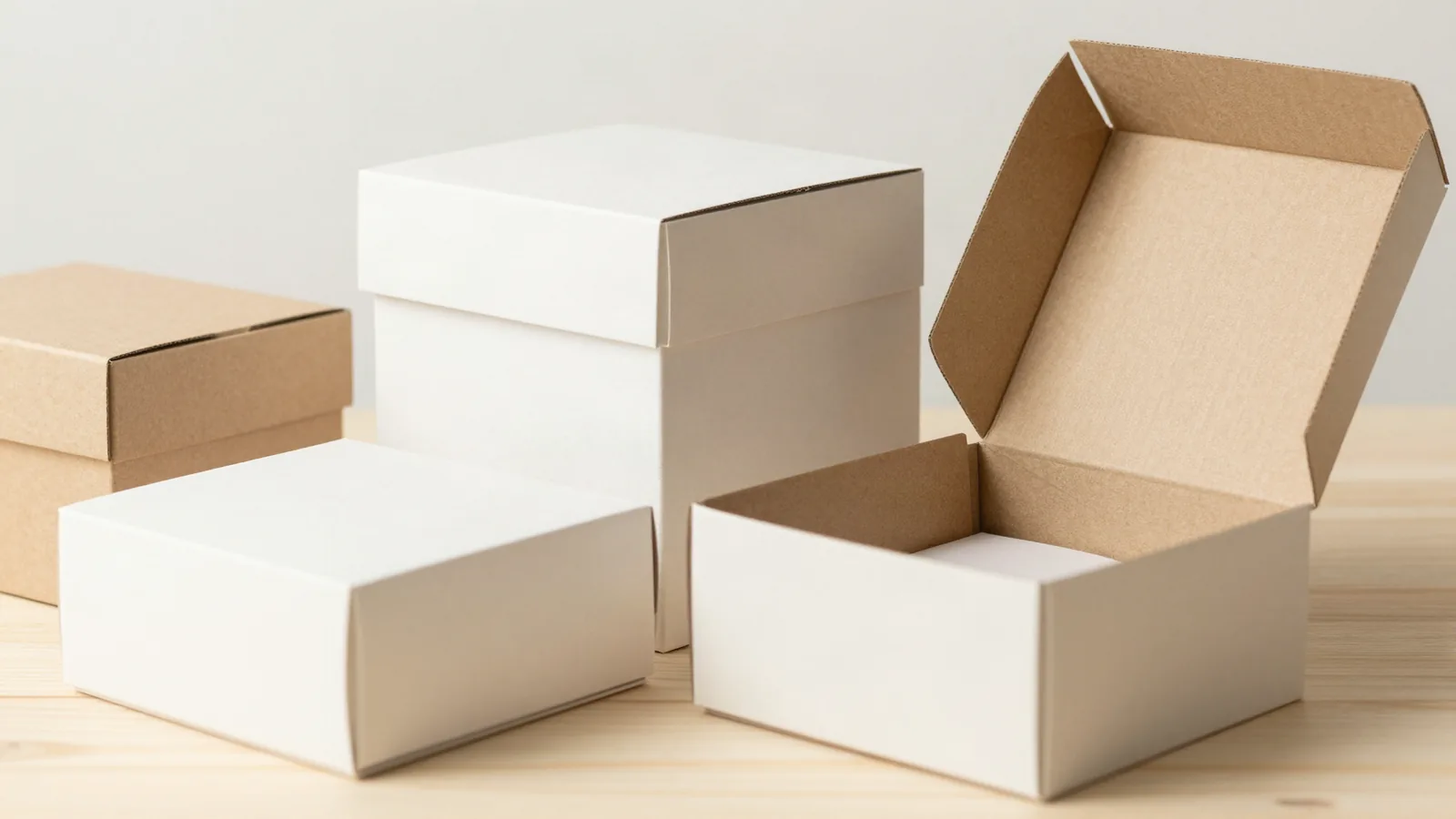
Roll end tuck top and FEFCO 0427 mailers suit packages that need a formed shipping shape with a tuck closure. Straight tuck end cartons keep the tuck panels aligned and suit lighter retail presentations. A sleeve wraps an inner box or tray, while a two-piece rigid box uses a separate base and lid for a more structured presentation.
| Structure | Typical use | Check before approval |
|---|---|---|
| Mailer, roll end tuck top | E-commerce apparel shipments and giftable openings | Closure depth, opening direction, and crush resistance |
| FEFCO 0427 mailer | Common mailer-style corrugated packaging | Board grade, insert clearance, and locking tabs |
| Straight tuck end | Lightweight retail cartons for folded garments | Panel hierarchy and tuck friction |
| Sleeve | Printed wrap around an inner garment box or tray | Retention, print area, and variant changes |
| Two-piece rigid | Presentation-led apparel or gifting | Base and lid fit, wrapping paper, and storage volume |
Mailers put closure and shipping shell in the same piece. Retail cartons put more pressure on panel alignment, tuck friction, and print coverage. A sleeve adds a printed wrap but depends on a close fit around the inner pack. Rigid construction adds a separate lid or base, so folded-flat storage and assembly need a place in the packing plan.
How should apparel packaging be printed and finished?
Offset CMYK suits detailed graphics on smooth paperboard. Flexo is common on corrugated surfaces, where board texture and ink coverage affect the result. Digital printing can suit short runs or limited artwork versions. The digital proof is the check for logo position, barcode size, bleed, and type before the file moves to production.
Matte and gloss lamination change reflection and surface handling. Soft-touch adds a tactile coating. Spot UV, foil stamping, embossing, and debossing need clear space around scores, glue tabs, and folds. A PET window, a clear plastic panel, is commonly around 0.2 to 0.3 mm. Place the patch away from glue areas and any panel that must carry a lock.
Low-resolution art stays soft when printed. RGB art can shift when it is converted for press. Type set too close to a score can fold into the crease, and bleed left off the file can expose a white edge. A press check looks at ink coverage, registration, and folded panel placement before the run continues.
What should I measure before ordering clothes boxes?
Start with the folded stack and the final packing sequence, then write the inside length x width x depth.
- Record the garment with tissue, inserts, or protective sleeves in place.
- Choose a retail carton, mailer, shipper, sleeve, or rigid presentation box.
- Mark the artwork panels, logo position, finish, closure, and packing order.
- If a master carton is planned, record the packed clothes-box count and the space needed around each unit.
For US ground planning, L x W x H / 139 is a common dimensional-weight calculation convention. It is a planning check, not a substitute for the carrier's current rule.
Compare window display boxes, window boxes, and wallet boxes when checking adjacent structures. See custom packaging for small business for broader planning. A $19.99 sample kit lets you compare boards and finishes before the first order. CPL quotes are from $0.49 per unit at volume, quoted to spec, from a 100-unit minimum. Production is typically 8 to 10 business days after proof approval, plus delivery. Free US shipping and free design support, including a free dieline, are available.
Frequently Asked Questions
What type of clothes box is best for shipping?
A roll end tuck top or FEFCO 0427 mailer is a practical starting point for clothes shipped directly to a customer because the corrugated structure combines a formed shell with a tuck closure. Check the folded stack, insert clearance, board grade, locking tabs, and parcel handling before choosing the final dieline.
Should I choose paperboard or corrugated board for apparel packaging?
Paperboard suits a compact retail carton with a smooth printed surface, while corrugated board gives a clothes package more thickness and structure for parcel handling. Common corrugated references include E, B, and C flutes, with 32 ECT as a common strength designation. The packed garment and shipping path decide the better fit.
How do I calculate clothes-box dimensions?
Clothes-box dimensions should start with the packed garment stack, including tissue, inserts, or protective sleeves. Give inside length x width x depth, then check clearance at folds and the closure. For US ground planning, L x W x H / 139 is a common dimensional-weight convention, subject to the carrier's current rules.
Can clothes boxes include a window?
A clothes box can include a PET window when the garment color, fold, or product detail needs to remain visible. PET window material is commonly around 0.2 to 0.3 mm. The opening must stay clear of folds, glue areas, and locking panels, so window placement belongs on the dieline before artwork approval.
What finishes work well for clothing gift boxes?
Matte or gloss lamination changes how a printed clothing box reflects light, while soft-touch changes the surface feel. Spot UV, foil stamping, embossing, and debossing can isolate a logo or collection mark. Keep decoration away from scores and glue tabs until the folded sample confirms the placement.












