




























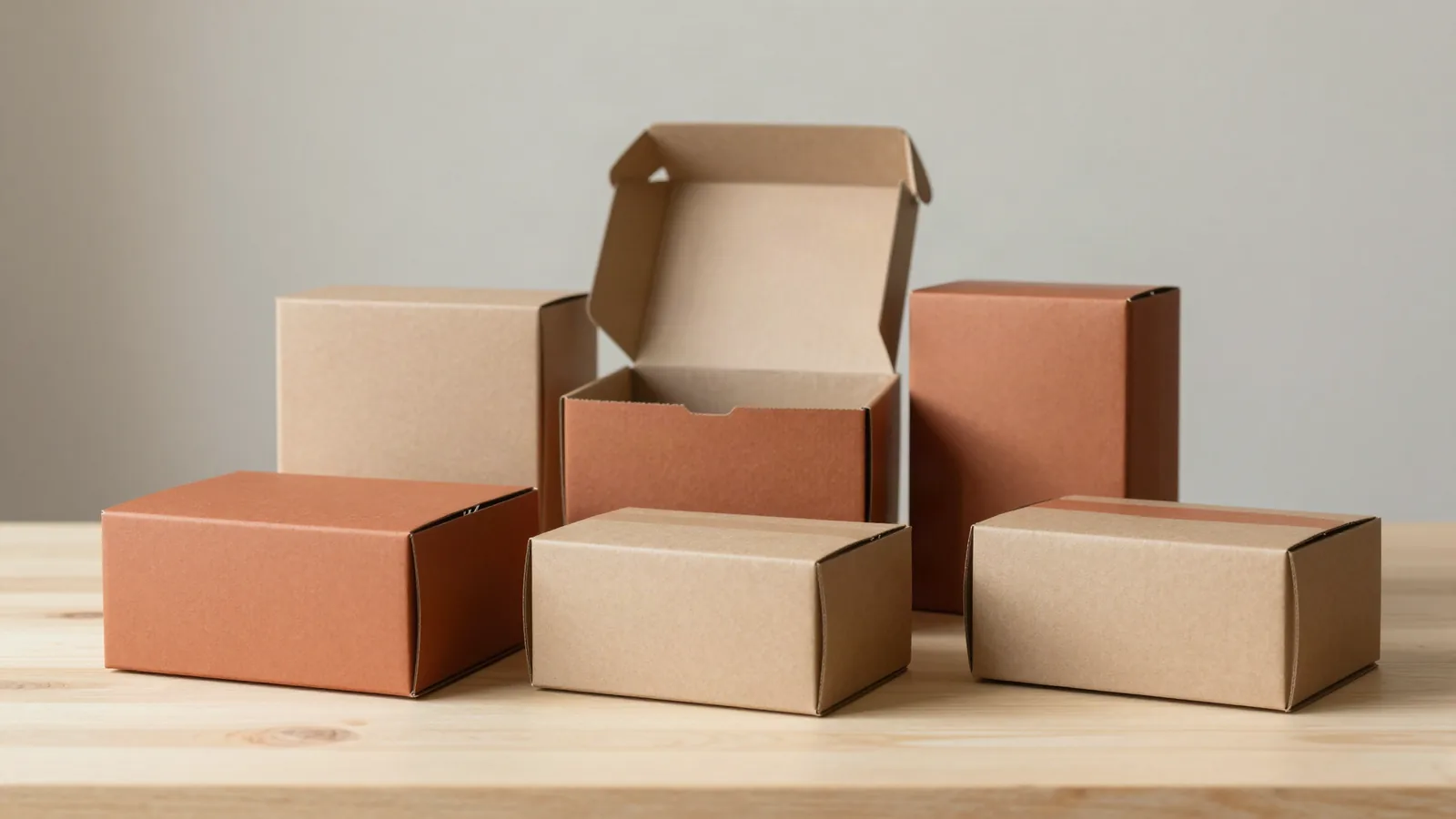




















































Cold salad packaging has to manage a wet, chilled product without losing the view or the closure. Condensation, visibility, headspace, stacking, and the path from fill area to customer belong in the first brief. A package that looks good empty can behave differently after the product is filled and exposed to temperature changes.
Primary container means the pack that touches the salad; secondary pack means an outer layer that groups or protects the filled pack. That distinction matters when asking about materials, coatings, windows, adhesives, and print. Define the filled portion first, then decide what the outer presentation has to do.
How should cold salad packaging handle condensation?
Condensation can soften exposed paperboard, blur print, and change how a carton opens or stacks. Start by identifying where moisture forms after filling and chilling, then separate the moisture question from the question of what touches the salad. Matte or gloss lamination can protect a printed surface from some handling moisture, but it does not settle the full material choice.
SBS means solid bleached sulfate paperboard, while C1S and C2S describe coating on one or both sides. These paperboards are commonly referenced in the 12 to 24 pt range. Corrugated board can form a secondary pack, with E flute and 32 ECT common references. PET is a clear plastic window material commonly specified around 0.2 to 0.3 mm. A perforated panel is a scored opening feature, not a moisture barrier.
| Packaging element | Common reference | Practical question |
|---|---|---|
| SBS, C1S, or C2S paperboard | 12 to 24 pt | What caliper and coated surface suit the carton? |
| Corrugated secondary pack | E flute or 32 ECT | Does the outer pack need parcel support? |
| PET window | 0.2 to 0.3 mm | What view is useful after filling? |
| Perforated panel | Opening or access feature | Where can the panel open without weakening the pack? |
A window removes board from a panel and adds patching work. A perforation guides access, but it still has to clear folds, seams, and the product presentation. Keep the condensation-facing surface under review after filling, not only on a dry, empty carton.
Do you need a window for a chilled salad?
A 0.2 to 0.3 mm PET window gives the buyer a view of the salad without opening the package. That opening also changes panel strength, viewing angle, and patching. Show the filled orientation in the proof, because loose greens or toppings can sit differently after handling than they do in an empty mockup.
Visibility is useful when arrangement and color are part of the presentation. If the package needs a locking tab, do not place the window where it removes the board that carries the closure. The window, coating, glue area, and fold lines belong in the same structural check.
Which structure suits the way the package is opened?
Straight tuck end and reverse tuck end cartons use folding flaps for a familiar top closure. Auto-lock and crash-lock bottoms form a base from folded panels. A gable structure changes the carry and presentation pattern, while a mailer suits a package that also travels as a shipment. Choose after checking fill access, headspace, stacking, condensation exposure, and hand assembly.
A tuck flap is the panel that folds into the opening. A locking tab is the cut feature that holds that panel in place. Those details matter when condensation makes the board softer and when the filled package is stacked before it reaches the customer.
How should you plan dimensions and delivery handling?
Inside length x width x depth is the useful starting convention, and about 1/16 inch, or 1.5 mm, is a common planning tolerance. Include the filled portion, headspace, closure clearance, divider, and dressing or insert. For US ground parcel planning, L x W x H / 139 is a common dimensional-weight convention. Confirm the carrier's current rules before booking a shipment.
Headspace is the empty room between the filled salad and the inside of the closure. Too little room can press the product against a lid or window. Too much room lets the presentation move. The filled pack should be checked upright, closed, stacked, and opened in the same orientation the customer will receive.
What should you ask about food-contact use?
Describe the intended salad fill and ask us about food-contact options before choosing the paperboard, pouch, window, ink, adhesive, or coating. Food-contact performance depends on the complete material system and use conditions. The package still needs a separate check for moisture handling, opening, stacking, and print.
- Filled length, width, depth, weight, headspace, and the way the salad sits inside.
- Condensation exposure, closure, window, perforation, divider, and stacking needs.
- Artwork, print coverage, surface finish, and panels that need clear visibility.
- Quantity, delivery destination, and whether the package ships alone or inside a secondary pack.
The salad boxes, perforated packaging, and private-label packaging pages give adjacent format references. See custom packaging for small business for broader planning. For a quoted CPL project, pricing is from $0.49 per unit at volume, quoted to spec, from a 100-unit minimum. Production is typically 8 to 10 business days after proof approval, plus delivery. Free US shipping and free design support, including a free dieline, are included. The $19.99 sample kit is credited to the first order. Ask us about food-contact options for your product.
Frequently Asked Questions
Why is condensation a concern for cold salad packaging?
Condensation can soften exposed paperboard, blur printed surfaces, and affect how cold salad packaging opens or stacks. The response depends on temperature change, exposure time, closure design, and handling. A laminate or coating is one part of the check, so review the filled package under the intended chilled handling conditions.
Should a cold salad box have a window?
A cold salad box should have a window when the filled arrangement, color, or toppings need to be visible before opening. A PET window around 0.2 to 0.3 mm is a common reference. The opening also changes panel strength and patching, so keep it away from locking tabs, folds, seams, and glue areas.
Which box structure works for a chilled meal?
A straight tuck or reverse tuck carton fits a familiar folding-carton opening, while an auto-lock or crash-lock bottom forms the base during setup. A gable or mailer changes carry and shipping behavior. Choose after checking fill access, headspace, stacking, condensation exposure, and the amount of hand assembly.
How should salad packaging dimensions be measured?
Salad packaging dimensions should use the filled portion and inside length x width x depth. Include headspace, closure clearance, and any divider or insert. About 1/16 inch, or 1.5 mm, is a common planning tolerance. For US ground shipping, L x W x H / 139 is a common dimensional-weight convention.
What should I ask about direct contact?
For direct contact with a cold salad, describe the intended fill and ask Custom Packaging Lane about food-contact options for your product before selecting paperboard, pouch, window, ink, adhesive, or coating. The full material system and use conditions matter, so moisture handling, opening, stacking, and graphics need separate checks.












