




























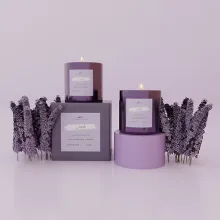
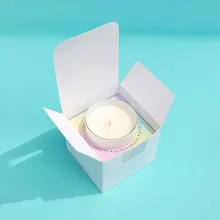







































Los Angeles box requests start with the packed product and the handoff. Custom Packaging Lane is served from its West Chicago HQ and Fremont, California sales office, so California buyers can use a local sales contact. State the product orientation. A shelf carton, parcel mailer, or protective inner box needs a different brief. The custom packaging design hub helps organize artwork questions. Related product references include custom tuck-top mailer boxes, custom votive candle boxes, and custom vial boxes.
What should a Los Angeles box quote include?
The packed product, inside measurements, loading direction, and intended handoff belong at the top of the brief. Say whether the box will sit on a retail shelf, move through parcel delivery, protect a fragile item, or group smaller products. Note whether the package is hand-packed or loaded on a line. If an insert is involved, describe its job: spacing, presentation, or movement control.
Which box structure fits the product handoff?
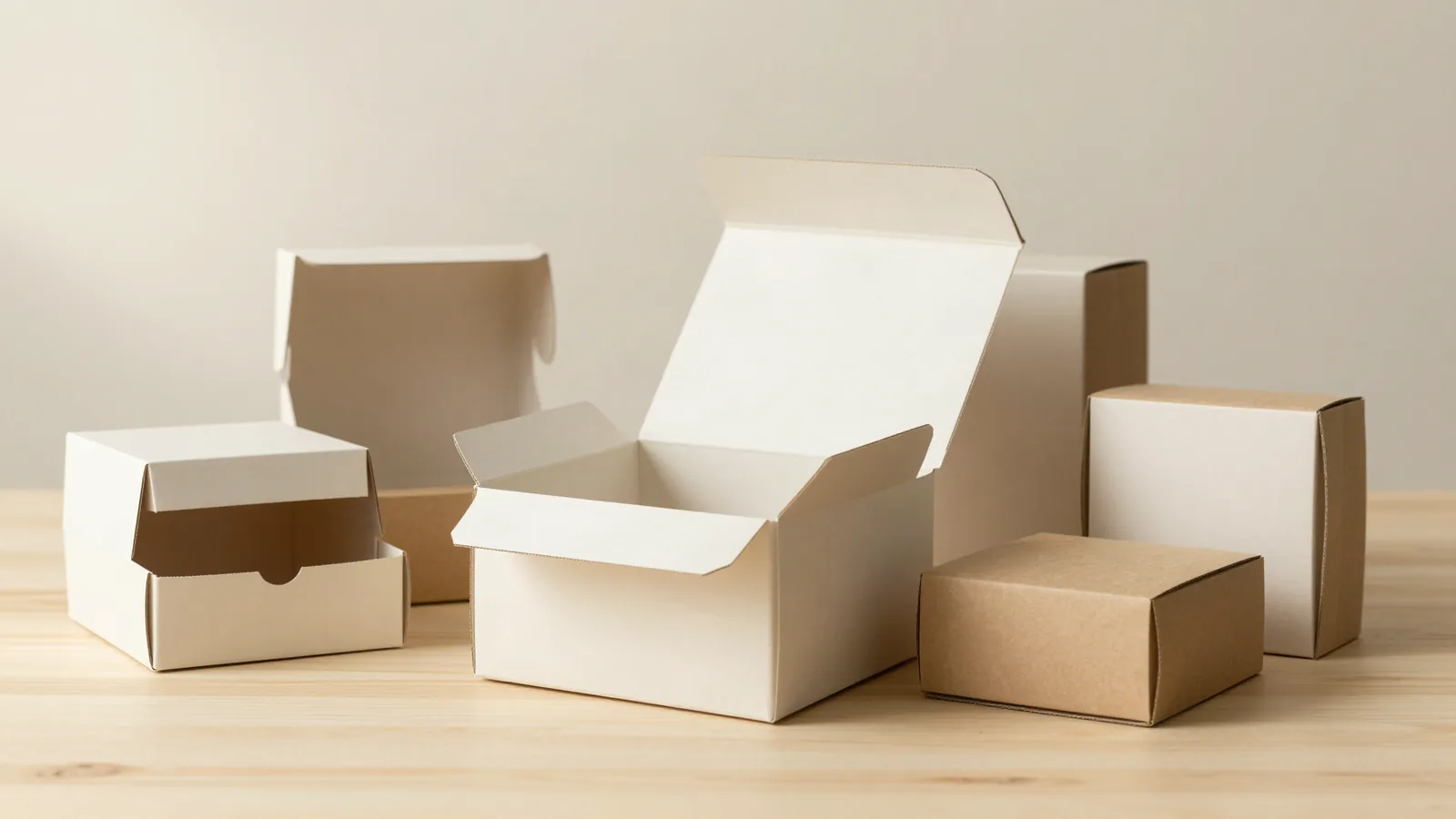
A folding carton and a mailer solve different handoffs, even when both carry printed panels.
| Product situation | Structure to compare | First check |
|---|---|---|
| Retail carton with a defined front | Straight tuck end or reverse tuck end | Front panel, tuck direction, and glue flap |
| Item that needs a formed base | Auto-lock or crash-lock bottom | Setup motion and support under load |
| Parcel handoff | Roll-end tuck-top mailer | Closure, packed footprint, and product movement |
| Presentation set | Two-piece rigid, drawer, or sleeve | Lid fit, tray travel, and sleeve clearance |
Which structural terms should a buyer use?
Straight tuck end and reverse tuck end describe different panel and flap arrangements on a folding carton. Auto-lock and crash-lock describe how the base is set up and closed. A sleeve wraps another package, a drawer or slide moves an inner piece, and a mailer closes around a shipment. FEFCO 0427 is a common reference for a roll-end tuck-top mailer. Name the opening direction and bottom construction together.
State whether the product enters from the top, side, or drawer opening. If an insert is needed, name its purpose: spacing, presentation, or movement control. Heavy-duty does not identify the load path or board.
How should artwork sit on the dieline?
A dieline is the flat cutting template that shows where a box is cut, folded, glued, and left open. Mark the primary display face, folds, glue areas, tuck panels, seams, and any window or cutout. Keep type away from scores and closures, and leave bleed beyond the cut line. A PET window, a clear plastic window, is commonly about 0.2 to 0.3 mm in applicable packaging constructions. Label the print plan as one-color, offset CMYK, or digital printing.
We send a digital proof before printing. Check panel order, logo scale, folds, glue zones, window placement, and whether a barcode or small copy sits too close to a score. RGB artwork can shift when converted for press. Low-resolution images stay soft after printing.
Which board and finish choices belong in the brief?
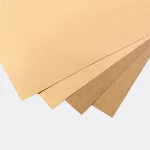
SBS, C1S, and C2S paperboard are general folding-carton references in the 12 to 24 pt range. Kraft board is often discussed around 18 to 24 pt. Rigid boxes commonly use chipboard around 1.5 to 3 mm wrapped in 100 to 157 gsm art paper. Pt is a board caliper notation, and gsm is a paper-weight measure. These are typical industry planning ranges. The product, panel size, folds, stacking, and shipping path decide the working material.
Matte lamination reduces surface reflection, while gloss lamination increases it. Soft-touch changes hand feel. Spot UV isolates a selected mark, foil stamping adds reflective detail, and embossing or debossing changes surface height. Keep effects clear of scores, folds, glue tabs, and small type.
How should I use a sample before production?
The sample kit answers board, surface, and construction questions; the project proof answers fit and artwork. Load the actual product into the closest structure. Check cavity clearance, closure motion, logo scale, color contrast, and surface treatment. A sample is a physical reference, not a substitute for the project-specific dieline or proof.
Write dimensions as length x width x depth and label them as inside measurements. A common packaging convention allows about 1/16 in, or 1.5 mm, tolerance. That allowance gives the product, insert, folds, and closure room to work.
How do I request custom boxes in Los Angeles?
A complete request names the product, inside dimensions, orientation, structure, insert, artwork status, print coverage, finish, and delivery destination. If food may touch the package, ask us about food-contact options for your product. Child-resistant construction can be built as a feature when the product requires it.
Custom Packaging Lane quotes to spec from a 100-unit minimum, with pricing from $0.49 per unit at volume, quoted to spec. Production is typically 8 to 10 business days after proof approval, plus delivery. Free US shipping, free design support, and a free dieline are available. The $19.99 sample kit is credited to the first order. Use the sample kit after the structure and product fit are clear, then send the brief for a quote.
Frequently Asked Questions
Can a California packaging buyer use a local contact?
California packaging buyers can use a local sales contact because Custom Packaging Lane is served from its West Chicago HQ and Fremont, California sales office. Include product dimensions, structure, artwork status, finish, and destination so the contact can discuss one complete specification with you.
What does a FEFCO 0427 mailer describe?
A FEFCO 0427 mailer is a roll-end tuck-top structure with a folded closure and an integrated outer form. It can suit a parcel-led package when the buyer needs a defined opening and a closed shipping surface. Check the packed footprint, product movement, tuck behavior, and artwork-safe areas on the assembled sample.
Should box dimensions be inside or outside measurements?
Box dimensions should be written as length x width x depth and labeled as inside or outside measurements. Inside values control the product cavity, insert space, folds, and closure. About 1/16 in, or 1.5 mm, is a common planning tolerance, so the assembled package still needs a fit check with the actual product.
Which paperboard ranges are common for folding cartons?
SBS, C1S, and C2S paperboard are commonly discussed in the 12 to 24 pt range for folding-carton planning. Kraft board is often referenced around 18 to 24 pt. Those figures are typical industry references. The final board choice still needs to match the product, folds, dimensions, stacking, print coverage, and finish.
What can a box sample reveal before approval?
A box sample can reveal cavity clearance, loading order, closure motion, panel scale, color contrast, and surface feel. It can also expose an insert that grips too tightly or lets the product rattle. Use the sample to test the physical construction, then use the project-specific dieline and digital proof to confirm fit and artwork.