


























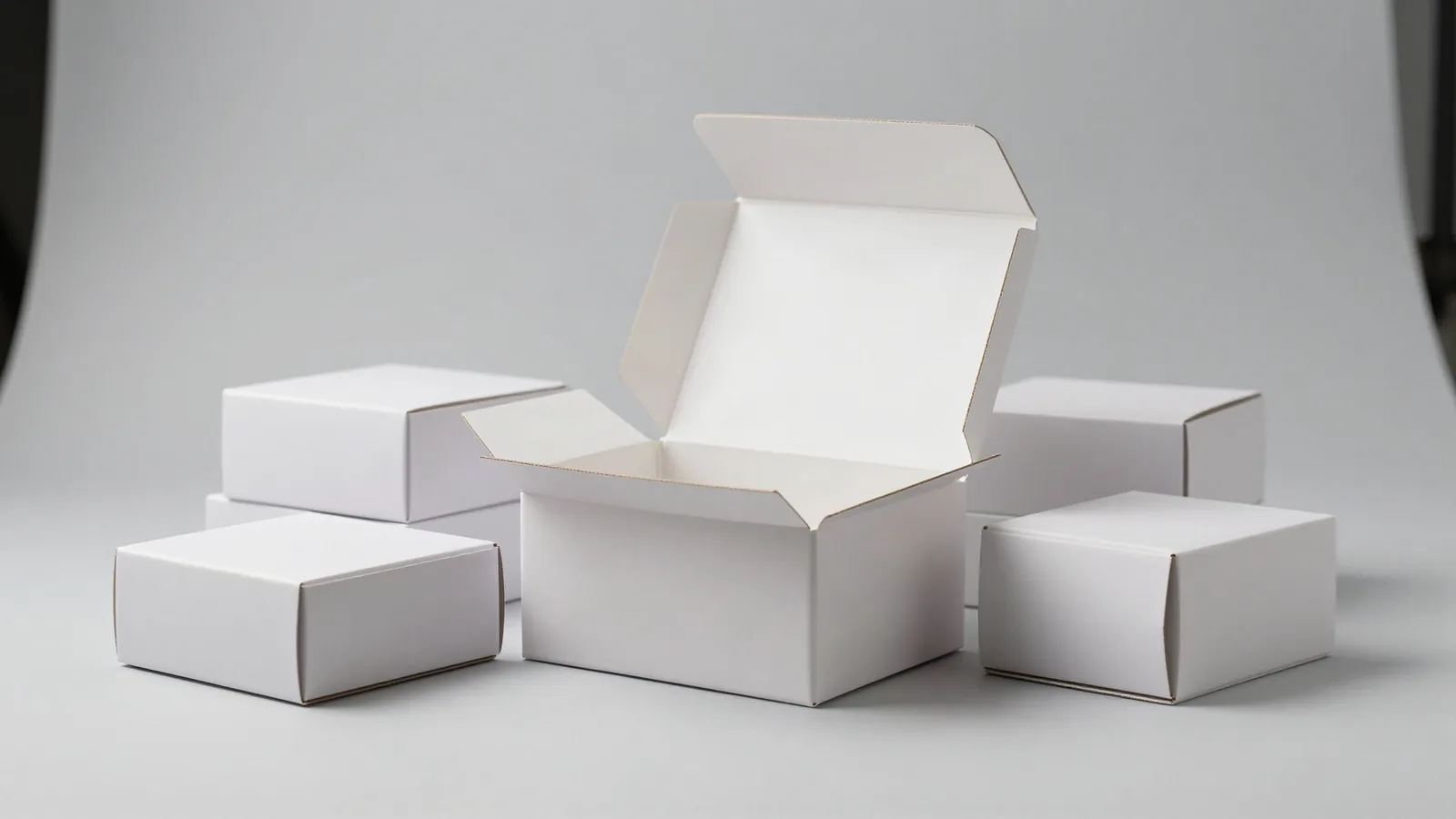












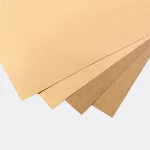






































Booklet packaging works when the printed piece and the holder are planned as one loading path. A booklet can be a folded instruction insert, product story, care guide, or booklet-style package component. Define its closed size, open size, fold direction, page order, binding or seam, and removal path before choosing the outer package. A dieline is the flat cutting template for the holder, with its cut lines, scores, folds, and glue areas. A booklet may sit loose in a carton, slide into a sleeve, rest in a tray, or sit under a lid. Compare wine box packaging when a package needs a defined opening and an insert relationship.
What can a booklet for packaging do?
The printed piece can carry information that would crowd the outer panels, but its finished size still controls the package cavity. An instruction insert needs a clean removal path. A product story needs a readable cover after insertion. A folded guide needs the fold sequence and panel order to work in the reader's hands.
Use the closed booklet size to plan the holder, then check the open size against the surrounding panels. A sleeve can hold the booklet without adding a separate box closure. A straight tuck end or reverse tuck end carton can hold the booklet and product together. An auto-lock bottom or crash-lock base changes assembly, while a drawer or slide changes removal.
Which booklet format fits the package?
The booklet's removal path should decide the holder: a loose insert, sleeve, pocket, tray, or lid each changes clearance and access.
| Booklet role | Package relationship | Details to define |
|---|---|---|
| Instruction insert | Loose piece inside a carton or mailer | Closed size, removal path, page order, and cavity clearance |
| Product story or brand piece | Sleeve, band, or pocket | Viewing side, opening direction, cover treatment, and holder size |
| Folded guide | Flat or accordion-style folded component | Open size, fold sequence, trim, and panel orientation |
| Booklet-style package component | Carton, tray, rigid shell, or magnetic flap | Closure movement, insert location, and repeated opening path |
Choose the package relationship from the way the reader gets the booklet out. A loose insert can shift or cover the product. A pocket controls placement but needs enough clearance for the folded thickness. A rigid shell holds its shape without a fold, while a carton changes shape along its scores.
For other product relationships, compare wax packaging for a compact panel and insert direction, towel packaging for a folded-product format, and private-label packaging when the booklet supports a wider branded package system. The booklet dimensions and holder still belong to the individual project.
Which materials are common around booklet packaging?
SBS, C1S, or C2S paperboard in the 12 to 24 pt range is a common reference for a folding-carton holder. Kraft board in the 18 to 24 pt range gives a different color base and stiffness. Rigid packaging uses chipboard in the 1.5 to 3 mm range wrapped in 100 to 157 gsm art paper.
Material caliper changes the holder's fold, edge feel, pocket clearance, and closure behavior. A booklet that fits a flexible sleeve may need different clearance from one placed in a rigid tray. If the outer package uses corrugated construction, E, B, or C flutes with 32 ECT are common references for a separate shipper. Keep the booklet, inner package, and outer shipper as separate layers in the brief.
How should booklet dimensions be written?
The folded dimensions determine the holder, while the open dimensions determine whether the booklet can be read without hitting the surrounding package. State the finished thickness and folded orientation. For a box or sleeve, write length x width x depth and identify inside or outside measurements.
About 1/16 in, or 1.5 mm, is a common packaging tolerance reference. Check the folded booklet, any wrap or band, and the holder together. Nominal artwork size does not show whether the finished piece will sit flat or shift inside the package. Include the product, tray, tissue, or other contents sharing the cavity, then state whether the booklet comes out before the product, after it, or alongside it.
Which print and finish options suit a booklet?
Offset CMYK is a common choice for detailed illustrations, instructions, and repeated brand color. Digital printing can suit short runs or a first version of the content. Matte or gloss lamination changes surface sheen. Soft-touch changes tactile feel. Foil stamping, spot UV, embossing, and debossing can be assigned to selected cover or panel areas when the artwork leaves clear space.
Check page order in the finished reading direction, not only on the flat file. Keep folds, trims, seams, pockets, and closure edges visible during review. If the booklet slides into a sleeve, confirm which panels remain visible. If the outer package has a window, map it after the booklet and product position are defined.
What should a booklet packaging proof show?
A useful proof shows the folded piece, the flat file, and the holder in the same review. Confirm the page order, fold direction, trim, binding or seam, cavity, outside size, sleeve or pocket, tray, lid, closure movement, and finish layers.
- Show the booklet in the order used for packing and removal.
- Separate base print, lamination, soft-touch, foil, spot UV, embossing, and debossing layers.
- Keep important copy away from folds and covered panels.
- Review the package from the buyer viewing direction.
Custom Packaging Lane quotes booklet packaging from a 100-unit minimum. Pricing is from $0.49 per unit at volume, quoted to spec. Production is typically 8 to 10 business days after proof approval, plus delivery. Free US shipping, free design support, and a free dieline are available. The $19.99 sample kit is credited to the first order. For structure planning, use custom packaging design.
Frequently Asked Questions
When is a booklet better than a loose insert?
A booklet is better than a loose insert when the package needs several pages, a fold-out guide, a product story, or information that would crowd the outer panels. Record the closed and open sizes, fold direction, page order, binding or seam, finished thickness, and removal path before the holder is drawn.
What clearance does a folded booklet need?
A folded booklet needs enough inside clearance to sit flat without shifting, while the open booklet needs room to clear nearby panels and the closure. Use length x width x depth for a box or sleeve and identify inside measurements. About 1/16 in, or 1.5 mm, is a common packaging tolerance reference, not a universal finished-fit result.
Does the holder need to be paperboard or rigid?
A folding-carton holder commonly uses SBS, C1S, or C2S paperboard in the 12 to 24 pt range, while a rigid holder uses chipboard in the 1.5 to 3 mm range wrapped in 100 to 157 gsm art paper. Kraft board commonly falls around 18 to 24 pt. The booklet thickness, opening, product, and storage needs guide the choice.
Can a booklet carry cover finishes?
A booklet can use offset CMYK for detailed illustrations and repeated brand color, or digital print for short runs and first content versions. Matte or gloss lamination changes surface sheen, while soft-touch changes tactile feel. Foil stamping, spot UV, embossing, and debossing need mapped cover or panel areas that stay clear of folds and trims.
What mistakes should a booklet proof catch?
A booklet proof should catch incorrect page order, wrong fold direction, trim conflicts, blocked panels, tight pockets, obstructed closure movement, and misplaced finishes. Check the flat and folded piece with the actual product, tray, tissue, or card. Confirm which panels remain visible after insertion and whether the booklet comes out in the intended order.