




























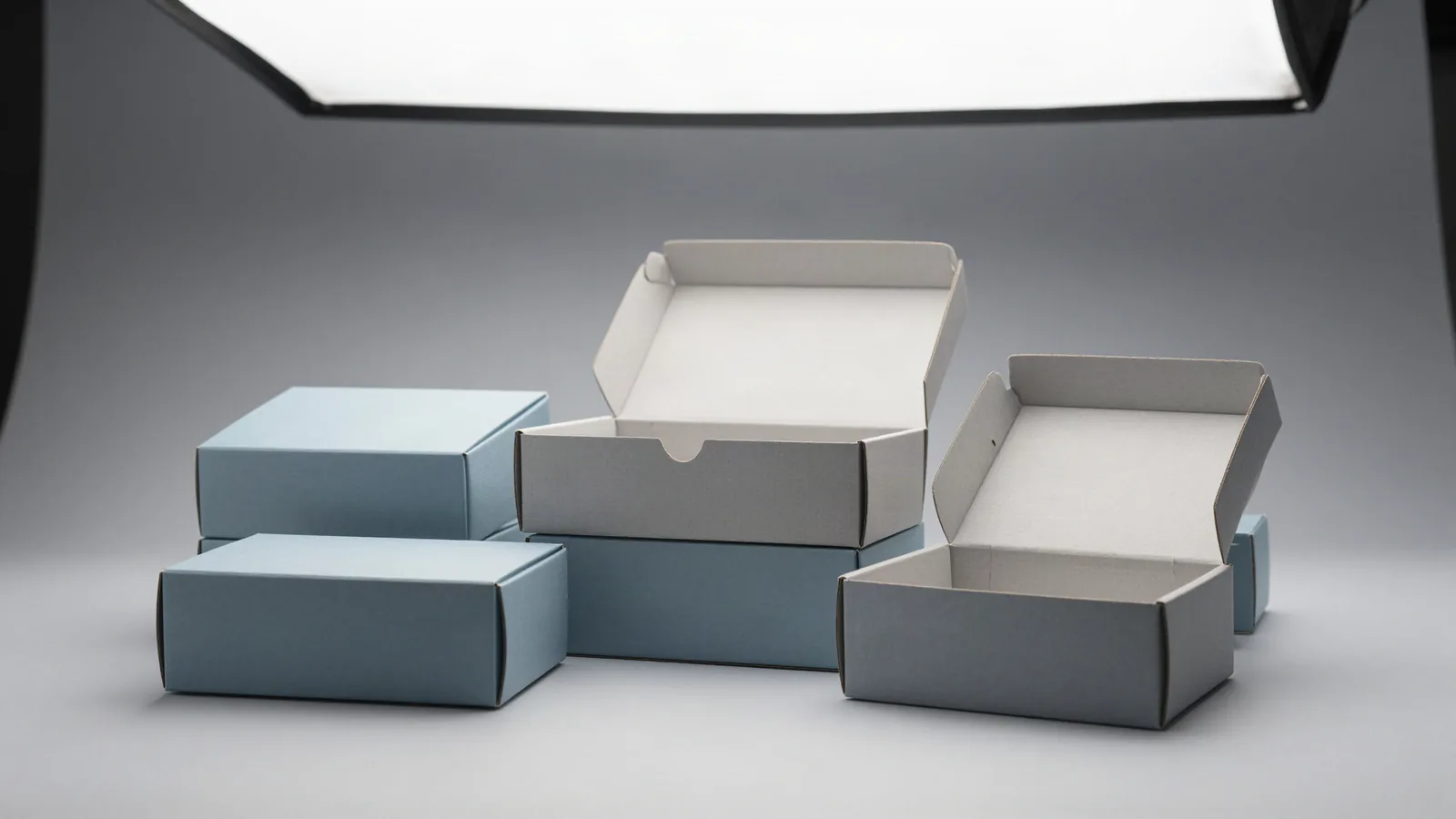




















































A bra box is sized around the folded garment, not the product name. Measure the tallest cup area, strap placement, clasp, decorative hardware, and any tissue or insert that will stay inside the closed package. Use inside length, width, and depth for the cavity. Then decide whether the box sits on a retail shelf, travels through parcel handling, or does both jobs.
What size should a custom bra box be?
The folded bra sets the cavity, and the insert sets the clearance around it. Record the garment in its actual packed pose, including the tallest cup and any hardware that could press into a panel. A common packaging convention allows about 1/16 in (1.5 mm) tolerance, subject to the structure and material. A box that follows an ideal fold too tightly can crush the cup or make removal awkward.
Check the closed package and the opened package. Straps should not catch on a score, the clasp should have a clear path, and tissue should not bow the lid. If the insert is cut to the product outline, test the real folded bra inside it. The assembled sample will show compression and movement that a flat drawing cannot.
Which structure works for lingerie presentation?
The opening motion should follow how the folded garment is packed and removed. A straight tuck end, auto-lock bottom, two-piece rigid box, drawer, slide, or sleeve each changes the clearance and front panel.
| Structure | Useful starting point | Buyer check |
|---|---|---|
| Straight tuck end | Compact folded garment carton | Front panel, tuck clearance, and opening force |
| Auto-lock bottom | Retail carton needing quick base setup | Bottom around heavier trims and product weight |
| Two-piece rigid | Separate lid and base presentation | Lid clearance, wall thickness, and insert fit |
| Drawer or slide | Tray with tissue or layered presentation | Tray clearance and pull area |
A straight tuck end keeps the package compact. An auto-lock bottom changes the base assembly and needs a check around heavier trims. Two-piece rigid uses a separate lid and base, while a drawer or slide guides the garment out on a tray. A sleeve can add a printed outer layer. Choose the opening motion before locking the artwork, because the front panel changes with the structure.
A window can show color or texture, but it uses part of the printed panel. PET window film is commonly around 0.2 to 0.3 mm. Keep the patch away from scores, glue zones, and locking tabs. If the buying decision depends on size, collection information, or care copy, a printed panel may do more work than the window.
Which board works for a folded garment box?
SBS or C1S paperboard is the usual starting point for a printed folding carton, with a common 12 to 24 pt range. Kraft board in the 18 to 24 pt range changes the base surface and ink contrast. Rigid chipboard around 1.5 to 3 mm, wrapped in 100 to 157 gsm art paper, creates a separate wall construction with a more substantial lid and base. Board choice still has to agree with the folds, garment weight, insert, and opening.
| Board reference | Typical industry range | What changes on the bra box |
|---|---|---|
| SBS or C1S paperboard | 12 to 24 pt | Printed folding panels and crease behavior |
| Kraft board | 18 to 24 pt | Surface color, ink contrast, and fold behavior |
| Rigid chipboard with art-paper wrap | 1.5 to 3 mm, 100 to 157 gsm | Lid fit, wall thickness, edge wrap, and insert clearance |
How should bra-box graphics and finishes be set up?
Offset CMYK suits detailed full-color artwork. Digital printing can suit short runs or changing versions, while flexo is more associated with corrugated work. Matte or gloss lamination changes glare and surface rub. Soft-touch changes the hand feel. Spot UV can isolate a logo, pattern, or size callout. Foil stamping, embossing, and debossing should stay clear of scores and tight locking tabs, where relief or foil can interfere with folding.
Keep the inside message useful: size, care, collection, or a QR area. The dieline maps artwork to panels, and the flat proof should show the front, back, inside, glue zones, bleed, safe areas, fold scores, product orientation, insert, and window. Low-resolution art is hard to rescue after the proof. Check small type at the panel size where a customer will actually read it.
Which related products fit a lingerie line?
When the assortment includes coordinated pieces, compare custom undergarment boxes for a broader garment format. Custom tuck top mailer boxes give a parcel-led outer reference. For a small accessory, custom vial boxes offer a compact spacing reference. Use custom packaging design for the structure and artwork brief, then order the sample kit to compare board feel and finish in hand.
What should I check before the proof is approved?
The assembled review starts with the folded garment in its actual pose and the insert that holds it.
- Folded garment dimensions, tallest cup, straps, clasp, hardware, and tissue clearance.
- Inside cavity, insert depth, removal path, and lid or sleeve clearance.
- Structure, board range, opening style, closure, and window patch.
- Artwork panels, bleed, safe areas, scores, glue zones, and finish layers.
- Filled, closed, and opened samples with the actual garment inside.
The proof is a production checkpoint. Look for a barcode or size label too close to a score, artwork that stops before the bleed, and an insert that pinches the garment. Approve the assembled result, not only the flat artwork.
Send the folded garment dimensions, structure, board, print coverage, finish, insert needs, and destination for a quote. Custom Packaging Lane works from a 100-unit minimum, with pricing from $0.49 per unit at volume, quoted to spec, and production typically 8 to 10 business days after proof approval, plus delivery. Free US shipping, free design support, a free dieline, and a $19.99 sample kit credited to the first order are available.
Frequently Asked Questions
How much clearance should a folded bra have?
A folded bra needs enough cavity space for the tallest cup, straps, clasp, decorative hardware, tissue, and insert without pressure. Use inside length, width, and depth for the cavity. About 1/16 in (1.5 mm) is a common tolerance reference, subject to the structure and material, so check the fit in an assembled sample.
Where should a clear window sit on a garment carton?
A clear window should sit where it shows useful color or texture without crossing scores, glue zones, or locking tabs. PET window film is commonly around 0.2 to 0.3 mm. Map the patch after the cavity and folds are set, then compare its panel area with the size, care, and collection information the package must carry.
How can tissue and an insert change the packout?
Tissue and an insert reduce the usable cavity and can change lid clearance, garment compression, and removal force. Measure the folded bra with those materials in place, not as an afterthought. A fitted insert can stop movement, but a cut that follows the garment too tightly can press the cups or catch a strap.
What can a physical bra-box sample reveal?
A physical bra-box sample can reveal cup compression, strap catches, awkward clasp removal, tissue pressure, panel alignment, and an insert that pinches the garment. Check the box closed and open with the actual folded bra inside. The sample is the quickest way to test the assembled fit before the artwork is released.
How should size or care copy fit on the package?
Size or care copy should sit on a clean panel with enough room for readable type and clear separation from scores, folds, glue tabs, and finish areas. Keep the message tied to the garment variant. Check the actual panel size on the proof because copy that looks comfortable on a screen can crowd a small carton.












