




























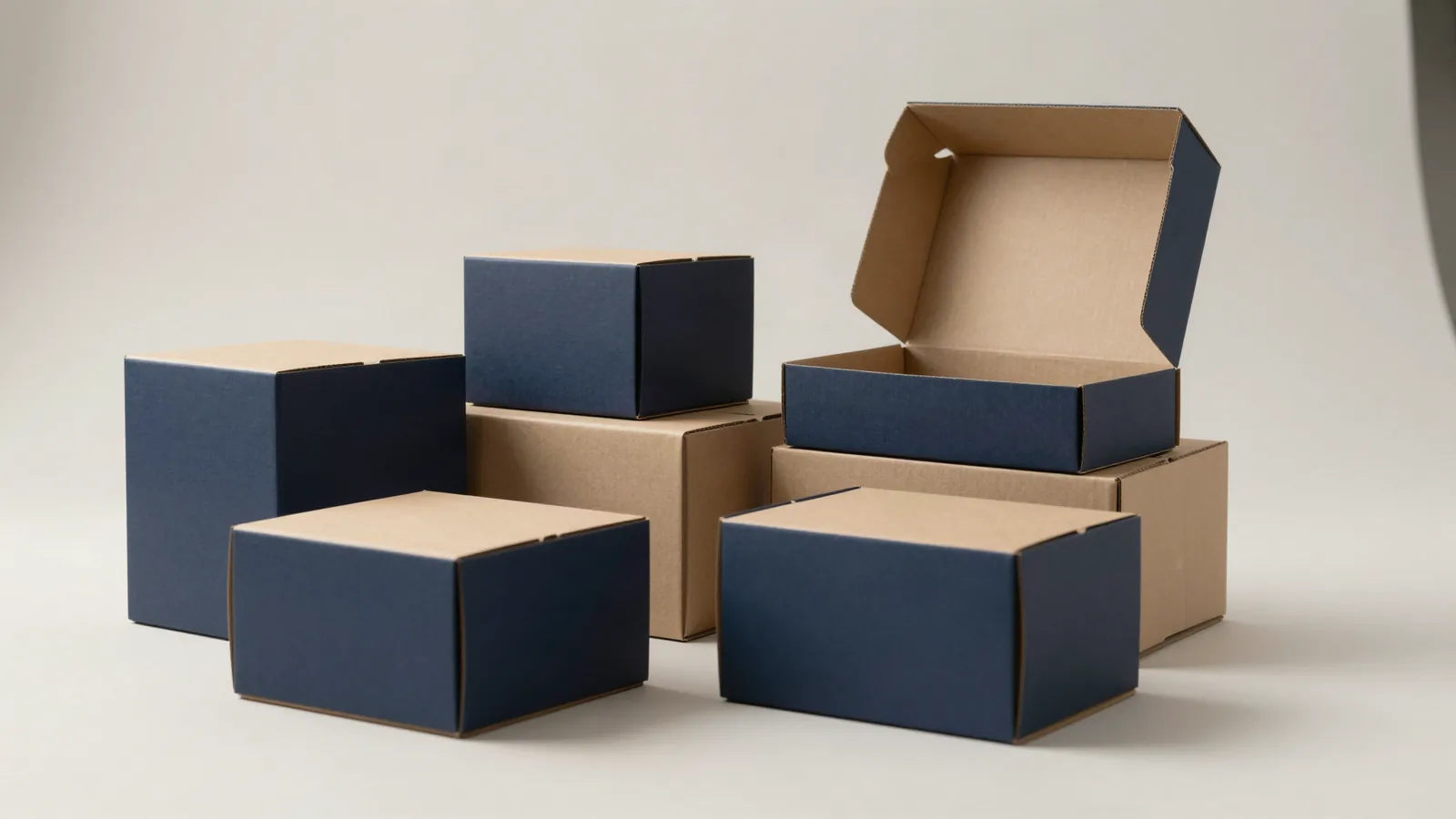




















































A custom textile box starts with the folded product, not the garment category. Record the folded length, width, and depth, fabric bulk, compression sensitivity, fold pattern, and any tissue, belly band, or insert that stays inside. Shirts, scarves, bedding, undergarments, and made-to-measure pieces can need different cavity clearances even when the outside format looks similar.
What should a custom textile box protect?
A folded stack needs enough room to enter, sit flat, and come out without a crushed edge or forced crease. State whether the textile is packed loose, wrapped in tissue, held by a tray, or separated into compartments. Mark embroidery, nap, printed areas, and delicate surfaces that should not rub against the interior wall, insert, or closure.
The handoff also sets the structure. A shelf carton, gift box, shipping mailer, and storage box face different handling after packing. A sleeve wraps a tray or carton. A drawer or slide changes the opening motion. A two-piece rigid box holds its shape for presentation, while a magnetic flap gives another presentation-led opening. A tuck-top mailer combines closure and shipping in one format.
Which structure suits the textile order?
A tuck-top mailer is the practical starting point when one package must close, carry a label, and travel to a customer. Presentation-led orders usually need a different opening path.
| Structure | Typical textile use | Check before proof |
|---|---|---|
| Sleeve | Printed wrap over a tray or carton | Panel overlap, friction, and print direction |
| Drawer or slide | Gift presentation or repeat opening | Pull clearance, fit, and opening resistance |
| Two-piece rigid box | Structured textile gifting | Lid fit, wrap paper, and stacking |
| Tuck-top mailer | Direct-to-customer textile shipping | Closure, label panel, and interior clearance |
Mailers are often specified as roll end tuck top or by the FEFCO 0427 reference. Folding cartons may use straight tuck end, reverse tuck end, auto-lock bottom, or crash-lock construction. The closure changes packing speed and opening behavior. Put the folded stack height, compression limit, tissue position, and insert location in the structural brief.
What board thickness fits folded garments?
SBS, C1S, and C2S paperboard are commonly discussed in the 12 to 24 pt range for folding cartons. Kraft board is commonly 18 to 24 pt. A rigid box uses chipboard, commonly 1.5 to 3 mm, wrapped in 100 to 157 gsm art paper. These are typical industry references. Box size, product weight, stacking, and the desired rigidity decide the final board.
Depth is where textile jobs often go wrong. A shallow carton compresses the fold. A cavity that is too large lets the stack move and arrive untidy. Record the packed height after the actual fold is made, then check how much pressure the closure puts on the textile. A tissue-friendly fit has room for the material without leaving the product loose inside.
Which finish works on a textile box?
Offset CMYK suits detailed artwork, while digital printing is often considered for shorter runs or artwork revisions. Matte lamination reduces reflection. Gloss lamination increases shine. Soft-touch changes the feel of the wrapped surface, and spot UV adds a hard, glossy contrast to selected areas. Foil stamping, embossing, and debossing can emphasize a mark when the construction supports them.
Keep foil, relief, and spot UV away from folds, seams, glue areas, and high-friction edges. Convert RGB artwork before approval, leave bleed in the file, and keep type away from scores. A barcode that crosses a fold can be difficult to scan. The digital proof is the point to move a logo, correct color conversion, or redraw the dieline before printing.
Which catalog products should I compare?
Custom undergarments boxes are a close reference for compact, fold-sensitive products. Compare custom tuck top mailer boxes when the carton must ship. Custom votive candle boxes can help compare insert and cavity decisions. Custom woozy bottle boxes show how a shaped product changes internal clearance. These are product references, so the textile dimensions still control the dieline.
What belongs in a textile-box quote?
The brief needs the folded length, width, and depth, product weight, fold pattern, tissue or insert plan, box structure, artwork, quantity, and delivery ZIP code. We draw a free dieline and provide free design support, then send a digital proof before printing. Quotes start at a 100-unit minimum, from $0.49 per unit at volume, quoted to spec. Production is typically 8 to 10 business days after proof approval, plus delivery. Free US shipping applies. Order the $19.99 sample kit, credited toward the first order, when folded fit or finish needs a physical check. Broader structural options are in custom packaging solutions.
Frequently Asked Questions
How do I measure a folded textile for a box?
Measure the folded textile at its longest, widest, and tallest points, then record length x width x depth. Include tissue, bands, labels, or inserts that remain inside the package. Note whether the fabric compresses, creases, has embroidery, or has a nap. A sample fold is useful because the packing method sets the clearance the box needs.
Which textile box style suits gifting?
A two-piece rigid box, drawer or slide, or magnetic flap suits a presentation-led textile gift. A sleeve adds a printed wrap around a tray or carton. Compare lid fit, pull resistance, stacking, and surface handling before choosing. A tuck-top mailer is the closer comparison when the same package must close for shipment.
What board thickness is common for textile cartons?
SBS, C1S, or C2S paperboard is commonly discussed in the 12 to 24 pt range for folding cartons. Kraft board is commonly 18 to 24 pt. Chipboard for rigid textile boxes commonly ranges from 1.5 to 3 mm and can be wrapped in 100 to 157 gsm art paper. Final selection follows box size, product weight, stacking, and rigidity.
Can a textile box ship directly to customers?
A tuck-top mailer can combine a folded textile's inner presentation with an outer shipping structure. Confirm the closed size, interior clearance, closure, label area, and stacking before approval. A gift carton and a shipping mailer face different handling requirements, so test the complete packed unit with the actual fold, tissue, and insert.
How should textile-box artwork avoid fold problems?
Keep logos, small type, barcodes, and repeat patterns away from scores, seams, glue areas, and closure stress points. Offset CMYK suits detailed print, while matte or gloss lamination changes reflection and handling. Soft-touch, spot UV, foil stamping, embossing, and debossing need separate placement notes so the finish does not land on a fold or high-friction edge.












