













































































What do custom corragted boxes mean?
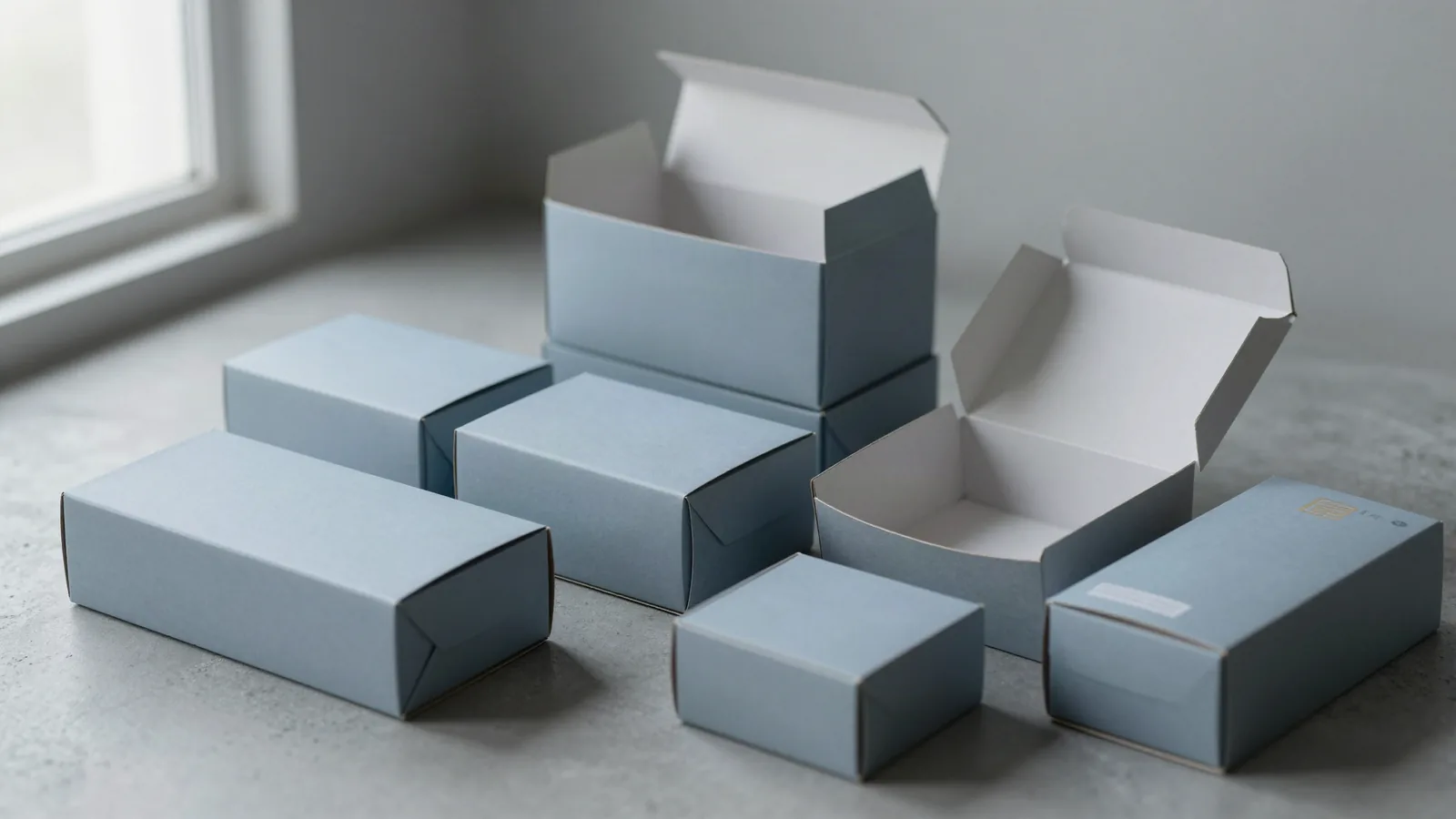
The phrase points to custom corrugated boxes, with a fluted medium held between liner sheets. Corrugated board gets its shape from the flutes, which create space between the liners and change the box's thickness, print surface, and stacking behavior. The box should be sized around the packed product and the route it takes.
Write down the loaded orientation, inside fit, outside space, opening motion, stack pattern, and loading method. An insert, divider, wrap, or smaller inner carton can control movement better than extra empty space. Draw those parts on the dieline, which is the flat cutting template used to print and cut the box.
Which flute should I compare?
E flute is the first comparison for fine print and compact retail panels. B flute gives a different balance of thickness and handling, while C flute has a deeper profile with more room for cushioning. 32 ECT is an edge crush test reference, so it describes a board-strength rating, not the performance of every finished box.
| Corrugated reference | Common planning position | What to check |
|---|---|---|
| E flute | Fine profile and compact retail presentation | Print detail, interior clearance, and panel size |
| B flute | Different balance of thickness and handling | Stacking pattern, closure, and product movement |
| C flute | Deeper profile and cushioning consideration | Outer dimensions, void, and load position |
| 32 ECT | Compression reference | Product weight, stacking, and box proportions |
Which structure fits a corrugated packing workflow?
Roll end tuck top is the direct starting point for a mailer that opens from a top panel. FEFCO 0427 is a named structure reference for that style, so include the code when it matches the requested format. A crash-lock bottom forms from interlocking panels, a sleeve slides over an inner pack, and a straight tuck end uses folded end panels.
| Structure | Useful planning question | Related use |
|---|---|---|
| Roll end tuck top, FEFCO 0427 | Will the top close cleanly after loading? | Mailer-style product shipments |
| Crash-lock bottom | Can the base form without extra handling? | Boxes packed at a repeatable station |
| Sleeve | Can the printed layer slide over the inner pack? | Secondary branded presentation |
| Straight tuck end | Are the end panels clear of the product? | Smaller folded cartons |
Crash-lock bottoms can reduce separate bottom-forming steps, but the closure needs checking with actual board and load. Sleeves add printed coverage over a separate pack. A folding carton can suit smaller retail items, while a corrugated outer box carries the shipping role. Keep the structure as simple as the loading motion allows.
How should print, dimensions, and shipping math work together?
Flexo prints directly on corrugated board, while digital print suits short runs or artwork that changes between versions. Offset CMYK is common for detailed paperboard artwork or a printed layer applied to board. Matte or gloss lamination changes the surface, and spot UV, foil stamping, embossing, debossing, or window patching add focused effects only when folds and handling can take them.
State dimensions as length x width x depth, then label inside or outside. A common convention allows about 1/16 in (1.5 mm) tolerance. For US ground shipping, dimensional weight commonly uses L x W x H / 139, a planning formula rather than a quote. Product fit still comes first because extra outer space raises the carrier cube and can leave the load moving inside the box.
What should I check in a corrugated box proof?
A box proof is where the corners, tuck panels, and loaded base get checked together. Build the box in the intended flute with the actual packed item before approval.
- Inside and outside dimensions stated as length x width x depth.
- Flute, ECT reference, product orientation, and stacking pattern.
- Closure, insert, divider, wrap, and loading sequence.
- Print process, coverage, finish locations, and clear label panels.
- An assembled sample with the actual packed load.
A flat file cannot show every interaction at the corners or tuck panels. Check the assembled box as a package system, including any insert or inner wrap.
Which catalog formats can help me compare fit?
Custom woozy bottle boxes and custom vial boxes are useful references when products have narrow or upright footprints. Custom votive candle boxes help compare compact retail presentation, while custom tuck-top mailer boxes provide a direct closure reference. Use these catalog formats to frame questions, then size the corrugated box around the actual packed product.
Custom Packaging Lane works from a 100-unit minimum, with pricing from $0.49 per unit at volume, quoted to spec. Production is typically 8 to 10 business days after proof approval, plus delivery. Free US shipping, free design support, and a free dieline are included. The $19.99 sample kit is credited to the first order. For a broader quantity path, see wholesale custom packaging.
Frequently Asked Questions
What does ECT tell me?
ECT means edge crush test, a compression rating used when comparing corrugated board. A 32 ECT reference helps organize a packaging brief, but the right board still depends on product weight, stacking, box dimensions, and handling. The number alone does not describe every finished box's performance.
When is E flute useful?
E flute has a fine corrugated profile that suits smaller retail cartons, detailed printed surfaces, and compact products. B flute and C flute provide different thickness and cushioning profiles. Compare the assembled board, interior clearance, print needs, and stacking pattern instead of selecting a flute from appearance alone.
Should corrugated boxes use flexo or digital print?
Flexo is a common process for direct printing on corrugated board, while digital print suits short runs or changing artwork. Offset CMYK is common for detailed paperboard artwork or a printed layer applied to board. Compare the print process with flute, coverage, coatings, and required folds before approval.
How should I measure a shipping box?
A shipping box should be measured as length x width x depth, with each value marked inside or outside. Inside measurements describe usable product space. About 1/16 in, or 1.5 mm, is a common planning tolerance, but inserts, wraps, and closure clearance still need separate checks.
What should I test before approval?
Before approving a corrugated box, build it in the intended flute and place the real packed item inside. Check closure, corners, label area, panel alignment, and product movement. Inspect the box with its insert or inner wrap because a clean flat dieline cannot reveal every assembled interaction.