


















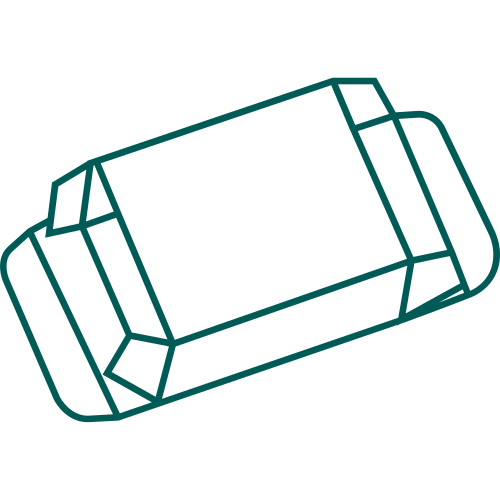
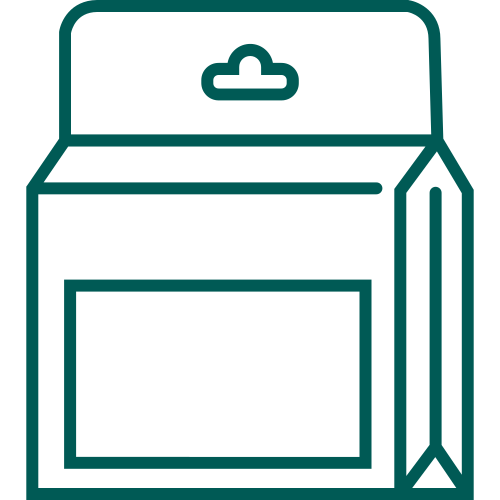




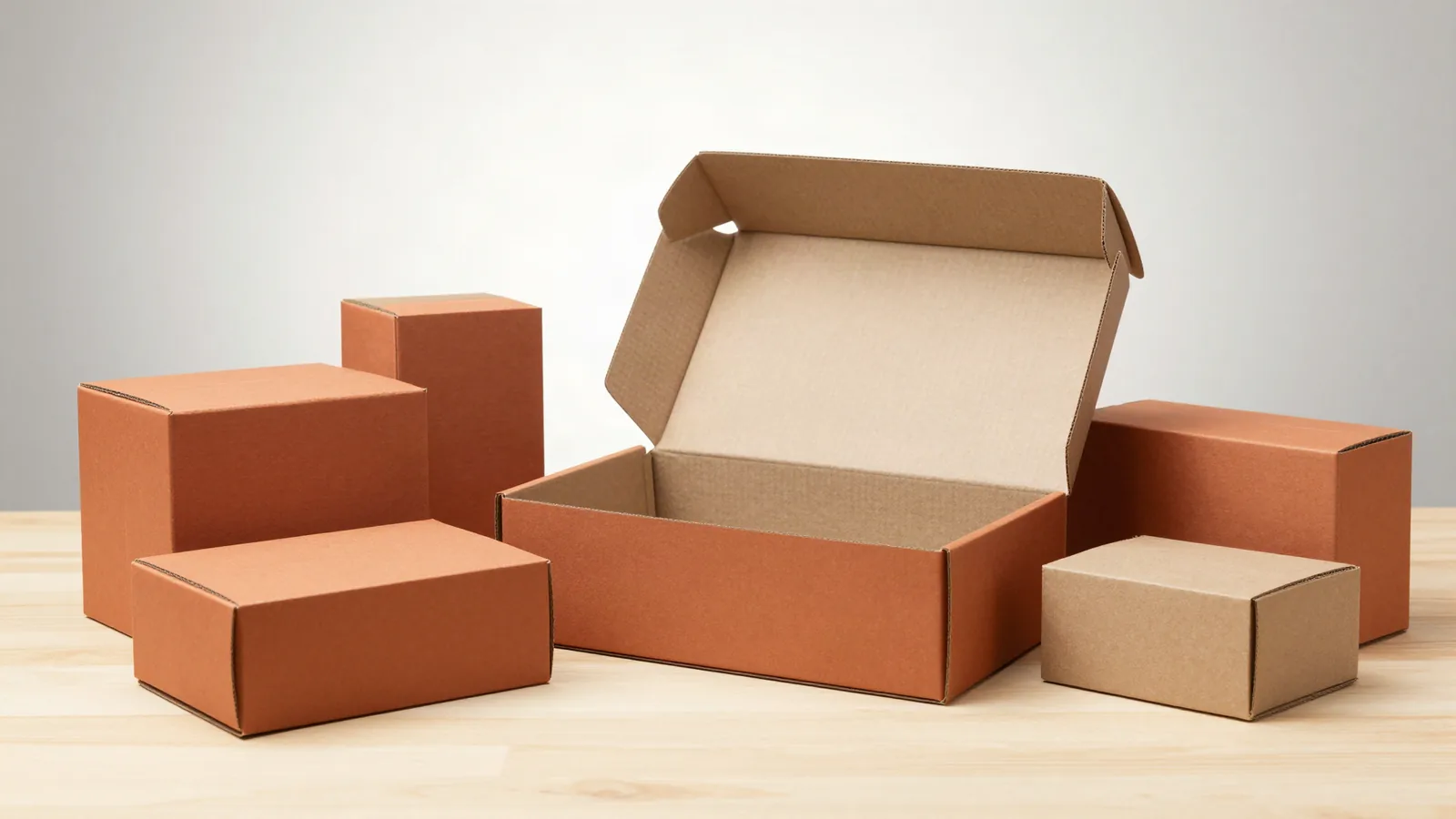















































Custom fries boxes are designed around the serving handoff: how the carton is filled, how the fries are removed, and whether the package sits inside a bag, tray, or larger shipper. The opening, taper, base, board, print coverage, and outer transport layer belong in the same brief. Compare custom tuck top mailer boxes, custom vial boxes, and custom votive candle boxes as folding-structure references. A dieline is the flat cutting template used to print and cut the carton.
What job should custom fries boxes perform?
The service sequence decides the geometry: how the carton is filled, how the customer receives it, and whether it enters another package. An open-top fry carton prioritizes direct serving access, while a closed or partially closed tuck-top carton changes the opening and handoff.
A tapered fry carton needs the top opening, base footprint, panel angle, height, fold locations, and product position recorded. If the carton touches food, ask about food-contact options for your product. Keep that question separate from board stiffness, print coverage, and finish.
Which carton structures should I compare?
An open-top fry carton keeps the serving area accessible, while a tuck-top or gable format changes the handoff. A corrugated outer case has a different job, the transport of multiple cartons.
| Structure | Possible role | Question to answer |
|---|---|---|
| Open-top fry carton | Direct serving access and visible product | How should the opening and tapered panels be shaped? |
| Tuck-top carton | Closed or partially closed presentation | Will the opening suit the filling sequence? |
| Gable format | Upright presentation where the geometry fits | Does the peak or handle change the serving footprint? |
| Corrugated outer case | Transport layer for multiple cartons | Which flute and outside dimensions suit the route? |
The linked folding references show how panels, closures, and compact cavities differ. They are structural references, not evidence of food-contact suitability.
Which paperboard grades are commonly considered?
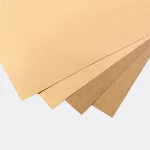
Common folding-carton references include SBS, C1S, and C2S paperboard in the 12 to 24 pt range. Kraft board is another reference around 18 to 24 pt. Board caliper affects stiffness, folding behavior, edge feel, and how the carton holds its shape after forming.
Review the board with the opening, taper, product load, storage method, artwork, and intended contact surface. A board choice that works for a flat display panel may not give the serving carton the right base or fold behavior.
How should I describe tapered carton dimensions?
A tapered fry carton needs a base footprint and top opening in addition to length x width x depth. Record the panel angle, height, fold locations, and internal product space. About 1/16 in, or 1.5 mm, is a general packaging tolerance reference, but the suitable fit depends on the structure, board, folds, finishing, and product.
If the carton enters a bag or shipper, provide the closed outside dimensions as well as the serving opening. Measure the actual product and label each value as inside or outside.
How do print and finish choices affect a serving carton?
Opening edges, folds, and glue areas decide which printed panels remain usable after forming. Offset CMYK is commonly used for detailed paperboard artwork, while digital printing can suit a short run or an early design direction. Mark the opening edge, folds, seams, glue areas, and finish zones on the proof.
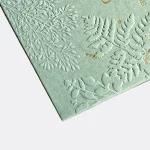
Matte or gloss lamination changes the visible surface. Soft-touch changes the feel, while spot UV, foil stamping, embossing, and debossing are separate finish decisions. Keep important copy away from folds, seams, glue, and the opening edge. Low-resolution art, RGB artwork converted for press, and missing bleed are proof-stage problems to catch before printing.
What belongs in a custom fries boxes brief?
The brief should show the handoff from preparation area to customer, including the outer bag or tray. Give the filling method, opening, serving orientation, product reference, internal cavity, taper, board, structure, closure, artwork, finish, quantity, and delivery destination.
- Describe the filling and serving sequence.
- Provide the product, cavity, taper, and base information.
- Mark board direction, structure, closure, folds, seams, and finish zones.
- Show print coverage and the surface that may contact food.
- Include the outer bag, tray, or shipper if one is part of the route.
Custom Packaging Lane quotes custom fries boxes to spec from a 100-unit minimum, with pricing from $0.49 per unit at volume, quoted to spec. Production is typically 8 to 10 business days after proof approval, plus delivery. Free US shipping, free design support, and a free dieline are available. The $19.99 sample kit is credited to the first order. Request a review through custom packaging solutions after the serving path is documented.
Frequently Asked Questions
Which details determine a fry carton's shape?
A fry carton's shape follows the filling method, serving opening, product position, taper, base footprint, board, folds, closure, and relationship to an outer bag or tray. Record the handoff sequence before artwork. If the carton touches food, ask about food-contact options during specification.
Are custom fries boxes always open at the top?
Custom fries boxes are not always open at the top. An open-top carton gives direct serving access, while a tuck-top or partially closed structure changes product visibility and handoff. Compare the opening, filling direction, panel area, and relationship to an outer bag or tray before choosing the structure.
Can kraft board work for a printed fry carton?
Kraft board is commonly discussed around 18 to 24 pt for folding-carton work. SBS, C1S, or C2S paperboard is another reference in the 12 to 24 pt range. Board caliper changes stiffness and folding behavior. Review the chosen board with the structure, finish, product load, and intended contact surface.
What measurements does a tapered carton need?
A tapered fries carton should include the base footprint, top opening, panel angle, height, fold locations, and internal product space. Also provide the closed outside dimensions if it enters a bag, tray, or shipper. Label each value as inside or outside, because length, width, and depth alone may miss the taper.
What should I check before approving a fries box proof?
Before approving a custom fries box proof, confirm the filling sequence, opening, product position, base footprint, fold and glue zones, artwork coverage, finish areas, and the surface that may contact food. The proof should match the real handoff and any outer bag, tray, or shipper. Ask about food-contact options before finalizing that surface.