

















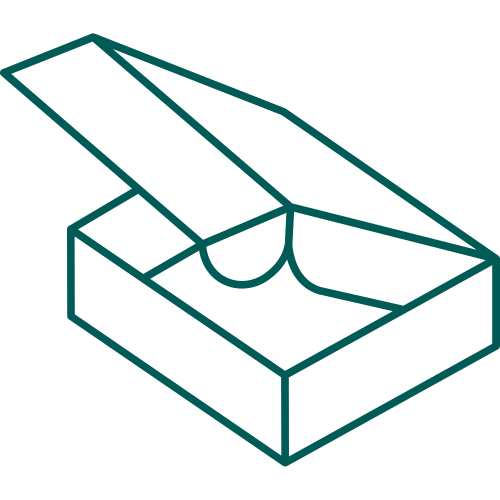
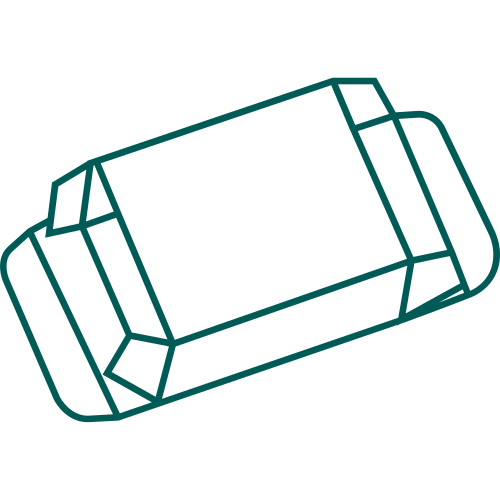




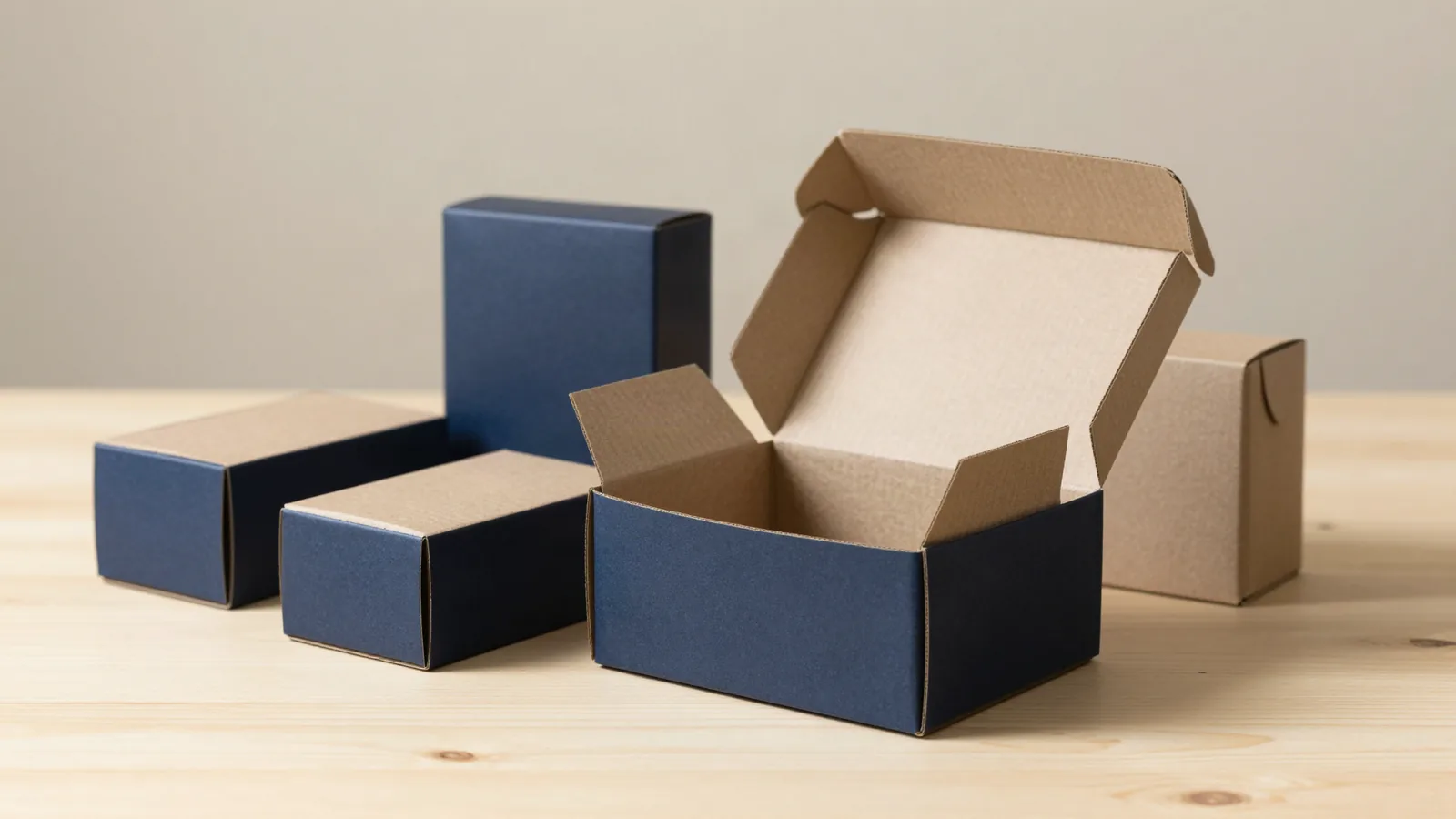









































A custom fry box is a folding carton built around a serving size, an opening motion, and the way the order moves from counter to customer. A dieline is the flat cutting template for the panels, scores, tabs, locks, and artwork. Start with the filled serving and state whether staff pack it by hand, place it in a delivery order, or present it inside a branded set. The structure and board follow that use.
What structure should a custom fry box use?
The bottom fold decides how quickly the carton can be filled and how much setup it needs. A straight tuck end uses aligned tuck flaps. A reverse tuck end changes the flap direction and the seam position. An auto-lock bottom forms a base through a locking fold. A crash-lock construction uses another bottom-fold sequence. Put the intended fill motion and opening direction on the brief before artwork is arranged.
| Structure | Common planning use | Point to specify |
|---|---|---|
| Straight tuck end | Folding carton with aligned tuck flaps | Opening direction and panel order |
| Reverse tuck end | Carton with opposing tuck flaps | Seam position and artwork rotation |
| Auto-lock bottom | Carton needing a formed base | Fill sequence and base support |
| Crash-lock | Carton using a locking bottom fold | Assembly motion and stacking plan |
Which paperboard range fits a fry box?
Folding-carton practice commonly references SBS, C1S, or C2S paperboard in the 12 to 24 pt range. SBS is solid bleached sulfate board. C1S is coated on one side, and C2S is coated on two sides. Kraft board commonly falls in the 18 to 24 pt range and has a different surface direction. A PET window, commonly 0.2 to 0.3 mm, adds a clear display area but also adds a cutout and window-patching step. Ask us about food-contact options for the intended use.
How should I state fry box dimensions?
Use length x width x depth and give inside measurements for the product request. State the product orientation, fill level, opening clearance, and whether the carton sits inside another package. About 1/16 in, or 1.5 mm, is a common industry tolerance reference for box dimensions. It is a planning convention, not a finished-fit promise. The physical serving should guide the dieline and digital proof.
Where should print and finish go?
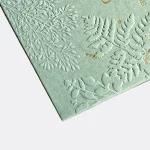
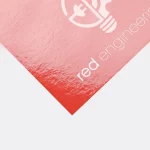
Offset CMYK is common for detailed paperboard artwork, while digital printing can suit a short run or an early artwork pass. Matte or gloss lamination changes the surface. Soft-touch changes the hand feel, and spot UV can isolate a logo or graphic. Foil stamping, embossing, and debossing can direct emphasis to one panel. Keep type, barcodes, seams, locks, and finish boundaries visible on the flat proof and the assembled carton.
How should moisture affect the package?
Moisture belongs in the first material discussion, along with serving temperature, sauce contact, fill method, and the outer package. If an outer shipper is needed, corrugated construction commonly uses E, B, or C flutes. 32 ECT is a common specification reference, where ECT means edge crush test. For US ground shipping, carrier dimensional weight commonly uses length times width times height divided by 139. The fry carton and outer shipper perform different jobs, so compare them as a packed set.
Which products can accompany a fry box?
The custom French fry boxes page is the closest product reference for the carton itself. Add a carrier layer with custom white paper bags. If a branded order has a separate promotional, insert, or presentation component, compare custom foam box inserts as another format. For a broader small-business packaging brief, use custom packaging for small business. Describe the actual contents in the quote request.
What should go into the digital proof?
The proof should show the structure, inside dimensions, panel order, artwork orientation, scores, locks, seams, finish zones, window cutout if used, and any required copy. Check the barcode at full size, keep type away from scores, and confirm bleed beyond the cut line. An assembled check catches a panel that reads correctly flat but turns away from the customer after folding.
How does CPL quote custom fry boxes?
The request should include the filled serving, inside length x width x depth, structure, board range, print coverage, finish, window choice, outer shipper, and destination. Custom Packaging Lane quotes custom fry boxes from a 100-unit minimum. Pricing is quoted to spec, from $0.49 per unit at volume. Production is typically 8 to 10 business days after proof approval, plus delivery. Free US shipping and free design support are available, and we prepare a free dieline. The $19.99 sample kit is credited to the first order. Send the packed serving and artwork file with the request.
Frequently Asked Questions
Why does the bottom fold change packing speed?
The bottom fold controls how the fry box is opened, filled, closed, and placed on a tray. Straight tuck end and reverse tuck end constructions change flap direction, while an auto-lock bottom and crash-lock construction change the setup sequence. Compare the loaded carton with the actual packing motion before choosing the structure.
What does a PET window change on a fry box?
A PET window around 0.2 to 0.3 mm adds a clear display area, but the cutout removes printed panel space and adds window-patching work. The dieline must show the window position, product clearance, folds, seals, and artwork boundary. Check the filled box upright so the visible area matches the intended presentation.
Why does an empty carton give the wrong fry box fit?
An empty carton hides the product shape, fill level, and opening clearance that determine the finished fit. State inside length x width x depth and use about 1/16 in, or 1.5 mm, as a common planning tolerance reference. Confirm the physical serving before proof approval because the loaded shape changes the check.
Which print process suits a short fry box run?
Digital printing can suit a short run or an early artwork pass, while offset CMYK is common for detailed paperboard artwork. Matte or gloss lamination changes the surface, and spot UV, foil stamping, embossing, or debossing can isolate selected details. The proof should show coverage, folds, seams, and finish boundaries together.
Why specify the outer shipper separately?
The fry carton holds and presents the serving, while the outer shipper handles the parcel journey. Corrugated shippers commonly use E, B, or C flutes, and 32 ECT is a common specification reference. Carrier dimensional weight for US ground shipping commonly uses length times width times height divided by 139. Compare the complete packed configuration.