


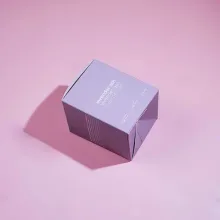
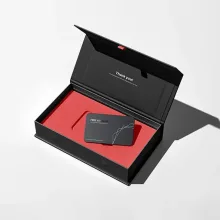
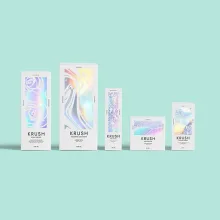
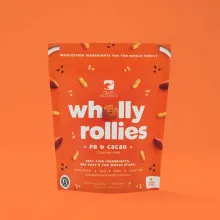



































Custom keychain boxes are sized around the assembled item, including the ring, clasp, chain, tag, and backing card. A dieline is the flat cutting template that maps the panels, scores, glue zones, insert, closure, and any window. Measure the complete item first, then decide what the buyer should see before opening.
How can a keychain box show the product?
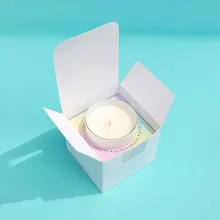
Visibility depends on the display face and the way the item stays put. An open printed panel shows the package design, an insert controls movement, and a PET window shows the product without opening the box. The chain, ring, clasp, attached card, or backing piece can change the interior footprint, so measure the assembled keychain rather than the charm alone.
A custom box with logo needs a logo panel clear of the closure and window. Put the front, back, glue zones, insert, and window on one dieline. That map prevents the artwork from occupying the exact area needed for a score, patch, or fold.
| Format | Common material or construction | Question to resolve |
|---|---|---|
| Straight tuck end | SBS, C1S, or C2S paperboard, 12 to 24 pt | Does the carton leave enough panel area for the small item? |
| Pillow box | Printed folding paperboard with curved end panels | Does the shape leave enough clearance for removal? |
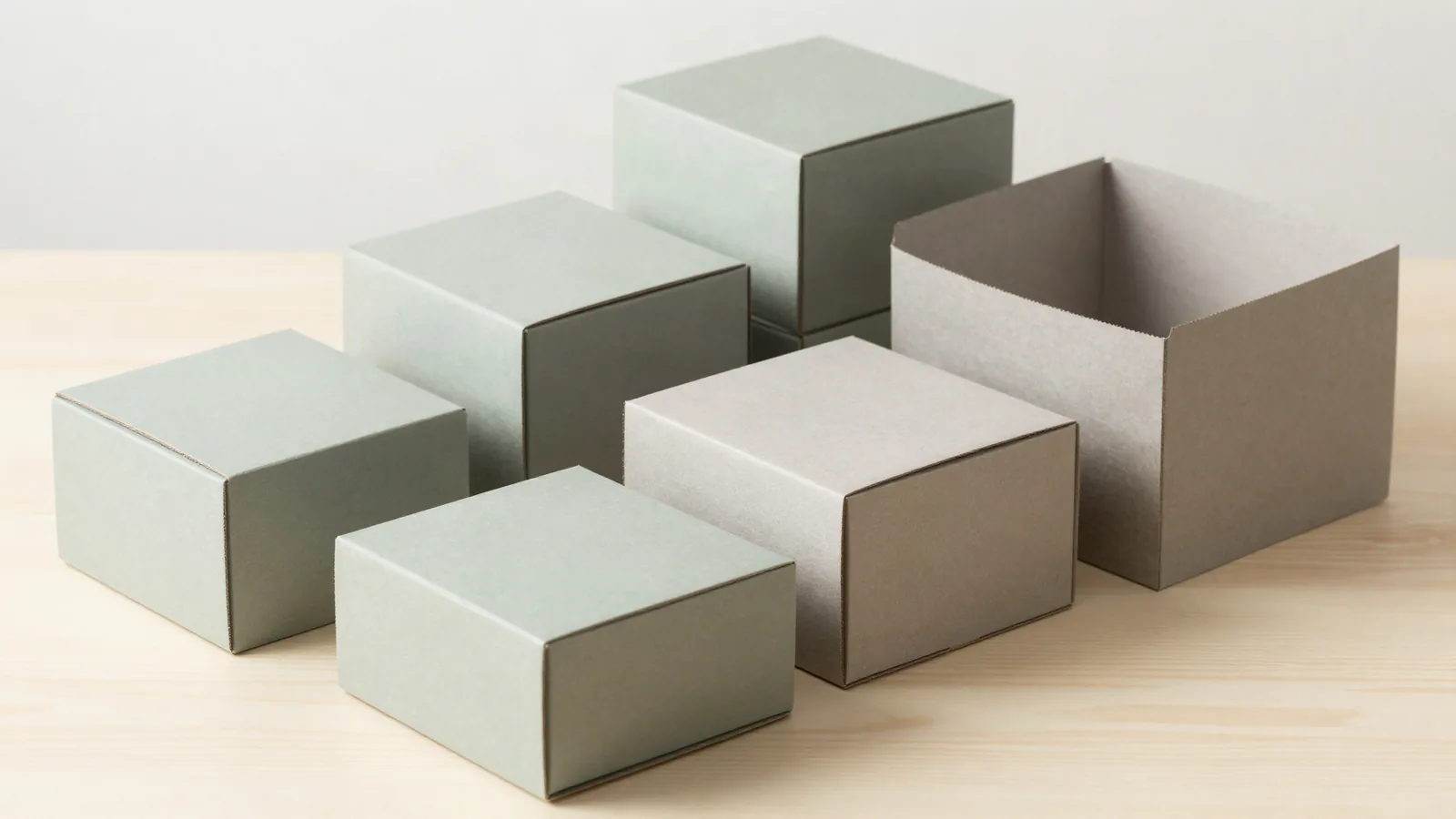
| Sleeve and tray | Rigid chipboard, 1.5 to 3 mm, wrapped in 100 to 157 gsm art paper | Should the tray slide out to reveal the keychain? |
| Mailer | Roll end tuck top, compared with E, B, or C flute corrugated board | Will the package travel through fulfillment or shipping? |
| PET window | Clear PET window film, commonly 0.2 to 0.3 mm | Which keychain area needs to remain visible? |
Which insert and clearance details matter?
Small hardware creates large fit questions. Record ring diameter, clasp position, chain length, attached tag, and backing-card size. If the keychain can move, compare a paperboard insert, shaped foam insert, or divided interior. The insert is part of the package dimensions. Size it with the outer box, then check removal by hand.
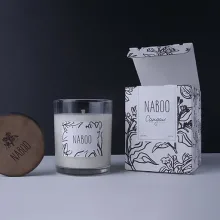
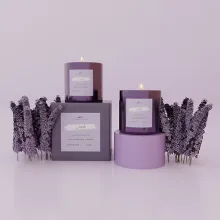
A custom vial box is a reference for small-format cavity planning. Custom votive candle boxes show how a compact product can sit in a structured printed carton. Those catalog formats do not replace the keychain measurements. They help frame the fit and opening questions.
Should the package use a window?
A PET window makes sense when the keychain itself needs to be seen before opening. Keep the window boundary away from folds, glue zones, and the closure. Show the charm, color, finish, or attached identifier that matters. If the item has no single display face, a printed carton or sleeve can give the artwork more control.
Window patching is separate from printing. Mark the window shape, film area, and placement on the dieline, and state whether the window sits on a folding carton, sleeve, or another structure. A clear window that crosses a score can crease, and a patch that enters a glue zone can interfere with assembly.
What print and finish choices fit a small box?
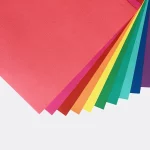
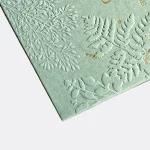
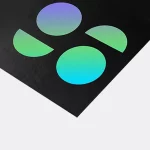
Offset CMYK suits detailed folding-carton artwork. Digital printing can suit short runs or artwork testing. Flexo is common for corrugated surfaces. Matte or gloss lamination puts a surface layer over the printed panel. Soft-touch changes the hand feel, while spot UV, foil stamping, embossing, and debossing mark selected areas. Keep the front panel simple enough for a small format.
Custom tuck-top mailer boxes are a catalog reference when the keychain needs a shipping-led opening rather than a display carton. Compare the closure and interior movement, then place the logo, product name, attachment details, and opening instructions on the panels that remain readable.
What should I send for a keychain quote?
A complete request includes the assembled keychain, its attachments, and the intended package behavior.
- Assembled keychain measurements, including ring, clasp, chain, tag, and backing card.
- Preferred format, closure, insert plan, and PET window requirement.
- Board direction, artwork coverage, print route, and finish locations.
- Quantity, destination, artwork status, and sample request.
Custom Packaging Lane quotes custom keychain boxes from a 100-unit minimum. Pricing is from $0.49 per unit at volume, quoted to spec. Production is typically 8 to 10 business days after proof approval, plus delivery. Free US shipping and free design support are included. A free dieline maps the window and artwork. The $19.99 sample kit is credited to the first order. Begin with the assembled keychain measurements and send them through custom boxes with logo.
Frequently Asked Questions
Should I measure the ring and clasp separately?
Measure the assembled keychain, including the ring, clasp, chain, tag, and backing card. Record the inside length x width x depth for the packed item and insert. Note which part should remain visible and which part needs clearance for removal. The box size should follow the complete packed keychain, not the charm alone.
When does a clear window help a keychain package?
A clear window is useful when the keychain needs to be seen before opening. PET window film is commonly around 0.2 to 0.3 mm, and its boundary should stay clear of folds, glue zones, and the closure. If the product has no clear display face, a printed carton or sleeve may give the artwork better control.
What changes between a folding carton and a rigid format?
A folding carton uses paperboard and creates a compact printed package. A sleeve and tray uses 1.5 to 3 mm chipboard wrapped in 100 to 157 gsm art paper and creates a slide-out opening. Compare panel area, insert, closure, storage, and presentation around the assembled keychain and backing card.
Can a small keychain box use several print processes?
Offset CMYK is commonly used for detailed folding-carton artwork, digital printing can suit short runs or artwork testing, and flexo is common for corrugated surfaces. Mark matte or gloss lamination, soft-touch, spot UV, foil stamping, embossing, or debossing on the artwork. The print route should match the selected board and coverage.
What should the artwork file show?
A keychain packaging artwork file should show the full dieline, panel order, folds, glue zones, closure, insert position, window shape, and finish locations. Label the front panel and required product text. Keep the file tied to the intended keychain style so the print file is not mixed with another package.