





























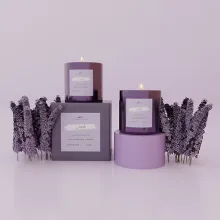






































How should custom lotion bottles read as one collection?
Start with a fixed and variable field map. Fixed fields include the brand position, product name, type hierarchy, panel order, and visual rules. Variable fields include scent, formula, color, size language, and supplied usage copy. Put the map beside the bottle, carton, bag, sleeve, or pouch artwork before production so each format follows the same collection logic.
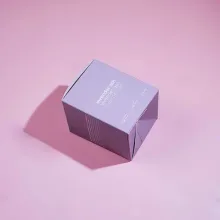
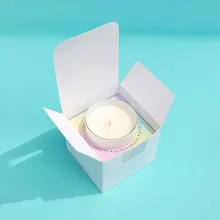
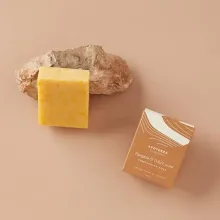
A printed carton can carry the main front and side information for one bottle. A paper bag can carry the retail handoff, while a sleeve can extend the same visual identity over a tray or set. Compare lotion boxes, custom white paper bags, and custom woozy bottle boxes as separate format references. Each format still needs its own dimensions and opening checks.
Which secondary format fits each retail moment?
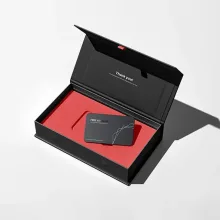
A folding carton suits single-bottle presentation, while a rigid box with sleeve and tray organizes a gift set. A paper bag carries a retail handoff, and a pouch provides a flexible outer format when its closure and barrier questions are resolved.
| Collection need | Packaging direction | Confirm in the proof |
|---|---|---|
| Single bottle presentation | Folding carton or bottle box | Panel hierarchy and closure behavior |
| Gift set or presentation-led launch | Rigid box with sleeve and tray | Opening order and collection layout |
| Retail carry or gifting | Paper bag with coordinated graphics | Handle, base, and artwork placement |
| Flexible outer format | Pouch with an appropriate laminate discussion | Closure, barrier, and product-contact questions |
Define the job of each outer layer before combining formats. A carton may explain the product, a bag may handle carry, and a shipping layer may protect the packed set. Keep product-contact questions with the format review, and keep the pouch's closure and barrier discussion separate from the bottle's product copy.
How can variant information stay consistent across bottles and bags?
Reserve one defined area for scent, formula, color, or use information, then keep the logo position, type hierarchy, and panel order stable. The collection can change color or pattern without moving the place where the buyer looks for the variant.
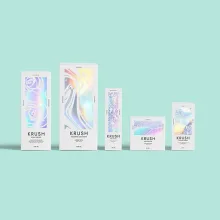
Review the range as a group. Put the bottle, carton, bag, sleeve, and set presentation side by side, then check front panel, side information, back copy, and small type. If bottle shapes differ, mark which components share artwork and which need separate dielines. A shared visual rule does not remove the need for a physical fit check.
Which material and print routes fit a lotion range?
SBS or C1S paperboard at 12 to 24 pt is a common folding-carton reference. Kraft board at 18 to 24 pt is another common range when a natural surface fits the collection. Rigid presentation formats commonly use 1.5 to 3 mm chipboard wrapped in 100 to 157 gsm art paper. Non-woven polypropylene at 80 to 120 gsm is a common reference for a reusable bag format.
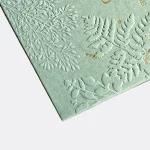
Offset CMYK suits detailed carton graphics. Digital printing can suit short-run tests or version changes, and flexo is common for corrugated surfaces. Matte or gloss lamination changes sheen. Soft-touch adds a smoother feel. Spot UV, foil stamping, embossing, and debossing create localized collection cues. Keep information panels readable, then reserve reflective or tactile treatment for selected marks.
How should a lotion range work across retail and shipping?
Retail presentation and parcel delivery may need separate outer layers. A carton or rigid set can carry the collection story, while a corrugated mailer handles the shipping role. Corrugated E, B, and C flutes are common industry references, and 32 ECT is a common strength convention for shipping-oriented cartons.
Review the complete packed set, destination, and channel before asking one package to do both jobs. Check bottle retention, opening order, retained storage, and the collection identity after the shipping layer is removed. A corrugated shipper that protects the set can still be a poor retail display, so keep the two roles clear.
What should a collection proof verify before production?
Load the actual bottles and accessories where relevant, then review every variant together. Confirm fixed and variable artwork fields, printed colors, small type, panel alignment, folds, closure, bag artwork, sleeve position, and rigid-set opening. Check that supplied product copy matches the intended package and remove any unsupported performance wording.
Custom Packaging Lane works from a 100-unit minimum, with pricing from $0.49 per unit at volume, quoted to spec. Production is typically 8 to 10 business days after proof approval, plus delivery. Free US shipping and free design support, including a free dieline, are available. The $19.99 sample kit is credited to the first order. Use custom packaging branding when the priority is a consistent collection system across cartons, bags, sleeves, and sets.
Frequently Asked Questions
Can one packaging system work across several lotion variants?
A shared lotion packaging system can keep brand position, type hierarchy, and panel order fixed while scent, formula, color, or usage information changes. Map the variable fields before artwork begins. If bottle shapes differ, confirm which formats can share artwork and which need separate dielines. Review the full range together before approval.
Which secondary format suits a lotion gift set?
A rigid box with sleeve and tray suits a presentation-led lotion gift set, while a folding carton suits a simpler single-bottle format. A coordinated paper bag can handle retail carry or gifting. Choose after checking bottle fit, accessories, opening order, storage, and the way the collection hierarchy appears across the complete set.
What material range is common for lotion cartons?
SBS or C1S paperboard at 12 to 24 pt is a common folding-carton reference. Kraft board at 18 to 24 pt is another option. Rigid formats commonly use 1.5 to 3 mm chipboard wrapped in 100 to 157 gsm art paper. Non-woven polypropylene at 80 to 120 gsm is a common reusable-bag reference.
How can packaging make a lotion range easier to shop?
Keep logo placement, type hierarchy, panel order, and the location of variant information consistent across the range. Use scent, formula, color, or naming changes to distinguish products. Check actual-size contrast and small type on every format, because a coherent system still needs separate artwork and fit checks for different bottles.
How should retail and shipping packaging work together?
A lotion range can use a carton or rigid set for presentation and a corrugated mailer for shipping. Corrugated E, B, and C flutes are common references, and 32 ECT is a common shipping-carton strength convention. Review the packed set, bottle retention, opening order, and the collection identity after the shipping layer is removed.