




























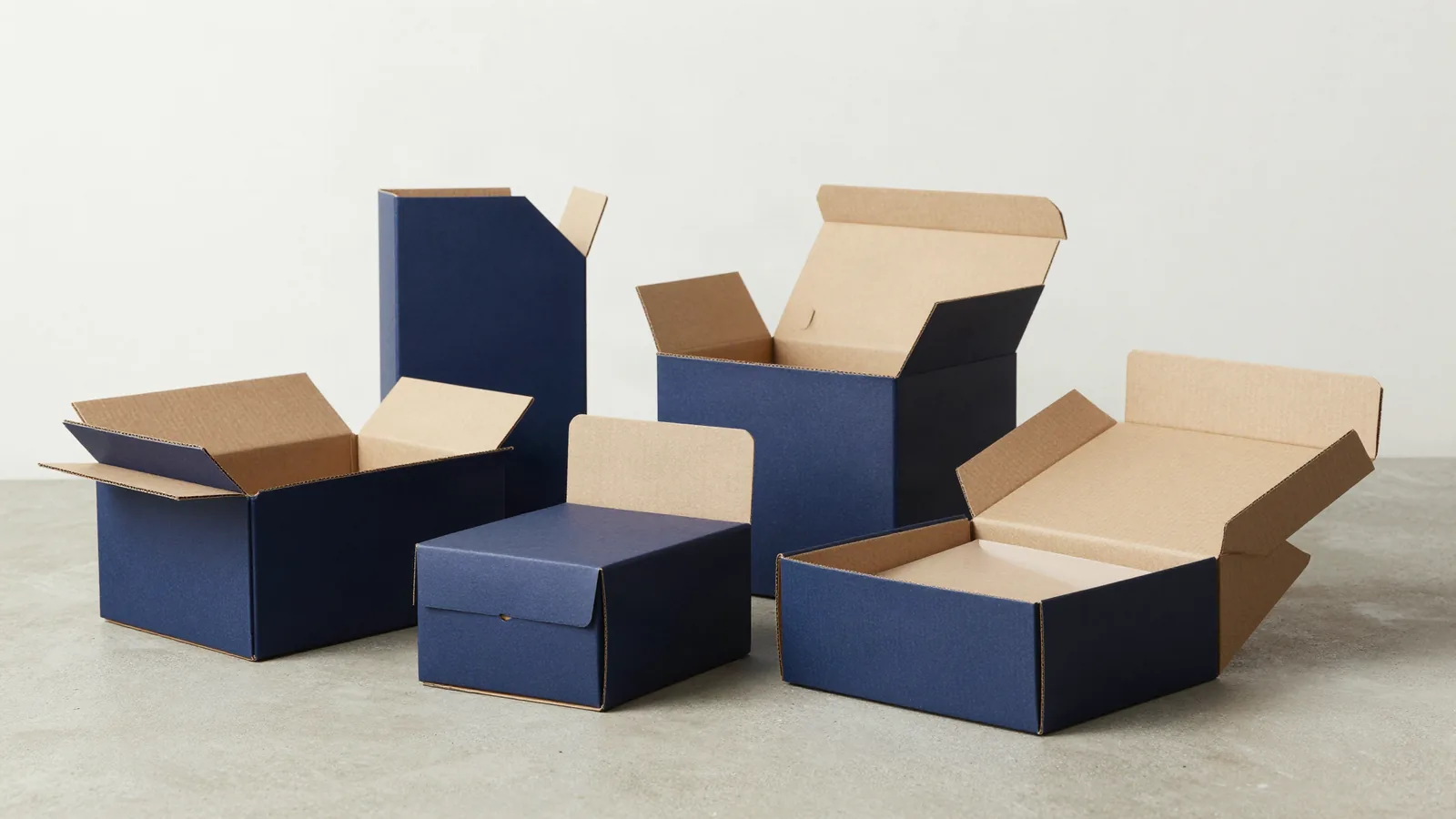




















































What makes luxe packaging feel deliberate?
The opening sequence gives the package its first physical instruction: lift a lid, pull a drawer, remove a sleeve, or separate a two-piece box. Keep the product, interior arrangement, and panel order in the same brief. If the product shifts in the tray or the brand panel faces the wall, an expensive finish cannot fix the basic handoff. Start with the product dimensions and desired hand movement, then select board and decoration.
Which material fits a rigid presentation?
Rigid chipboard is commonly 1.5 to 3 mm thick and wrapped in 100 to 157 gsm art paper. Chipboard is a dense board used for a lid, base, or tray, so it holds a shape without folding along a crease. In this reference, gsm means grams per square meter, a paper weight convention. SBS means solid bleached sulfate paperboard; C1S and C2S describe coating on one side or both sides. The unit pt is a point-based board caliper measure. SBS, C1S, or C2S paperboard in the 12 to 24 pt range suits a folding format, while kraft board in the 18 to 24 pt range keeps a visible kraft color direction.
| Material direction | Typical industry reference | Question for the brief |
|---|---|---|
| Rigid chipboard | 1.5 to 3 mm, wrapped in 100 to 157 gsm art paper | How much structure should the package carry? |
| SBS, C1S, or C2S | 12 to 24 pt folding-carton paperboard | Would a lighter flat-fold format work? |
| Kraft board | 18 to 24 pt paperboard | Should the surface show a kraft direction? |
| Metal tin | Separate container and decorated surface | Should the package use a metal format? |
Which structure should carry the presentation?
A two-piece rigid box separates lid and base, while a drawer or slide reveals the product through a pull. A magnetic flap guides a front-to-back opening, and a sleeve creates an outer reveal around another structure. A straight tuck end can be a better fit when the package needs to ship flat. Choose the structure after mapping the product, insert, closure, and shipping configuration; the movement has to work with the hand holding the box.
How should the finish hierarchy be planned?
Matte lamination reduces glare; gloss lamination reflects direct light and needs a proof check under the light where the package will be seen. Soft-touch adds a velvety surface, spot UV places gloss on selected artwork, foil stamping adds a reflective detail, and embossing or debossing changes the paper's relief. The finish plan should name the panel and the artwork layer for every effect.
| Finish | Surface or tactile role | Planning note |
|---|---|---|
| Matte lamination | Low-glare surface | Reserve high-contrast details for selected panels |
| Gloss lamination | Reflective surface | Check artwork under direct light |
| Soft-touch | Velvety tactile surface | Mark the exact panels that receive it |
| Foil stamping | Reflective decorative detail | Keep type and registration areas clear |
| Embossing or debossing | Raised or recessed paper relief | Map the effect against folds and seams |
How should artwork be prepared for a luxe box?
A workable art file separates print, foil, embossing, debossing, and structural zones before the proof is reviewed. A dieline is the flat cutting template that shows which panels face outward, where the folds and scores sit, and how the opening changes the reading order. Offset CMYK is common for detailed folding-carton artwork; digital printing can suit short runs or an early color direction. Keep tray edges, seams, glue zones, and magnet areas outside the main artwork.
Which catalog pages help choose a direction?
Use custom tin packaging as a reference for a metal presentation. The custom taper candle packaging page gives a narrow product carton comparison. For an insert or printed card direction, see custom greeting card packaging. If a small presentation carton is under consideration, compare custom printed macaron packaging boxes. The actual product still decides fit, construction, and opening.
What should a luxe packaging quote include?
A usable quote request names the product dimensions, preferred structure, board direction, wrap paper, interior arrangement, closure, artwork coverage, finish areas, quantity, and delivery location. Explain which surface carries the main brand panel and how the package should open. If a logo or pattern needs foil, embossing, debossing, or spot UV, identify the exact panel before proof approval.
What ordering terms should I expect?
Custom Packaging Lane quotes custom luxe packaging to spec from a 100-unit minimum. Pricing is from $0.49 per unit at volume, quoted to spec. Production is typically 8 to 10 business days after proof approval, plus delivery. Free US shipping, free design support, and a free dieline are available. The $19.99 sample kit is credited to the first order. For a branded structure plan, use custom boxes with logo and send the product and finish direction.
Frequently Asked Questions
Which material works for a rigid presentation box?
Rigid presentation boxes commonly use 1.5 to 3 mm chipboard wrapped in 100 to 157 gsm art paper. SBS, C1S, or C2S paperboard in the 12 to 24 pt range fits a folding-carton format, while kraft board in the 18 to 24 pt range gives a visible kraft surface. The product and opening decide which construction belongs in the brief.
What is the difference between a rigid box and a folding carton?
A rigid box uses formed chipboard for the lid, base, or tray, so the structure holds its shape without a fold. A folding carton uses scored paperboard and can ship flat more easily. Rigid construction suits a deliberate lid, drawer, or magnetic flap opening; a folding carton suits a simpler fold and printed panel arrangement.
Which finish should go on a logo or product name?
Matte lamination lowers glare, gloss lamination reflects light, and soft-touch changes the surface feel. Spot UV adds gloss to a selected graphic, while foil stamping adds a reflective mark. Embossing raises the paper and debossing recesses it. Choose the effect by panel, then check type size and registration on the proof.
How do I prepare foil and embossing artwork?
Foil and embossing artwork should arrive as separate effect areas, not as color mixed into the print file. Mark the foil, embossing, debossing, spot UV, folds, seams, glue zones, tray edges, and magnet areas on the dieline. Keep type away from scores, then inspect the digital proof at full size.
Can a physical sample help compare luxe packaging?
A physical sample lets you compare paper surface, color, foil placement, emboss depth, and the movement of a magnetic flap or drawer. Bring the actual product when possible, because fit and opening sequence affect how the finish reads. Use the sample to settle structure and surface choices before approving the production artwork.












