




























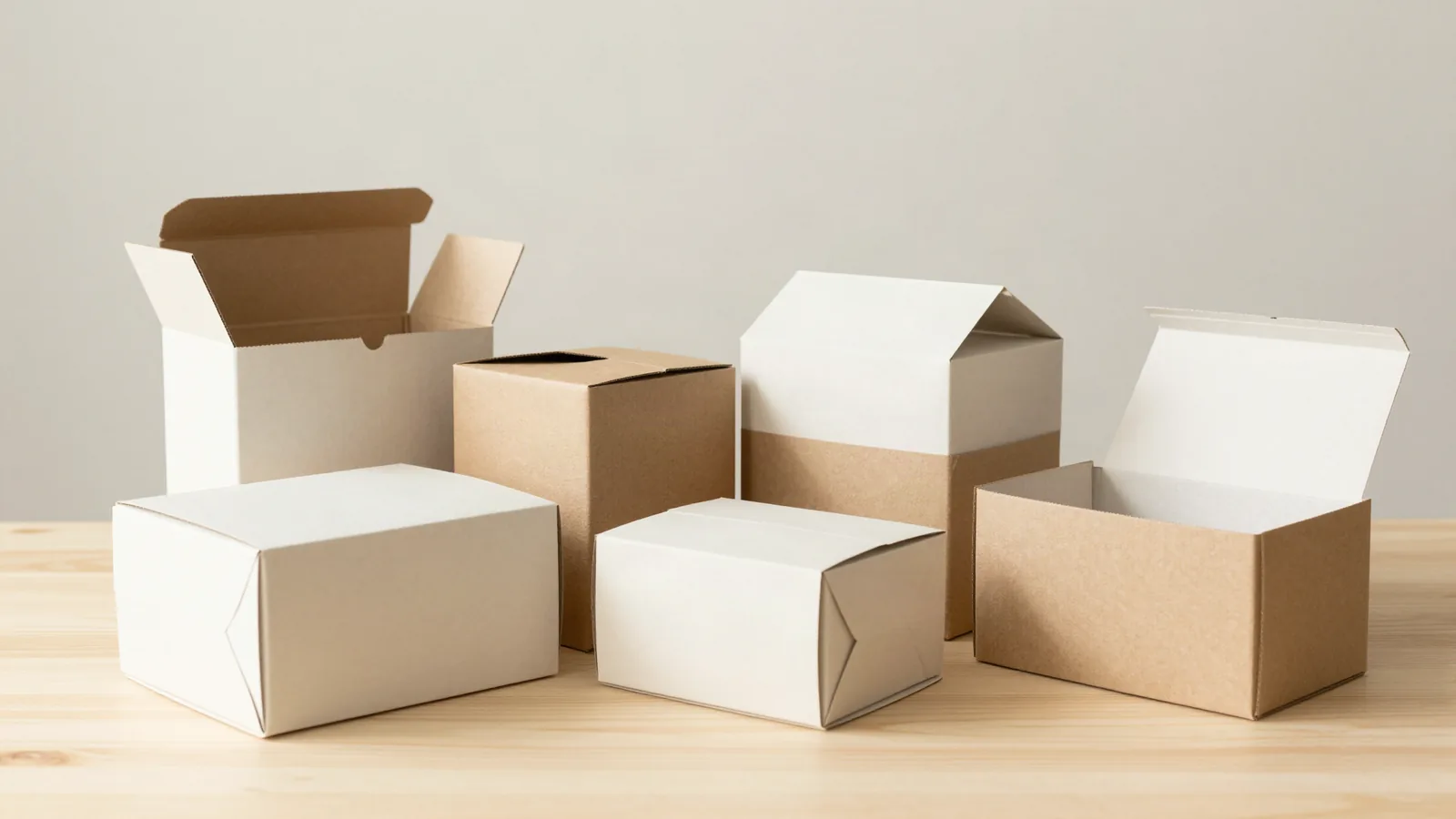




















































How can a custom mug box support a gift or campaign?
A custom mug box gives the mug a defined first view, opening sequence, and place for the campaign message. Start with the mug's packed dimensions and handle clearance, then decide whether the recipient sees the mug through a window, after lifting a lid, or after removing an insert. A custom mug box format is easier to quote when the physical reveal is written down.
The box may travel alone, inside a mailer, or as one part of a welcome kit. That choice changes the board and closure discussion. Related custom white paper bags, embossed tin packaging, and custom Woozy bottle boxes can share a visual system, but each product needs its own cavity and handling check.
Which panels should carry the brand message?
The front panel should identify the campaign or mug quickly, while the top panel should work when the box is viewed from above. Use a side panel for a short message, pattern, or color block, and reserve the back for care text or the next action. Panel hierarchy matters because the logo, copy, and opening cue cannot all occupy the same visual space.
For a folding carton, SBS, C1S, and C2S paperboard commonly fall in the 12 to 24 pt range. A rigid presentation box commonly uses 1.5 to 3 mm chipboard wrapped in 100 to 157 gsm art paper. Rigid chipboard holds its shape without a fold, while paperboard folds around the mug and can use tuck or lock closures.
Offset CMYK suits detailed carton artwork, and digital printing can suit short runs or artwork tests. Matte or gloss lamination changes the reflection. Soft-touch, spot UV, foil stamping, embossing, and debossing can mark the logo or opening cue, but the finish map must keep folds, glue zones, and closure areas clear.
| Unboxing point | Structure or artwork choice | Check before approval |
|---|---|---|
| First view | Front and top panel hierarchy | What is recognized first? |
| Opening | Mailer, tuck, drawer, or magnetic flap | Where does the hand start? |
| Mug reveal | Insert, wrap, or fitted presentation | Does the handle stay clear? |
| After opening | Interior print or short message | What remains useful after the mug is removed? |
How should the insert protect the mug and guide the reveal?
The handle is the first fit problem to draw around. The insert should keep the mug from shifting while leaving clearance around the handle, rim, and printed surface. A fitted paperboard insert keeps the package light, while a foam insert can create deeper cushioning when the brief calls for it.
Choose the packing order before finalizing the artwork. A card under the mug creates one reveal, an insert over the mug creates another, and a sleeve or tray can make the box easier to pack repeatedly. If the mug is part of a larger kit, custom DNA test kit box packaging can be a reference for information-led presentation, while wine box packaging can inform gift-oriented panel sequencing.
Which closure and finish fit the unboxing moment?
A straight tuck end and reverse tuck end fold closed from opposite panel directions. An auto-lock bottom or crash-lock bottom forms the base before the mug is inserted, while a mailer adds a shipping-oriented outer structure. A tuck closure opens quickly, a drawer or slide slows the reveal, and a magnetic flap makes the lid movement part of the presentation.
Choose the closure around the mug's weight, the packing workflow, and how often the box will be opened. Soft-touch changes the hand feel, spot UV creates a gloss detail on a matte field, foil stamping adds a reflective mark, and embossing or debossing creates raised or recessed paperboard. Keep those treatments away from scores, folds, glue tabs, and high-friction corners.
What should go into a custom mug box brief?
Send the mug's outside dimensions, handle projection, packed orientation, insert plan, opening style, panel copy, artwork status, quantity, and destination. Add whether the box is packed by hand or as part of a repeatable workflow. The brief gives the dieline a physical starting point and keeps the quote tied to the actual mug rather than the product name alone.
Use the $19.99 sample kit to compare paperboard, rigid wrap, and finish directions before approval. Custom Packaging Lane quotes from a 100-unit minimum, with pricing from $0.49 per unit at volume. Production is typically 8 to 10 business days after proof approval, plus delivery, with free US shipping and free design support. For a broader branded-box direction, see custom boxes with logo.
Frequently Asked Questions
How can a custom mug box feel like a gift?
A gift-oriented custom mug box can use a planned reveal, clear front and top panel hierarchy, a short interior message, and a closure that matches the packing workflow. A drawer, sleeve, magnetic flap, or two-piece rigid structure changes the opening rhythm. The insert still needs to hold the mug and keep the handle, rim, and printed surface clear.
Which finish changes the hand feel of a mug box?
Soft-touch, embossing, and debossing change the hand feel of a mug box. Spot UV creates a focused gloss contrast, while foil stamping adds a reflective accent. Place these treatments around the logo or opening cue, then check folds, glue zones, closure areas, and handling corners so the finished box still closes and packs cleanly.
How should a mug box fit inside a welcome kit?
A mug box inside a welcome kit should share the kit's color, type, and message hierarchy while keeping the mug's cavity specific to its handle and rim. Decide whether the mug is the first reveal or one item in a sequence, then write the packing order into the brief. Companion bags and boxes should not replace the physical fit check.
What affects the quote for a custom mug box?
A custom mug box quote should include board caliper, print coverage, finishing, quantity, tooling, shipping zone, insert complexity, interior print, closure type, and packing method. The mug's outside dimensions and handle projection belong in the same brief. Those details show whether the package needs a folding carton, rigid box, sleeve, or fitted insert.
What should I send to start a custom mug box project?
To start a custom mug box project, send the mug's outside length, width, and height, handle projection, packed orientation, desired opening, insert plan, artwork status, quantity, and destination. Add photos or a simple orientation sketch when the handle or printed face controls the fit. The dieline can then be checked against the actual mug.












