




























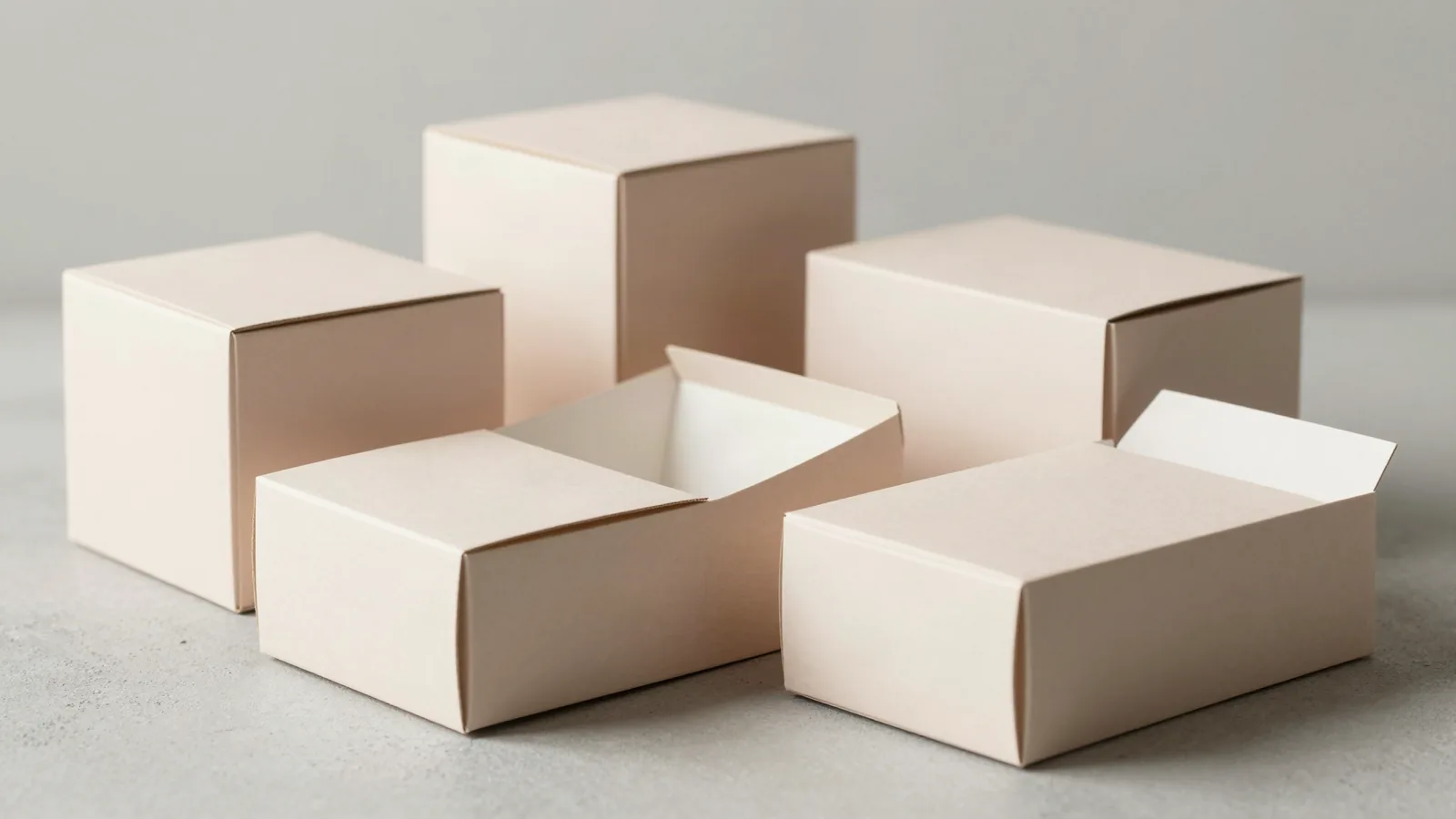




















































Mug packaging is sized around the vessel, not the product label. The handle projection, rim, base, lid, and insert determine how much room the assembled package needs. Clearance is the intentional gap between the mug and the package, and it has to be checked at the handle and rim as well as the body. A mug box can look generous from the outside while the handle still presses against a score.
What measurements does a mug box need?
Handle projection and handle opening usually decide the insert geometry before the outside box size does. Record the body diameter, overall height, taper, base shape, rim profile, lid, and accessories. Mark the orientation in which the mug should sit. If several sizes share one artwork direction, record the largest and smallest vessel separately.
| Fit field | What to capture | Why it matters |
|---|---|---|
| Body profile | Diameter, taper, base, rim shape | Sets the primary internal footprint |
| Handle | Projection, opening, preferred orientation | Determines clearance and insert geometry |
| Accessories | Lid, spoon, card, protective component | Changes the internal arrangement |
| Opening | Top, side, drawer, or mailer access | Shapes the opening sequence |
| Use environment | Shelf display, parcel delivery, gifting, mixed use | Sets structure and protection priorities |
Which insert holds a mug steady?
The insert has to support the base and stop the handle from taking the load during movement. A cutout can locate the handle, while a buffer can keep the rim and body away from the carton wall. An insert cut to the exact product size can still let a tapered mug rattle if the handle and base points are not located correctly. Check the assembled pack with the lid, card, spoon, or other accessory in place.
Should a mug use a mailer or folding carton?
A folding carton gives broad print panels for shelf presentation, while a corrugated mailer gives the parcel route a protective structure. A roll end tuck top is a common mailer direction, and FEFCO 0427 is a standard convention used to identify a style. Corrugated options include E, B, and C flutes, with 32 ECT as a general board-strength reference. Straight tuck end, reverse tuck end, auto-lock bottom, crash-lock, sleeve, drawer or slide, and two-piece rigid structures should be compared against the mug and insert plan.
| Format direction | Useful when | Question to settle |
|---|---|---|
| Folding carton | Retail panels and compact presentation matter | Does the board and insert hold the handle securely? |
| Corrugated mailer | Parcel delivery and guided opening matter | Does the interior control movement? |
| Two-piece rigid | Gift presentation and a substantial opening matter | Does the lid and base arrangement suit the mug? |
| Sleeve or drawer | An inner tray or existing container supports the mug | Can the sleeve reveal the mug without losing fit? |
Which board works for a printed mug carton?
SBS, C1S, and C2S paperboard at 12 to 24 pt are common folding-carton references. Kraft board commonly falls in the 18 to 24 pt range and gives the printed surface a different color response. Rigid chipboard commonly measures 1.5 to 3 mm and can be wrapped in 100 to 157 gsm art paper. Board caliper changes fold behavior and stiffness, while the insert handles the mug's contact points. Match the board to the assembled structure, not only to the artwork.
What should mug artwork avoid?
Keep type, barcodes, and logos away from scores, glue tabs, and the panel that the handle hides. Offset CMYK suits detailed carton artwork, while digital printing can suit short runs or version changes. Check low-resolution art, RGB files after conversion for press, missing bleed, and copy set too close to a score. Matte or gloss lamination changes sheen. Soft-touch changes hand feel. Spot UV, foil stamping, embossing, and debossing need clear finish zones on the artwork check.
How should mug dimensions be written?
Use assembled inside length x width x depth, then mark the handle, base, rim, lid, seam, and opening direction on the drawing. About 1/16 in, or 1.5 mm, is a common tolerance convention to discuss during structural review. The fit still depends on the actual vessel, insert, folds, and closure. Review the folded interior, because the flat template alone cannot show every clearance point.
Which catalog pages help compare the structure?
Related catalog formats can sharpen the questions without pretending a wine or shoe package is a mug box. Wine box packaging gives a tall-item presentation reference. Shoe box packaging gives a larger-format carton reference. Private label packaging keeps the branding brief in view, while perforated packaging raises questions about opening and access. The mug, handle, insert, and delivery environment remain the governing inputs.
What should I send before requesting a mug quote?
A side view of the actual mug settles fit questions faster than a generic product name. Send:
- The body diameter, height, handle projection, handle opening, rim, base, lid, and accessories.
- The preferred retail, shipping, gifting, or mixed-use format, plus the opening direction.
- The insert idea, board or corrugated direction, handle clearance, and any outer-carton requirement.
- The artwork panels, logo and barcode locations, bleed, print process, and finish zones.
- If any package component may touch a food or drink surface, ask us about food-contact options.
Custom Packaging Lane quotes mug packaging from a 100-unit minimum, with pricing from $0.49 per unit at volume, quoted to spec. Production is typically 8 to 10 business days after proof approval, plus delivery. The quote includes free US shipping, free design support, and a free dieline. A digital proof is sent before anything prints. The $19.99 sample kit is credited toward the first order. Start with custom packaging solutions and request the sample kit.
Frequently Asked Questions
Why does a mug handle change the box design?
A mug handle creates a projecting load point that needs clearance, support, and a defined orientation. The insert must keep the handle from pressing against a score or carton wall while the base stays supported. Record the handle projection and opening with the body diameter, height, rim, base, lid, and accessories.
Can a mug sit in a rigid box?
A mug can sit in a two-piece rigid box when the lid, base, insert, and opening suit the vessel. Rigid chipboard commonly measures 1.5 to 3 mm and can be wrapped in printed art paper. The structure still needs handle clearance and base support, so the actual mug should guide the interior.
What is FEFCO 0427 used for?
FEFCO 0427 is a standard corrugated packaging code used to identify a box style. A roll end tuck top is one mailer direction buyers compare for guided opening and parcel movement. The code does not settle the mug fit, insert layout, flute, board strength, or artwork placement.
What should a mug packaging proof show?
A mug packaging proof should show the front, side, opening, seam, glue tabs, scores, handle-facing panel, barcode area, and finish zones at the assembled scale. Check RGB conversion, bleed, low-resolution art, and type near folds before approval. The folded view matters because the product hides part of the printed panel.
Can mug packaging touch a drink surface?
Mug packaging should not be assumed to touch a drink surface. If a package component may contact food or a beverage, ask us about food-contact options before choosing the material, insert, coating, or artwork. Keep that requirement separate from the outer package's print, opening, and parcel-handling decisions.












