





















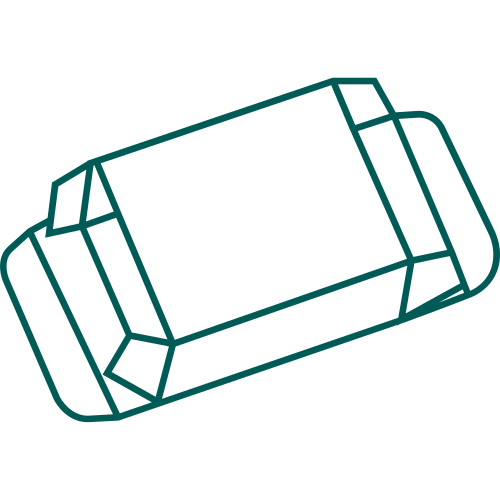





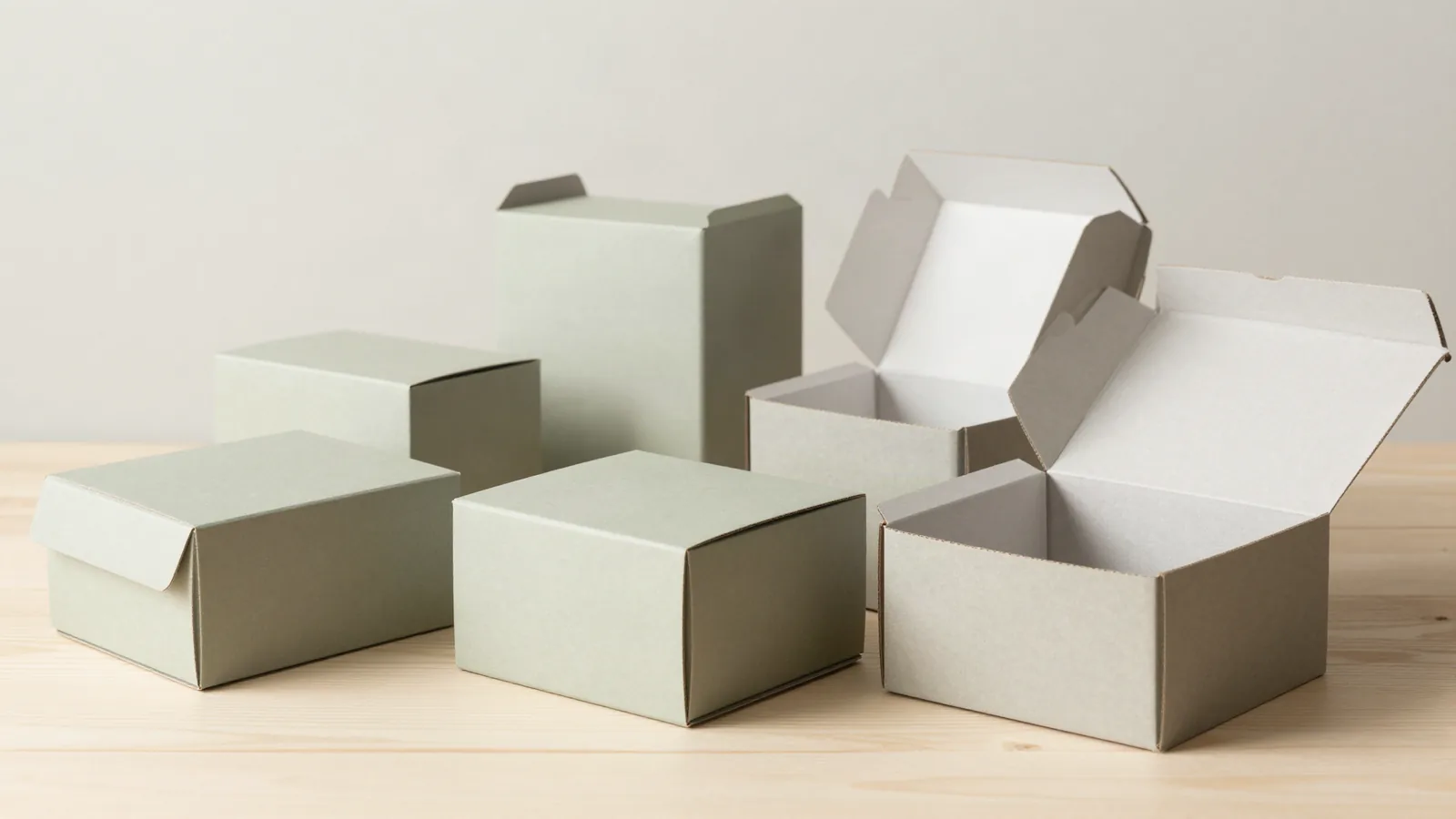





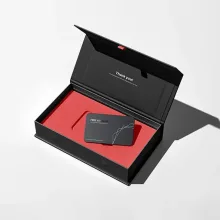











































Box genie is a broad search phrase, not a box structure. The useful brief names the product, filled orientation, opening, board, interior support, artwork, and handling path. A folding carton, corrugated mailer, rigid box, tin, and insert-led package solve different physical problems, so choose the structure before the graphic treatment. A dieline is the flat cutting template used to print, crease, cut, and fold the chosen structure.
What should a box genie brief decide first?
The filled product and its handling path should settle the first choice. A flat-shipped carton has a different assembly routine from a pre-formed rigid box. A pull-out drawer opens differently from a tuck end. State the product footprint, fragile areas, accessories, storage position, and whether presentation or shipping drives the package.
| Package direction | Typical industry reference | Decision to make |
|---|---|---|
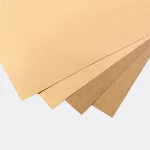
| Folding carton | SBS, solid bleached sulfate, C1S coated on one side, or C2S coated on two sides, commonly 12 to 24 pt | Which tuck, lock, panel, and clearance pattern fits? |
| Corrugated mailer | E, B, or C flute corrugated profiles, with 32 ECT as a common reference | How should the package close, stack, and move? |
| Rigid presentation box | Chipboard 1.5 to 3 mm wrapped in 100 to 157 gsm art paper | Should the opening be a lid, drawer, slide, or magnetic flap? |
| Insert-led package | Die-cut foam or fitted interior support | Where do the product, accessories, and contact points sit? |
Which board family fits the product?
SBS means solid bleached sulfate paperboard. C1S is coated on one side, while C2S is coated on two sides. Those paperboards suit printed folding cartons. E, B, and C corrugated flutes have different profiles, thicknesses, and stacking behavior. Rigid chipboard, wrapped in art paper, holds a separate base and wrap structure. Compare the filled product, panel span, fold pattern, load, storage path, and interior support before choosing the board family.
Which opening should the custom box use?
Straight tuck end and reverse tuck end cartons put the tuck panel in different positions. An auto-lock bottom or crash-lock bottom changes assembly and how the base carries the product. A two-piece rigid box separates lid and base. A drawer or slide pulls along a different opening path, while a magnetic flap closes over the front edge.
A roll end tuck top mailer is a self-closing corrugated format. FEFCO 0427 is a common industry reference for that style. Test the tuck with the actual board and filled product, because a closure that looks right on the flat layout can catch after folding.
How should an insert fit inside the box?
An insert cavity is the cut space that receives the product. Set the contact points, accessory locations, removable sections, and clearance before the insert is drawn. Die-cut foam can follow a fixed shape, but the cavity must match the real product and the finished box interior. Write dimensions as length x width x depth, and state whether they describe the box or the insert. About 1/16 in, or 1.5 mm, is a common tolerance reference for box measurements.
Custom foam box inserts and custom DNA test kit boxes are useful catalog references for insert-led planning. Wine box packaging gives a narrow, upright format to compare. Embossed tin box packaging shows a metal-container direction that should be evaluated separately from a folding carton.
How do print and finish change the package?
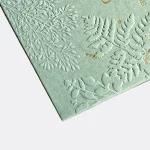
Offset CMYK is a common process for detailed paperboard graphics. Digital print can suit short runs or artwork tests, and flexo is commonly used on corrugated surfaces. Matte or gloss lamination changes sheen and surface feel. Soft-touch adds a tactile layer. Spot UV concentrates gloss in selected areas. Foil stamping, embossing, and debossing need marked locations and a board-compatible production plan.
Keep small type, barcodes, folds, tucks, locks, wraps, windows, and insert contact areas visible in the proof. Bleed should extend past the cut line as a standard prepress check. A logo treatment on one panel can need different preparation from a full-panel pattern. Coordinate structure and printed identity through custom boxes with a logo.
What should I check before approving the proof?
Approval should follow a physical and artwork check against the chosen structure.
- Match the product orientation and inside measurements to the chosen structure.
- Check the board family, caliper or flute reference, panel dimensions, and assembly direction.
- Map the insert cavity, accessories, contact points, and clearance.
- Inspect artwork around creases, tucks, locks, wraps, windows, and finish boundaries.
- Compare the assembled package with the real product or a dependable drawing.
- State whether the package is for presentation, shipping, storage, or combined use.
Quotes start at a 100-unit minimum. Pricing is from $0.49 per unit at volume, quoted to spec. Production typically takes 8 to 10 business days after proof approval, plus delivery. Free US shipping and free design support are available, and the $19.99 sample kit is credited toward the first order. Send the product dimensions, opening preference, board direction, insert plan, artwork status, and destination.
Frequently Asked Questions
When is a folding carton a better fit than a rigid box?
A folding carton fits when a cut and creased paperboard structure, flat storage, and tuck or lock closure meet the product needs. A rigid box fits when a separate base and lid, drawer, slide, or magnetic flap suits the presentation. Compare assembly, interior support, storage, opening path, and filled footprint before choosing.
How do I specify an insert cavity?
An insert cavity is the cut space that receives the product. Specify the product contact points, accessories, orientation, removable sections, and clearance, then give length x width x depth for the box and insert separately. Check the cavity against the real product or a dependable drawing before approving the proof.
What does FEFCO 0427 describe?
FEFCO 0427 is a common industry reference for a roll end tuck top mailer. The format has a branded opening and self-closing style, but the final board, inside measurements, tuck alignment, and closure behavior still need a filled-product check. Use the code as a structure reference, not a complete specification.
Which printing and finishing choices can go on a custom box?
Offset CMYK suits detailed paperboard graphics, digital print can suit short runs or artwork tests, and flexo is commonly used on corrugated board. Matte or gloss lamination changes sheen. Soft-touch, spot UV, foil stamping, embossing, and debossing each need a marked location and a check around folds, locks, and small type.
How should box dimensions be written?
Write box dimensions as length x width x depth and label them as inside or outside measurements. Identify the base, opening direction, product orientation, and insert clearance. About 1/16 in, or 1.5 mm, is a common industry reference for box measurements, so the proof should show the measurement convention clearly.