




























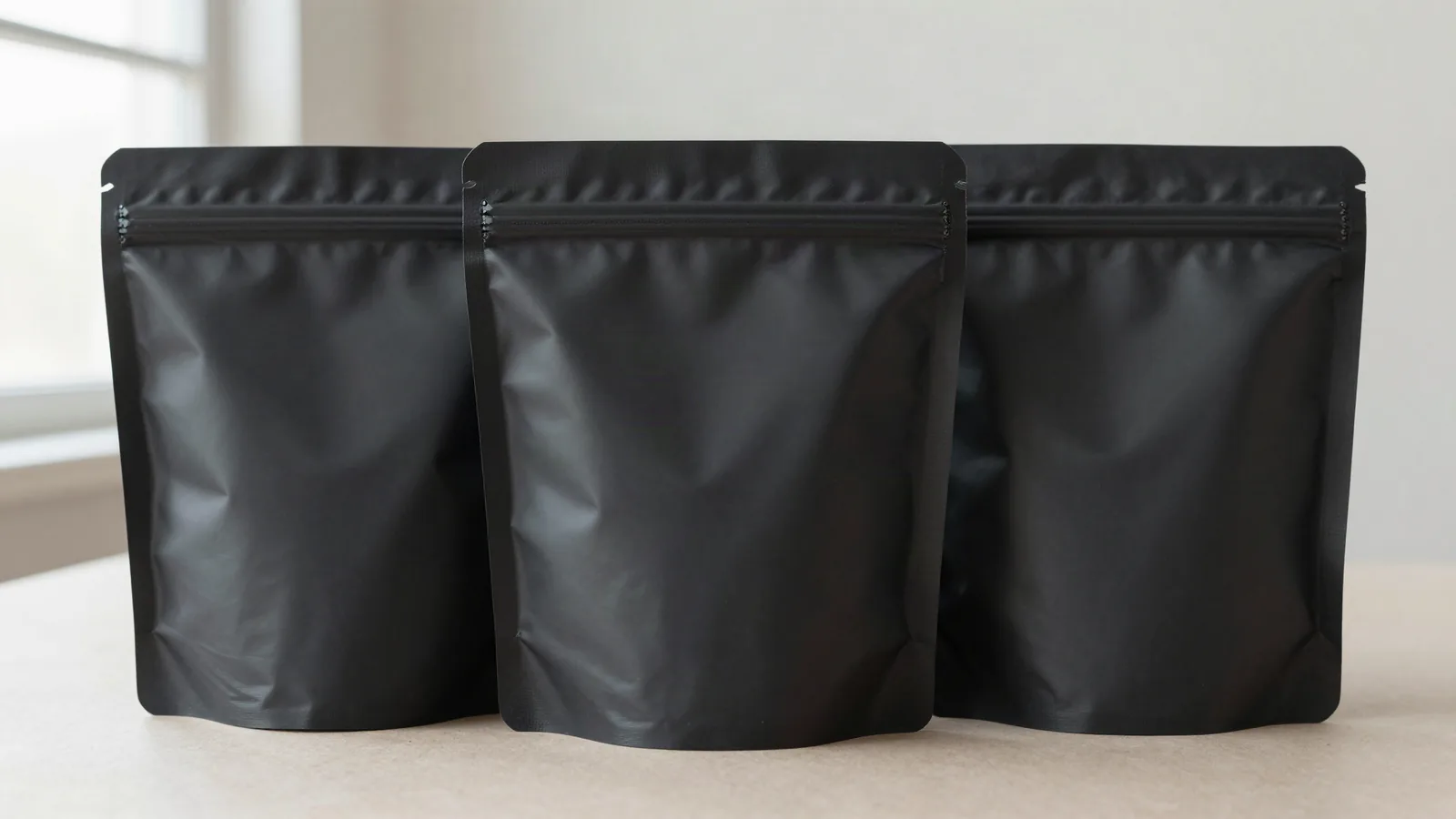




















































A custom mylar gasket is a die-cut or shaped flexible component used at an interface to seal, separate, cushion, or support a closure. Mylar commonly refers to polyester film, often written as PET, while gasket names the part's function and profile. A gasket may sit in a pouch, lid, jar closure, tray, or another package interface. Adhesive, foam, paper, foil, or another layer may belong in the construction. For the surrounding package, see custom packaging solutions.
What does a custom Mylar gasket do?
The mating parts decide whether the component needs compression, a heat-seal interface, separation, cushioning, or a removable barrier. A drawing that shows only the outside shape leaves out the load path. State where the gasket sits, what closes against it, whether a customer removes or punctures it, and whether the package opens repeatedly. The component should be reviewed with the pouch, lid, tray, or closure that will hold it.
Which dimensions belong in the gasket drawing?
The mating opening, sealing land, corner radius, hole pattern, and alignment features control fit before material selection is final. A sealing land is the flat contact area where the gasket meets its mating part. Show the outside profile, inner opening, holes, notches, tabs, and any removal feature. Use length x width x depth where a box or cavity is involved, and label inside measurements separately. About 1/16 in, or 1.5 mm, is a common box-dimension tolerance reference, not a universal gasket tolerance.
| Detail | What to provide | Why it affects the result |
|---|---|---|
| Profile | Outside shape, inner opening, holes, notches, and tabs | Fit, alignment, and sealing land |
| Material stack | Film, foil, PE sealant, adhesive, or support layer | Barrier, flexibility, bonding, and seal behavior |
| Thickness | Required caliper or compression target | Fit and assembly closure |
| Exposure | Product, temperature, moisture, and contact conditions | Construction and test plan |
How do PET, AL, and PE work together?
Layer order assigns different jobs to the film, foil, and sealant. PET is polyester film, AL is aluminum foil, and PE is polyethylene. PET can provide dimensional stability and a printable outer face. AL can add a barrier layer. PE is commonly used as a heat-sealable inner layer in flexible laminates. Those functions are not interchangeable, and the stack affects opacity, fold response, seal areas, and repeated opening. A film name alone does not define the complete gasket.
Which seal method fits the mating part?
Heat sealing, pressure application, mechanical trapping, and adhesive bonding hold a component in different ways. Heat sealing depends on a compatible sealant layer and mating temperature. Pressure application depends on contact force and surface fit. Mechanical trapping places the gasket between parts, while adhesive bonding adds an adhesive layer. Record temperature exposure, chemical exposure, moisture, compression, and the intended opening cycle. If the closure needs a child-resistant feature, put it in the closure brief and review the assembled design.
Which pouch format is related to a gasket brief?
The associated pouch format tells you whether the component belongs beside a heat seal, vacuum seal, zipper, or printed barrier face. Review custom mylar heat-seal bags for a heat-sealed flexible package. Compare custom mylar vacuum-seal bags when air removal and seal geometry matter. For reusable access, see custom mylar ziplock bags. A broader printed format is shown by custom printed mylar bags.
How should I prepare a custom gasket request?
Send the mating part, drawing, or physical reference with the measurements that control alignment and sealing.
- Profile, thickness, caliper, corner radii, holes, notches, tabs, and sealing land.
- PET, AL, and PE layer order, adhesive or support layers, and cut profile.
- Seal method, compression target, temperature, moisture, chemical, product, and contact conditions.
- Whether the part stays in place, is removed, is punctured, or is opened repeatedly.
- Artwork status, print needs, quantity, and delivery destination.
Custom Packaging Lane quotes to spec from a 100-unit minimum. Pricing is from $0.49 per unit at volume, quoted to spec. Production is typically 8 to 10 business days after proof approval, plus delivery. Free US shipping and free design support are available, with a free dieline for the component drawing. The $19.99 sample kit is credited to the first order.
Frequently Asked Questions
Is a custom mylar gasket always a complete seal?
A custom mylar gasket is not automatically a complete seal because sealing depends on the profile, compression, mating surfaces, layer stack, seal method, and closure geometry. Some gaskets separate parts or cushion contact instead. State the desired function and show the assembled interface so the drawing addresses the actual load path.
What is a sealing land?
A sealing land is the flat contact area where the gasket meets its mating part. Its width, continuity, corner radius, and alignment affect how the interface closes. Mark the sealing land on the drawing, along with holes, notches, and the inside opening, so the component is reviewed against the real closure rather than an isolated outline.
Can a gasket include holes or notches?
Yes. A custom mylar gasket can be drawn with holes, notches, tabs, corner radii, and alignment features when those details match the mating part. Show each feature on the profile and identify which edges carry sealing or positioning work. A physical sample or dimensioned drawing is more useful than an outside photograph alone.
Does PET, AL, and PE describe one material?
PET, AL, and PE describe separate layers in a laminate, not one single material. PET is polyester film, AL is aluminum foil, and PE is polyethylene sealant or film. Layer order changes print, opacity, barrier behavior, flexibility, and heat sealing, so the brief should name the complete stack instead of saying only mylar.
Can a gasket be used for food packaging?
Ask us about food-contact options for your product before selecting a gasket for food packaging. The complete assembly matters: film, foil, sealant, adhesive, ink, coating, product, and temperature exposure can all affect the proposed construction. Provide the contact surface and filling or storage conditions for review.












