
















































































How can Los Angeles buyers source custom Mylar bags?
The filled product and filling method should come before the bag name, because they determine format, seal area, and barrier needs. Custom Packaging Lane serves California buyers through a Fremont, California sales office, with the company headquartered in West Chicago. California buyers can use a local sales contact to discuss the contents, filling process, artwork, dimensions, closure, and delivery destination.
Mylar is commonly used as shorthand for high-barrier laminated flexible packaging. A typical laminate discussion may include PET, AL, and PE layers. PET can carry the printable outer surface, aluminum can contribute a barrier against light and aroma transfer, and PE is commonly associated with sealing. Share storage conditions, opening method, and handling needs before choosing a construction.
Which Mylar bag format fits my product?
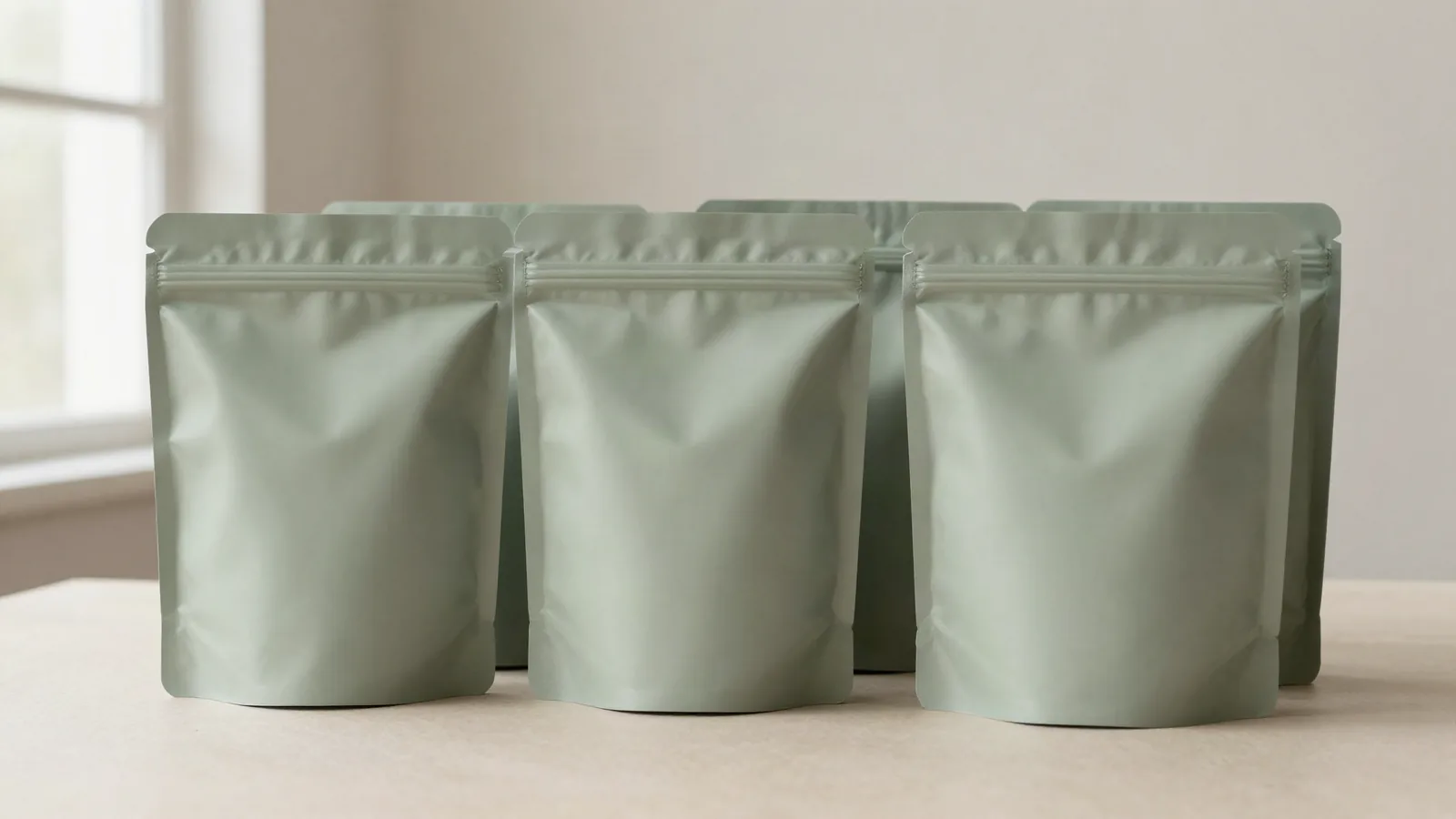
A stand-up pouch starts around 3 to 7.5 in wide in common industry discussions, but filled height and gusset depth decide whether it stands correctly. Final width and height depend on fill volume, headspace, seal area, and product shape. Flat pouches suit compact formats, while ziplock bags support repeated access. Die-cut and irregular-shape formats change the silhouette when the filling process can handle them.
For freeze-drying, see Mylar bags for freeze drying. For larger contents, compare large Mylar bags. A shaped format may point to irregular shape Mylar bags or die-cut Mylar bags. The format should follow the filled product, sealing process, and handling needs rather than the city where the project is quoted.
What laminate layers and barriers should I discuss?
PET usually carries the printable outer surface, aluminum forms a metallic barrier layer, and PE is commonly the heat-seal layer. The complete PET, AL, and PE combination matters more than one material name. Performance also depends on layer thickness, seal integrity, gussets, closures, and how the package is stored and opened.
Ask which exposure factors matter for the contents, including moisture, light, oxygen, odor transfer, and handling. If odor control is central, compare custom smell proof Mylar bags. For branded artwork, custom printed Mylar bags can frame the print discussion. Ask us about food-contact options for your product when the contents may touch the package.
Which closure and access features should I specify?
A zipper fits repeat access, while a heat-sealed top fits a single-open format. A tear notch can make opening easier, and a hang hole can support retail display. These features can be combined, but the seal area, zipper position, artwork, notch location, hang-hole placement, and filling process need to be checked together.
| Bag decision | Common packaging reference | Why it matters |
|---|---|---|
| Laminate | PET, AL, and PE layer references | Print surface, barrier, and seal behavior |
| Stand-up width | Often about 3 to 7.5 in | Frames an initial format discussion |
| Closure | Zipper, heat seal, tear notch, or combination | Controls access and opening behavior |
| Shape | Flat, stand-up, die-cut, or irregular | Matches filling, display, and handling needs |
How should Los Angeles buyers plan dimensions and artwork?
The filled bag dimensions set the artwork area, because gussets, seals, and closures consume printable space. Provide filled width and height, target fill amount, headspace, gusset needs, seal area, zipper position, and any notch or hang-hole requirement. State whether a measurement is taken before or after gusseting. Artwork should reserve space for seals, folds, rounded corners, tear features, and any transparent or foil area.
Low-resolution art can soften small type. RGB artwork can shift when it is converted for press. Missing bleed leaves the cut edge exposed, and type placed too close to a score can become hard to read after the bag is formed. A digital proof gives you a fixed file to check before anything prints.
Custom Packaging Lane works from a 100-unit minimum, with pricing from $0.49 per unit at volume, quoted to spec. Production is typically 8 to 10 business days after proof approval, plus delivery. Free US shipping, free design support, and a free dieline are available. The $19.99 sample kit is credited to the first order. California buyers can coordinate with the Fremont sales contact, then use wholesale custom packaging planning to send the filled dimensions and artwork for a quote.
Frequently Asked Questions
Does Custom Packaging Lane have a California contact for Los Angeles buyers?
Custom Packaging Lane has a Fremont, California sales office and a West Chicago headquarters. California buyers can use a local sales contact for a Mylar bag discussion. Share the product, filled dimensions, format, laminate, artwork, closure, filling method, and delivery destination so the proposed construction matches the actual job.
What does a typical Mylar laminate include?
A common flexible-packaging reference includes PET, AL, and PE layers. PET can provide the printable outer surface, aluminum can contribute barrier performance, and PE is commonly associated with heat sealing. The actual result depends on the complete construction, layer thickness, seal design, contents, storage conditions, and opening method.
What size should I consider for a stand-up pouch?
Stand-up pouches commonly fall around 3 to 7.5 inches wide as a starting industry range. Final width and height depend on fill volume, gusset depth, headspace, seal area, zipper placement, and product shape. Provide filled dimensions and target capacity rather than choosing a bag from width alone.
Which closure suits repeat access?
A zipper is commonly considered when a Mylar bag needs repeated opening and closing. A heat-sealed top may suit a single-open format, while a tear notch can make access easier. These features can be combined, but seal area, zipper position, artwork, notch placement, and the filling process need to work together.
Can a Mylar bag be shaped or printed for branding?
Common options include flat bags, stand-up pouches, die-cut bags, irregular shapes, and custom printed bags. Artwork must account for gussets, seals, zippers, rounded corners, notches, and any foil or transparent area. The chosen shape still needs to support filling, sealing, handling, and the intended product presentation.












