




























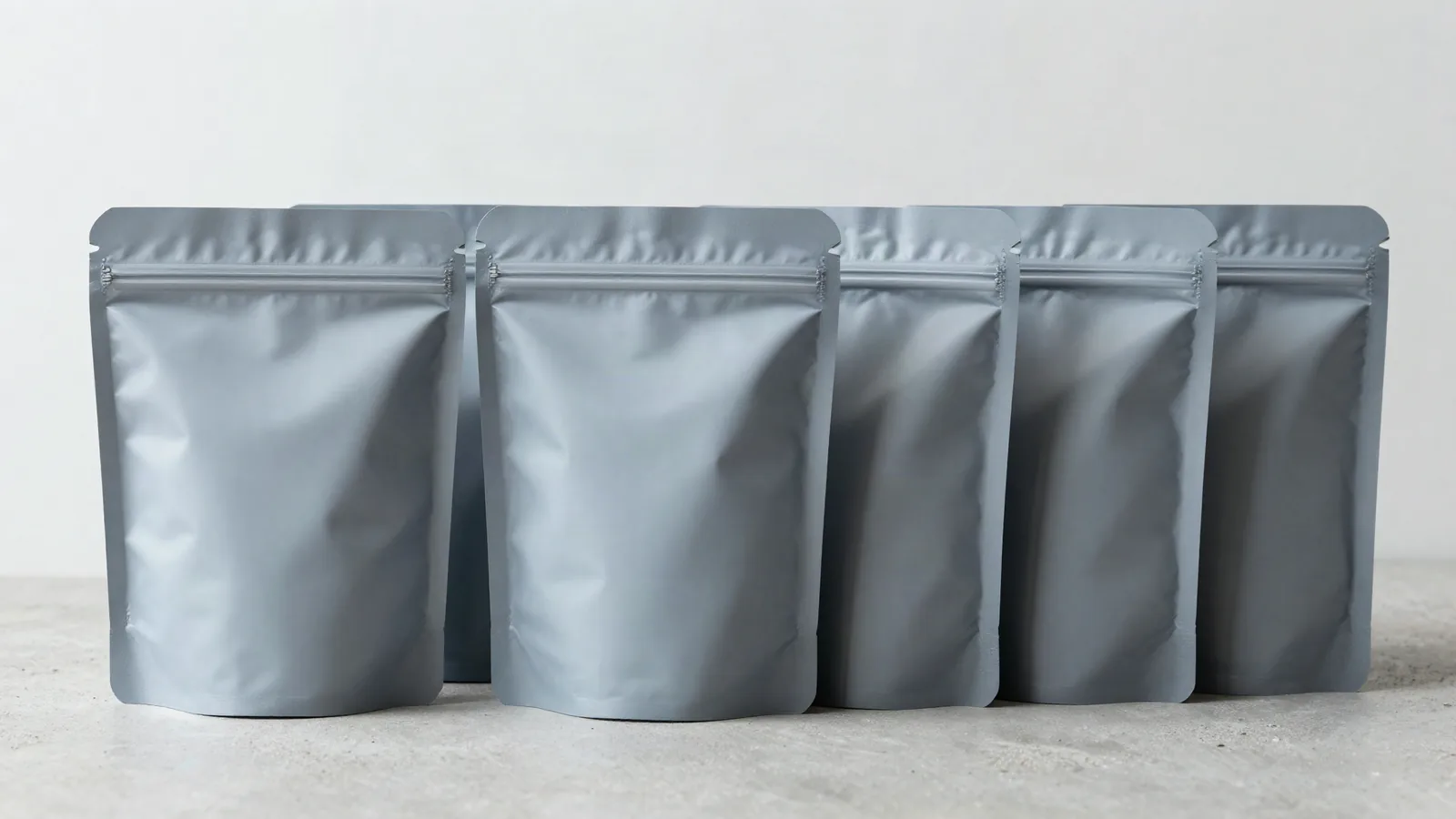




















































What does mylar packaging mean?
The word Mylar usually points to a polyester film layer, while finished mylar packaging is typically a laminated flexible structure made from several layers. PET can provide the printable outer surface, AL can block light and limit aroma transfer, and PE is commonly used as the heat-sealable inner layer. The actual layer stack matters more than the word Mylar by itself.
For custom mylar packaging, start with the product, filling method, opening preference, and storage conditions. A flat bag, zipper bag, stand-up pouch, vacuum-seal bag, or heat-seal format can require different film, seal, and artwork decisions. Ask us about food-contact options for your product when the contents will touch the package interior.
Which laminate construction should I consider?
PET carries print on the outside, AL forms a metallic barrier layer, and PE commonly forms the heat-sealable inner layer. Each layer has a separate job, but the finished bag depends on the combination, thickness, seals, gussets, and use conditions.
| Construction question | Common consideration | Why it matters |
|---|---|---|
| PET outer layer | Print surface and handling | Supports artwork presentation and everyday flexing |
| AL barrier layer | Light and aroma barrier | Consider when environmental exposure matters |
| PE sealant layer | Heat sealing and inner contact layer | Defines seal behavior and package opening |
| Window requirement | Visibility versus barrier | A window changes the protection strategy and artwork layout |
A transparent window can show the product, but it changes how the barrier and printed artwork are planned. A window commonly falls around 0.2 to 0.3 mm in windowed packaging applications. Do not choose a layer stack from a product name alone. State whether the bag needs light protection, product visibility, odor control, repeated opening, or a heat seal.
What pouch structures and access features are available?
Stand-up, flat, zipper, heat-seal, and vacuum-seal bags solve different access and filling problems. Stand-up pouches commonly measure about 3 to 7.5 in wide, although finished width should follow the product and fill volume. A zipper supports repeated access. A heat seal can support a tamper-evident presentation when the production brief calls for one. Vacuum-seal formats need enough seal area and a film construction compatible with the packing process.
Artwork planning should reserve the top seal, bottom gusset, zipper track, tear notch, rounded corners, and hang-hole area. Matte or gloss lamination changes surface appearance. Soft-touch changes the hand feel. Spot UV and foil effects can set apart selected artwork, but they need clear placement around seals, folds, and gussets. A digital proof catches low-resolution art, RGB color shifts, missing bleed, and type placed too close to a score.
Which products can use mylar packaging?
The product and the way it is filled should decide the pouch format before the artwork is built. See custom printed Mylar bags for branded flexible bag concepts. If odor containment is part of the brief, compare custom smell proof Mylar bags. For repeated opening, explore custom Mylar ziplock bags. When a pouch needs a stable base, custom stand-up pouches provide a relevant structure to assess.
How do I prepare a custom mylar packaging quote?
The quote should name the filled dimensions, target fill, seal method, and closure before it names a finish. Include desired width and height, laminate preference, headspace, gusset, artwork coverage, window requirement, and whether the bag needs a zipper, tear notch, hang hole, or vacuum seal. State how the bag will be filled and opened. We send a digital proof before anything prints.
Custom Packaging Lane quotes from a 100-unit minimum, with pricing from $0.49 per unit at volume, quoted to spec. Production is typically 8 to 10 business days after proof approval, plus delivery. Free US shipping, free design support, and a free dieline are available. The $19.99 sample kit is credited to the first order. Start with custom packaging solutions, send the filled product details, and request the first proof.
Frequently Asked Questions
Is Mylar packaging a single material?
Mylar is commonly used as a trade name for polyester film, while Mylar packaging often refers to a laminated flexible structure. A package may combine PET, AL, and PE layers so the outside can carry print, the middle can provide barrier, and the inside can support sealing. Ask for the actual layer construction instead of specifying only the word Mylar.
What is the difference between a zipper pouch and a heat-seal bag?
A zipper pouch is designed for repeated opening and closing, so the zipper position, seal area, and gusset need to work together. A heat-seal bag is closed by applying heat across a sealant layer and may suit a single-use or tamper-evident presentation. The choice depends on access, filling equipment, product protection, and the desired opening method.
What size are stand-up pouches?
Stand-up pouches commonly measure about 3 to 7.5 inches wide, but width alone does not determine capacity. Height, bottom gusset, seal area, product density, and fill method also matter. Provide the packed product dimensions and target fill so the pouch can be laid out around the real contents and checked before production.
Can mylar packaging have a printed matte finish?
Yes, the printed exterior can be evaluated with matte or gloss lamination, soft-touch, spot UV, or foil effects. The finish affects appearance, handling feel, rub resistance, and artwork contrast against a metallic or clear laminate. Keep critical text and codes away from seals, zippers, tear notches, and gussets so the finished package remains legible.
What should I ask about for food packaging?
Ask specifically about food-contact options and describe the product, filling process, storage conditions, and intended use. Flexible packaging can use different inner sealant layers and laminate constructions, so a generic Mylar label is not enough to establish suitability. The proposed structure and artwork should be checked against the product requirements before a proof is approved.












