







































































What should custom ornament packaging protect?
Custom ornament packaging needs a cavity that stops movement without pressing on the painted face, hook, raised detail, or hanging loop. Measure the ornament at its widest and tallest points, including hardware, then decide whether the box will ship, sit on a shelf, stay in seasonal storage, or be given as a gift.
A ship-ready package needs an outer structure and an internal fit. A display package may need a PET window. A keepsake package may use a rigid two-piece box with a reusable interior. The custom packaging solutions page is a broader starting point, but the ornament dimensions should drive the actual dieline.
Which materials suit ornament packaging?
SBS, C1S, and C2S paperboard commonly fall in the 12 to 24 pt range for folding cartons. SBS gives a clean coated print surface, while C1S and C2S define which sides carry coating. Rigid chipboard is commonly 1.5 to 3 mm thick and wrapped in 100 to 157 gsm art paper, so the box holds its shape without a fold.
Corrugated board is useful when parcel handling and stacking matter. E, B, and C flutes have different profiles, and 32 ECT is a common board-test reference for carton planning. A PET window around 0.2 to 0.3 mm can show the ornament while leaving a panel between the product and handling.
| Packaging direction | Common material reference | Best fit for the job |
|---|---|---|
| Printed folding carton | 12 to 24 pt SBS, C1S, or C2S | Seasonal graphics and shelf display |
| Keepsake rigid box | 1.5 to 3 mm chipboard with 100 to 157 gsm art paper wrap | Substantial presentation and storage |
| Shipping carton | E, B, or C flute corrugated board with 32 ECT as a common reference | Transit protection and stacking |
| Window carton | Paperboard with 0.2 to 0.3 mm PET | Product visibility before opening |
Which structure fits how ornaments are sold?
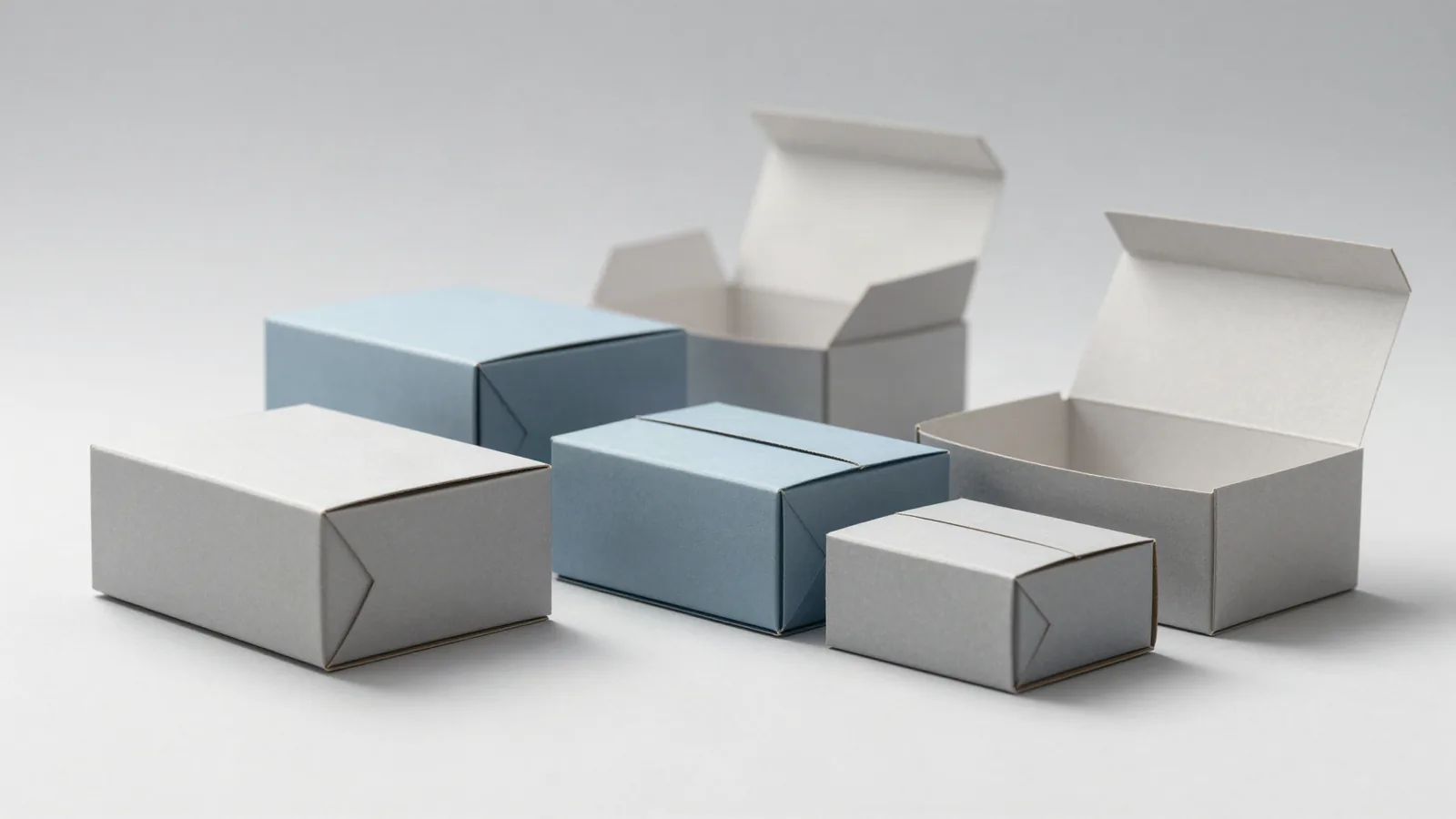
A straight tuck end keeps a familiar retail carton compact, while a reverse tuck end changes the opening direction and seam position. Auto-lock and crash-lock bottoms create a formed base for packing. A sleeve can slide over a tray or inner carton, adding a printed layer without changing the product cavity.
For a keepsake or gift, compare a two-piece rigid box, magnetic flap, drawer or slide, fitted tray, and pillow box. A mailer structure makes more sense when the package itself travels through parcel handling. Product references such as custom tin packaging, custom taper candle packaging, and custom greeting card packaging show different approaches to closure, presentation, and a clear product view.
How should the insert and window be drawn?
Draw the product cavity from inside measurements, not from an outside box guess. The insert should stop movement while leaving pressure off fragile surfaces. A die-cut paperboard cradle keeps the package light, and a foam insert can suit a delicate item when deeper cushioning is needed.
Write dimensions as length by width by depth, then allow about 1/16 in, or 1.5 mm, as a common planning tolerance. Keep the window patch clear of folds, glue flaps, and closure movement. A physical sample should confirm cavity fit, window alignment, hanging-loop position, and the way the ornament settles inside the box.
Which finishes keep seasonal artwork readable?
Offset CMYK suits detailed seasonal artwork on paperboard, while digital printing can suit short runs or artwork tests. Matte or gloss lamination changes surface reflection. Soft-touch changes the hand feel, spot UV isolates a gloss detail, and foil stamping, embossing, and debossing create tactile contrast.
Keep the front panel simple enough to read at the intended viewing distance. A window already shows the product, so dense artwork can compete with it. For several ornament shapes, share the typography and color rules, then draw separate cavities and dielines for the real dimensions.
What should I send for an ornament packaging quote?
Send the ornament dimensions, weight, hanging hardware, reference photos, opening style, quantity, artwork status, and whether the pack needs a window or shipping outer. A free dieline can turn that information into a structure for sign-off. Order the $19.99 sample kit, credited to the first order, when you want to compare materials and finishes.
Custom Packaging Lane quotes from a 100-unit minimum, with pricing from $0.49 per unit at volume. Production is typically 8 to 10 business days after proof approval, plus delivery, with free US shipping and free design support.
Frequently Asked Questions
What size should custom ornament packaging be?
Custom ornament packaging should start with the finished ornament, including its hanging loop and widest protrusion. Use inside length, width, and depth for the cavity, then leave room for an insert without allowing movement. About 1/16 in, or 1.5 mm, is a common tolerance reference, but a physical fit check should settle the final structure.
When is a clear window useful for ornament packaging?
A clear PET window is useful when the ornament's shape, color, or finish needs to be seen before opening. A 0.2 to 0.3 mm PET patch should stay clear of scores, glue flaps, and closure movement. The insert should keep the ornament from touching the window, especially when the surface has paint or raised detail.
Which structure suits a keepsake ornament?
A two-piece rigid box, drawer or slide, magnetic flap, or fitted tray can suit a keepsake ornament because each structure changes the opening and storage experience. A sleeve over a tray adds a printed outer layer. Choose after checking the insert and seasonal storage plan, because a rigid exterior does not stop movement by itself.
Can one ornament packaging dieline fit several shapes?
One visual system can cover several ornament designs, but each distinct shape needs its own cavity check. Shared panels, typography, and finishes can keep a collection consistent, while separate inserts handle height, width, and hanging hardware. Treat each silhouette as a separate fit problem when a window or rigid tray is involved.
When should an ornament package use rigid chipboard?
Rigid chipboard suits ornament packaging when the package should hold its shape, protect a delicate surface, or remain in seasonal storage. The common reference is 1.5 to 3 mm chipboard wrapped in 100 to 157 gsm art paper. Compare that construction with a folding carton when lower package weight and compact shipping matter.