






























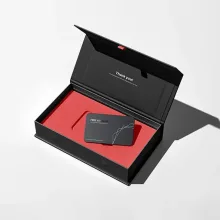

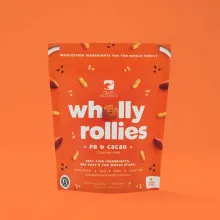









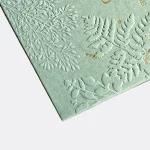
































A custom packaging center is a place to narrow a package brief by fit, material, structure, print, finish, and interior support. Start with the product and the way it is handled, then test the visual direction against a real dieline. A dieline is the flat cutting template a printer uses to print, cut, score, and fold a package. A digital proof is the file review of that package before printing. Use custom packaging solutions as a planning reference, then move toward a specific structure.
What should a custom packaging center help me decide?
The first decision is the package's job: shelf presentation, parcel handling, display, hand carrying, or a controlled opening. Product dimensions come before decoration because a finish cannot fix a poor fit. Compare the package type, board or film, opening action, interior support, print method, and surface treatment in that order. That sequence keeps the shortlist tied to the product instead of the other way around.
Which material family fits the product and presentation?
Paperboard folds, wrapped chipboard holds shape, flexible film creates a layered pack, and a PET window exposes part of the product. SBS means solid bleached sulfate paperboard. C1S has one coated side, while C2S has coated sides on both sides. Mylar is a polyester film, and a foil laminate can use PET, AL, and PE layers. The figures below are typical industry references.
| Material family | Typical industry reference | Useful comparison |
|---|---|---|
| SBS, C1S, or C2S paperboard | 12 to 24 pt | Folding cartons, printed panels, and surface finish |
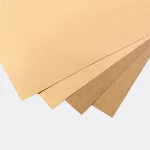
| Kraft board | 18 to 24 pt | Natural paper appearance and contrast |
| Rigid chipboard wrapped in art paper | 1.5 to 3 mm chipboard with 100 to 157 gsm art paper | Two-piece, drawer, and presentation structures |
| Mylar or foil laminate | PET, AL, and PE layers | Barrier, seal, opacity, and flexible-packaging briefs |
| PET window | 0.2 to 0.3 mm | See-through panel planning and product visibility |
A 12 to 24 pt paperboard carton gives you foldable printed panels. Kraft at 18 to 24 pt keeps more of the paper character visible. Chipboard at 1.5 to 3 mm creates a rigid wall, while 100 to 157 gsm art paper carries the printed wrap. A PET window at 0.2 to 0.3 mm changes the panel cut and the patching step, so it belongs in the structure brief.
Which structure should I compare first?
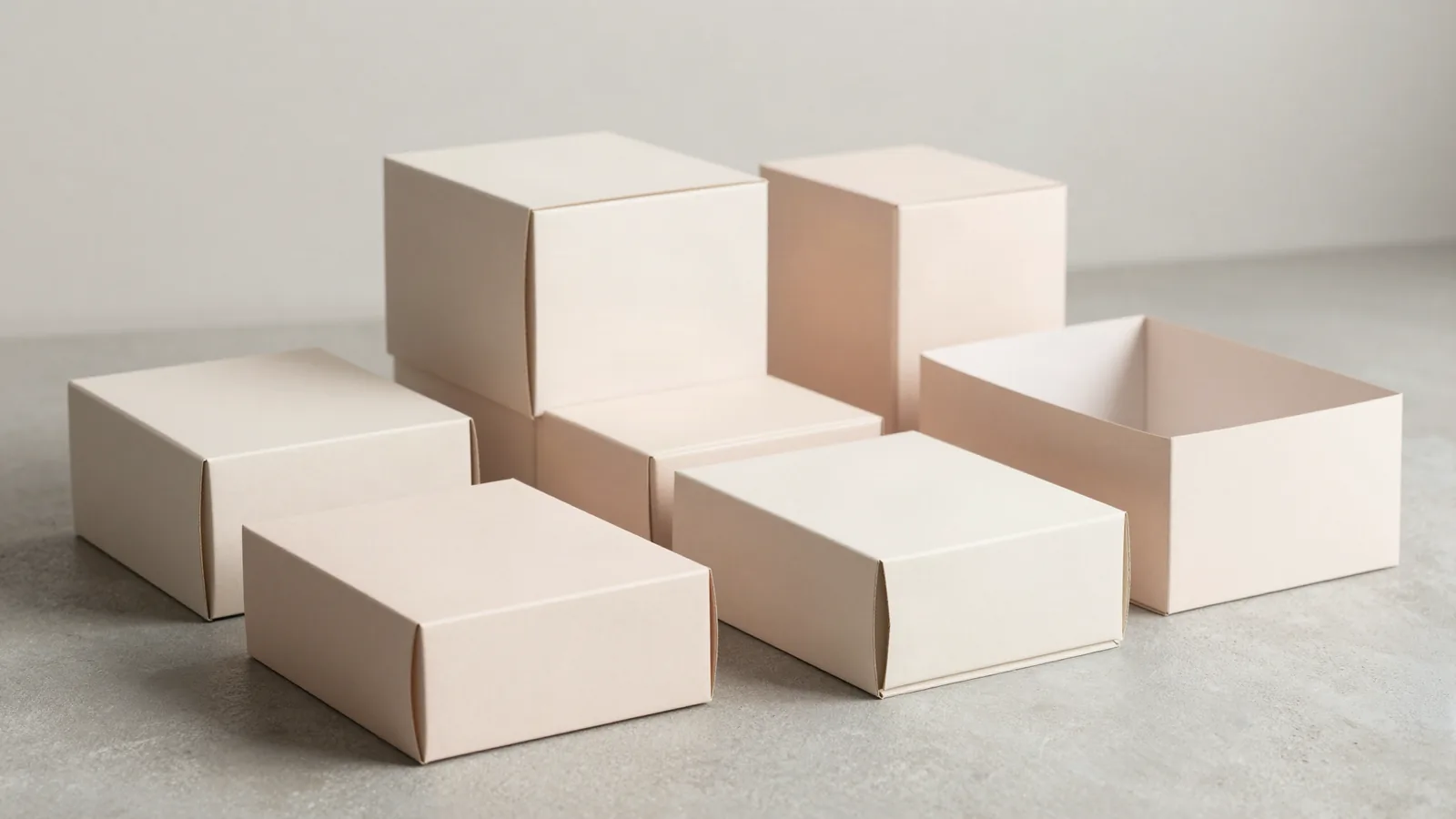
Opening action usually narrows the list faster than decoration. Straight tuck end and reverse tuck end cartons load from an end panel but place their folds differently. Two-piece rigid formats separate a base and lid. Drawer and slide structures create a pull-out opening. Magnetic flap formats add a closing panel. Gable and pillow structures change the silhouette for display or hand carrying. Choose the opening direction before deciding where a logo sits.
How do print and finish change the package?
Print method and surface treatment should be chosen together because ink coverage and glare change how panels read. Offset CMYK is commonly used for detailed paperboard graphics. Digital printing can suit short runs or a fast artwork comparison. Flexo is common for corrugated surfaces. Matte or gloss lamination sets the broad surface. Soft-touch changes the tactile feel. Spot UV, foil stamping, embossing, and debossing can isolate a mark or selected panel. Window patching is a construction step, not a finish added after the artwork is complete.
Which product examples can anchor the discussion?
Product pages make the comparison concrete when the category is still too broad. Use custom tin packaging for a metal-container direction. Custom taper candle packaging can clarify a long-format product brief. Custom printed macaron packaging boxes show how presentation and interior organization can share one structure. For a technical item, custom drone packaging boxes can frame fit, protection, and internal organization.
What information should a purchasing team bring?
A purchasing team can prevent a second quote round by sending dimensions with orientation and packout.
- Product dimensions as inside length x width x depth, plus orientation.
- Preferred material family and any need for windows, laminates, or inserts.
- Opening style, assembly preference, print coverage, and finish priorities.
- Destination, packout quantity, and any secondary carton or carrier constraint.
- Artwork status, product copy, and the parts that must remain fixed across formats.
How do I turn the shortlist into a quote?
A quote is ready for review when its construction can be described without adjectives. Name the product fit, material, structure, opening, print method, finish, insert, window, and packed configuration. Put changes against the dieline so the supplier can see what moves and what stays. Custom Packaging Lane quotes from a 100-unit minimum, with pricing from $0.49 per unit at volume, quoted to spec. Production is typically 8 to 10 business days after proof approval, plus delivery. Free US shipping, free design support, and a free dieline are available. The $19.99 sample kit is credited to the first order.
Frequently Asked Questions
What does a custom packaging center do?
A custom packaging center helps a buyer compare product fit, material, structure, print method, finish, windows, and interior support in one planning process. It is useful when a product category does not identify the right package by itself. The buyer can narrow the construction first, then use artwork and product examples to refine the brief.
How should a buyer compare packaging categories?
Compare categories by the job the package must perform. Ask whether it needs shelf presentation, parcel protection, hand carrying, product visibility, or a controlled opening. Then compare board or film, dimensions, closure, print method, finish, and interior support. This keeps an attractive format from being selected before its packout is understood.
How is SBS different from rigid chipboard?
SBS, C1S, and C2S are paperboard families commonly used for folding cartons and printed panels at 12 to 24 pt. Rigid chipboard is a thicker board, commonly 1.5 to 3 mm, wrapped in 100 to 157 gsm art paper. SBS folds into cartons, while wrapped chipboard holds a rigid shape.
When does a PET window make sense?
A PET window makes sense when seeing part of the product supports presentation or selection. A typical PET window reference is 0.2 to 0.3 mm. The brief should identify the visible area, patch location, surrounding print, and folding limits because the window changes the panel cut and the construction sequence.
What should a purchasing team send first?
Send product dimensions, orientation, packout, preferred material, opening style, print coverage, finish ideas, and any insert or window requirement. Include the destination and identify which visual rules must carry across a product range. A short description of how the item sits inside the package often answers more practical questions than the product name alone.