












































































For a buyer typing custom packaging Columbus, the address is the last line of the brief, not the package specification. Start with the product and the way it will be filled, closed, displayed, and shipped. A quote can then name a carton, mailer, sleeve, tin, or product-specific format with its assumptions visible. Include the Columbus destination early, but do not let the city keyword decide the fit.
What should I include in a Columbus packaging request?
Product dimensions belong at the top of the brief. Give length, width, and depth, then state whether each number describes the product, the usable inside cavity, or the outside package. Add orientation, clearance, insert, closure, quantity, artwork status, and ship-to details. A physical sample or dependable drawing settles questions that a product name cannot.
Describe the opening in plain language if the formal structure is unknown. Say whether the package needs a tuck flap, a sleeve, a lid, a tray, or an insert. A flat item and a narrow item can share a brand system while needing different panels, scores, and interior clearance.
Which board or material fits my package?
Board caliper sets the starting point for fold stiffness and print surface. SBS, C1S, and C2S paperboard are common folding-carton references in the 12 to 24 pt range. Kraft board in the 18 to 24 pt range keeps a natural paper tone. Rigid construction uses chipboard in the 1.5 to 3 mm range wrapped in 100 to 157 gsm art paper. These are typical industry references, and the mill, fold pattern, and package size still need review.
| Material direction | Typical industry reference | What to decide |
|---|---|---|
| Folding carton board | SBS, C1S, or C2S, 12 to 24 pt | Stiffness, fold pattern, and print surface |
| Kraft board | 18 to 24 pt | Natural paper tone and board feel |
| Rigid wrapped board | Chipboard, 1.5 to 3 mm, wrapped in 100 to 157 gsm art paper | Separate lid, base, drawer, or tray |
Rigid wrapped board holds shape without a fold, while paperboard relies on scores and panels. A buyer who needs a lid, base, or drawer should say so at the start. Finish choice can then be checked against the board rather than added after the structure is set.
Which structure matches the opening?
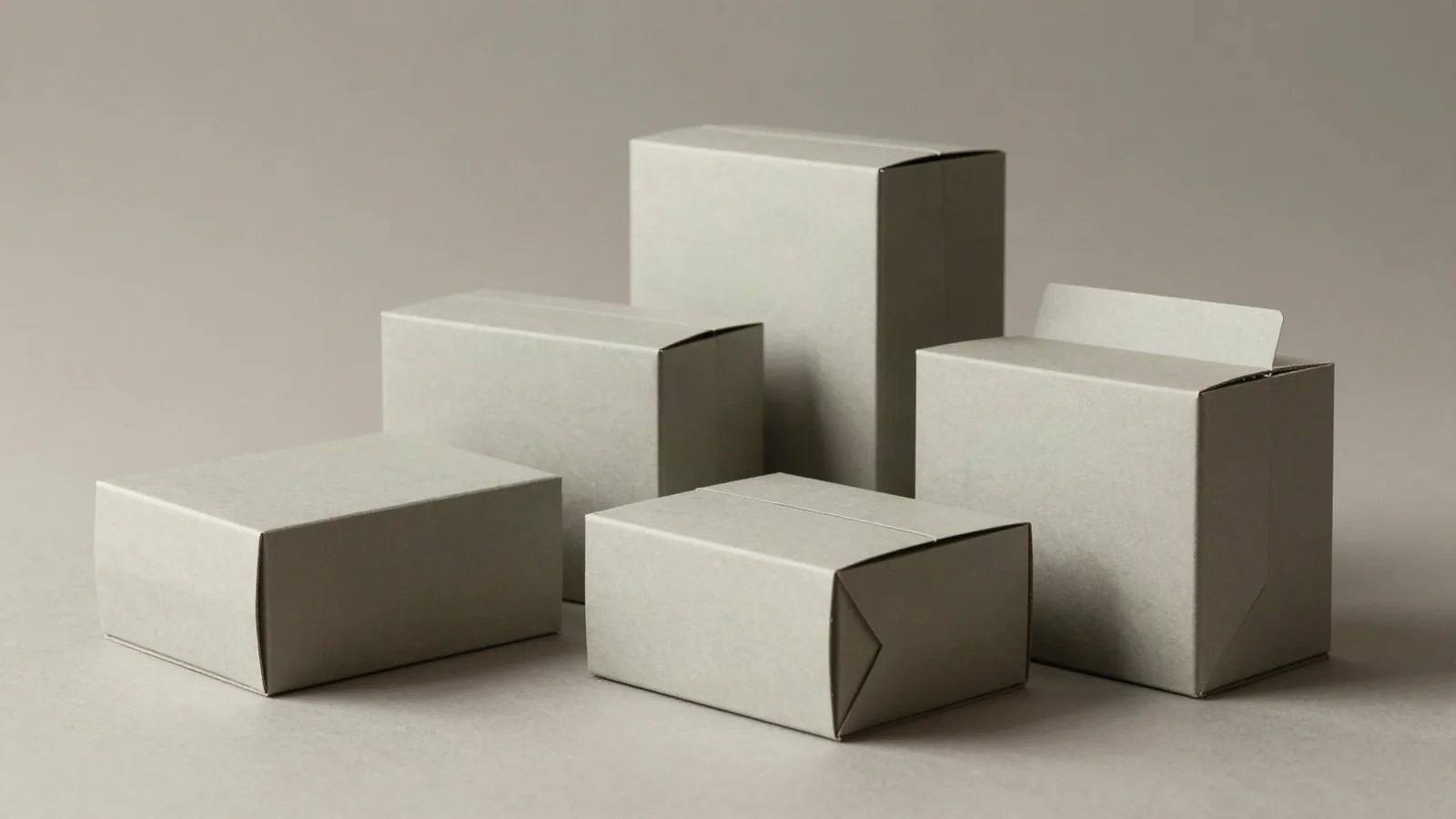
A straight tuck end puts the opening on a tuck flap, while a reverse tuck end changes the flap direction. Auto-lock bottom and crash-lock construction change how the base sets up and how much hand assembly the packout needs. A roll end tuck top mailer is commonly referenced as FEFCO 0427, a standard structure code. Name the opening and base because a broad phrase such as custom box leaves those details out.
Glue tabs, scores, and seams deserve a physical check. Type placed too close to a score can bend into the fold. An insert cut to the exact product size can hold the item tightly, but an undersized insert lets the item rattle. State the clearance and movement the packed product can accept in transit.
How should I plan print and finish?
Offset CMYK suits detailed folding-carton artwork. Digital printing is commonly considered for shorter runs or changing graphics, and flexo is common on corrugated board. RGB files can shift when converted for press. Low-resolution art stays soft. Leave bleed outside the cut line and keep barcodes and type clear of scores, glue tabs, and seams.
Matte and gloss lamination change surface appearance. Soft-touch changes hand feel. Spot UV, foil stamping, embossing, and debossing create selected areas of contrast or relief. Mark each finish zone on the proof. Check the logo panel, information panel, closure, window area if any, and folds before print approval.
How do measurements affect a Columbus delivery quote?
Write dimensions as length x width x depth and label inside versus outside. Inside measurements describe the usable cavity. A common packaging convention is about 1/16 in, or 1.5 mm, tolerance, but the structure and board caliper set the final fit discussion. For US ground planning, carrier dimensional weight is commonly discussed as L x W x H / 139. Give the outside dimensions when several packed units will travel inside a master carton.
Master-carton planning starts with the number of finished boxes that nest without crushing corners or forcing a flap open. Give the carton count and pallet arrangement if you already know them. If you do not, keep the first quote tied to package dimensions instead of inventing a packout.
Which catalog examples help with unusual shapes?
Catalog pages are format references, not substitutes for the product drawing. Custom tin packaging frames a metal container. Custom taper candle packaging shows why a narrow item needs a specific fit. Custom stevia packaging gives a compact folding-carton reference, while custom greeting card packaging shows a flat presentation format.
A dieline is the flat cutting template a printer uses to print and cut the package. It records panels, scores, bleed, glue areas, and cut lines. The final dieline follows the actual item, its clearance, its opening, and the way the finished package will travel.
What should I send before the quote is prepared?
- The product, photos, a physical reference, or a dependable drawing.
- Length, width, depth, product orientation, clearance, and inside versus outside measurements.
- The structure, board or material direction, closure, insert, window, and packout.
- Print coverage, artwork status, safe areas, barcode placement, and requested finish treatments.
- Quantity, Columbus delivery details, outer shipping configuration, and any master-carton plan.
CPL quotes Columbus projects to a 100-unit minimum. Pricing is from $0.49 per unit at volume, quoted to spec. Production is typically 8 to 10 business days after proof approval, plus delivery. Free US shipping and free design support are available, and the free dieline is part of the preparation. The $19.99 sample kit is credited to the first order. Send the finished brief through custom packaging solutions.
Frequently Asked Questions
Does the Columbus address determine the package size?
A Columbus delivery address determines where the finished package goes, not its cavity dimensions. The product's length, width, depth, clearance, closure, insert, and outer shipping configuration set the package specification. Put the address in the brief so delivery planning stays visible while the structure remains tied to the item.
Should box dimensions be inside or outside?
Inside dimensions are the clearest starting point for product fit. Write length x width x depth, then label any outside dimensions separately. Inside figures describe usable cavity space, while outside figures support carton nesting, pallet planning, and carrier calculations. Mixing the two makes a dieline and shipping discussion harder to check.
When is rigid wrapped board useful?
Rigid chipboard wrapped in art paper is useful when a package needs a separate lid, base, drawer, or tray and must hold shape without a fold. The 1.5 to 3 mm board thickness and 100 to 157 gsm wrap affect the construction, joints, and opening sequence, so describe the intended presentation before the dieline is drawn.
What can spoil a printed proof?
Low-resolution artwork can look soft at print size, and RGB artwork can shift during press conversion. Missing bleed leaves a white edge after cutting. Type placed too close to a score, glue tab, or seam can fold out of position. Check those areas on the digital proof before approving the final file.
Can catalog pages replace a sample or drawing?
Catalog pages are useful for comparing structures, closures, and presentation formats, but they do not replace the actual product dimensions. Send a physical reference, clear photos, or a dependable drawing when fit matters. The final package should follow the product, clearance, insert, artwork, and opening sequence shown in the request.