




























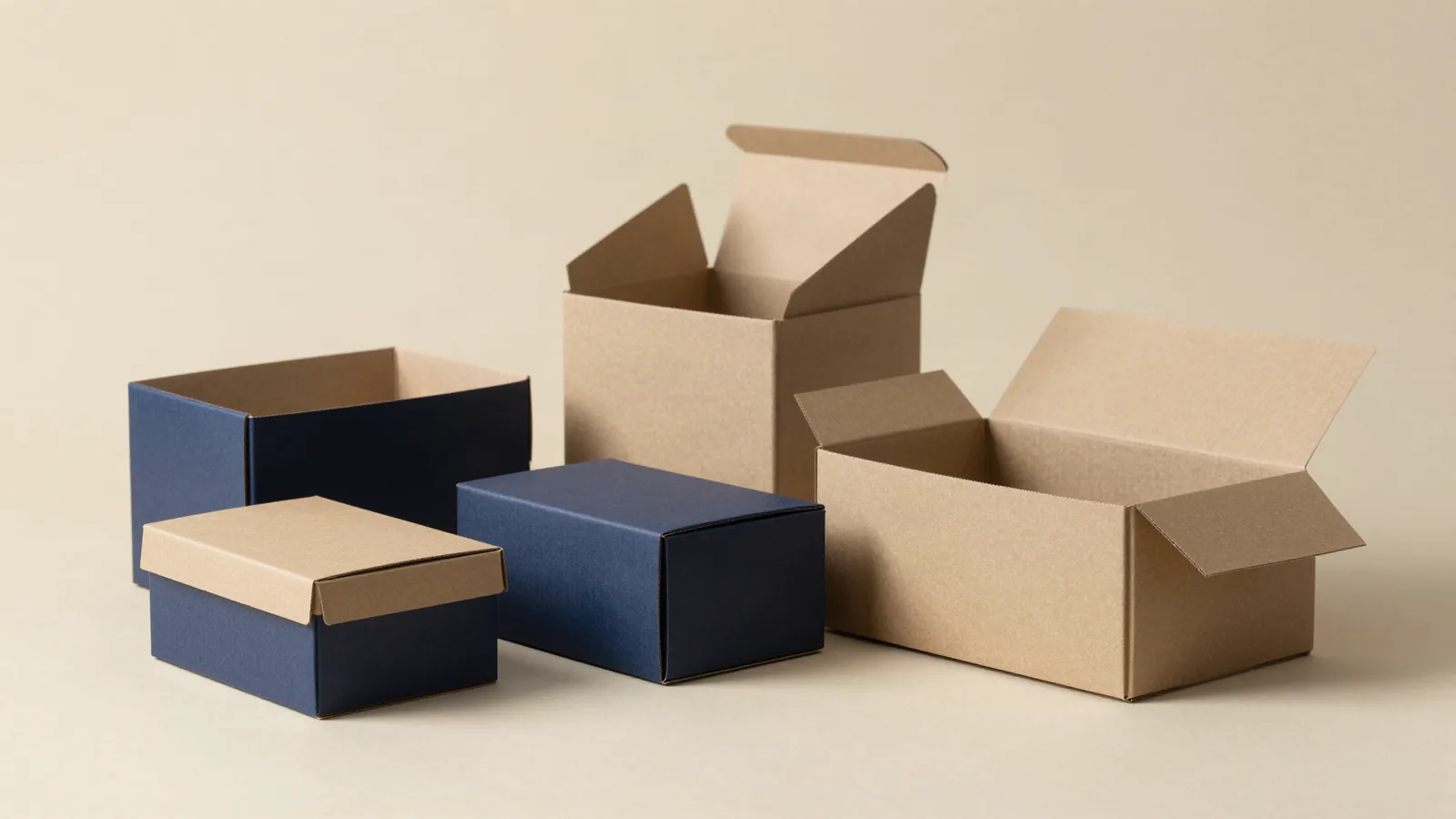




















































Rhode Island buyers can make a packaging request easier to price by sending a construction brief, not a vague product name. The brief should state what goes inside, the inside dimensions, how the package opens, what the customer sees, the board or film, the print coverage, and the delivery destination. The state changes the ship-to line. It does not replace the package specification.
What should a Rhode Island quote brief contain?
Begin with inside length, width, and depth, then name the product, structure, finish, quantity, and delivery destination. Packaging dimensions are commonly written as length x width x depth. A common convention is about 1/16 in, or 1.5 mm, tolerance when checking fit. The final amount of clearance depends on the product, insert, closure, and assembly method.
Structure belongs in the first request. Straight tuck end and reverse tuck end cartons open from different panels. Auto-lock bottom and crash-lock bases change how the packer closes the box. A sleeve can add an outer printed layer around an inner pack. Name the structure before artwork is finalized.
Which board should a Rhode Island buyer compare?
The board choice follows product weight, folding needs, printed surface, and finish. These common industry references give a quote enough detail to start a real comparison.
| Packaging need | Common industry option | What buyers compare |
|---|---|---|
| Printed retail carton | SBS or C1S, 12 to 24 pt | Surface, stiffness, and folding behavior |
| Natural-looking carton | Kraft board, 18 to 24 pt | Uncoated appearance and board feel |
| Rigid presentation | Rigid chipboard, 1.5 to 3 mm, wrapped in 100 to 157 gsm art paper | Opening feel, wrap, tray, and lid alignment |
| Visible product area | PET window, 0.2 to 0.3 mm | Product visibility and board around the opening |
What do SBS, C1S, C2S, and kraft mean?
SBS has a smooth printed surface, C1S has one coated side, and C2S has coated faces on both sides. SBS, C1S, and C2S commonly fall in the 12 to 24 pt range. Kraft board commonly falls in the 18 to 24 pt range and gives a more natural surface direction. The board still needs to fold cleanly around the actual product.
When does a rigid box or clear window make sense?
Rigid chipboard holds shape, while a clear window trades some board area for product visibility. Rigid boxes use chipboard in the 1.5 to 3 mm range with a 100 to 157 gsm art paper wrap. PET around 0.2 to 0.3 mm is a common general reference for window film. The dieline should show the opening, remaining board, folds, and glue zones.
For products that need a barrier direction, mylar or foil laminates commonly use PET, AL, and PE layers. Ask us about food-contact options for your product when the packed item will touch the packaging. Material selection should follow the product environment and the construction, not appearance alone.
What should artwork avoid before proofing?
Keep type away from scores, trim, and glue tabs, and leave bleed outside the cut line. Low-resolution art can leave soft edges. RGB artwork can shift when it is converted for press. Barcode space needs to stay clear, and a logo that crosses a fold can read differently after assembly. Mark these restricted zones on the dieline.
Which finish belongs on a printed carton?
Matte and gloss lamination change surface appearance, while soft-touch changes hand feel. Spot UV adds a localized contrast area. Foil stamping creates a reflective accent. Embossing and debossing create relief in the board. Put the selected treatment on the finish map, then check its position against folds, scores, seams, and the panel hierarchy.
Which catalog formats help narrow the request?
A product format can expose the construction question that a general box name hides. Custom tin packaging suits a compact item that needs a metal container and a different opening behavior. Custom taper candle packaging puts length, protection, and internal clearance first. Custom greeting card packaging organizes flat printed goods with a clear retail-facing surface.
What should be checked before proof approval?
The final inspection should use the product in the assembled package, not only the flat artwork.
- Confirm the product sits within the stated length, width, and depth without crushing or excess movement.
- Check folds, tuck flaps, glue areas, inserts, and windows on the dieline.
- Review text legibility, panel orientation, barcode placement, and finish callouts.
- Open the package with the product in place and check the reveal.
How can Rhode Island buyers start the order?
The handoff starts with a product reference or drawing, inside dimensions, structure, artwork, finish, quantity, and destination. Use custom packaging solutions for the broader route, or request the sample kit to compare materials and construction.
Custom Packaging Lane quotes projects from a 100-unit minimum. Pricing is from $0.49 per unit at volume, quoted to spec. Production is typically 8 to 10 business days after proof approval, plus delivery. Free US shipping, free design support, and a free dieline are included in the offer. The $19.99 sample kit is credited to the first order.
Frequently Asked Questions
Should package dimensions be inside or outside?
Package dimensions should state whether they are inside or outside measurements. Use inside length, width, and depth to check product fit, then record the outside size for the finished package. A common convention is about 1/16 in, or 1.5 mm, tolerance, with final clearance set by the product and closure.
How does C1S differ from C2S?
C1S paperboard has one coated side, while C2S paperboard has coated faces on both sides. SBS is commonly chosen for a smooth printed surface. SBS, C1S, and C2S commonly fall in the 12 to 24 pt range, while kraft board commonly falls in the 18 to 24 pt range.
What makes a rigid box different from a folding carton?
A rigid box uses chipboard that holds its shape, then receives a paper wrap, tray, lid, or sleeve. A folding carton uses paperboard that is creased and folded into its final form. Rigid chipboard commonly falls in the 1.5 to 3 mm range, with 100 to 157 gsm art paper used for the wrap.
How is a PET window planned?
A PET window is a clear film patch over an opening in the package. PET around 0.2 to 0.3 mm is a common general reference. The dieline should show the opening, board around it, folds, scores, glue zones, and the product position so the window stays clear after assembly.
Which artwork mistakes can prepress catch?
Prepress can catch low-resolution art, RGB artwork that shifts during press conversion, type placed too close to a score, missing bleed, covered barcode space, and artwork that crosses a glue tab. The check should compare the file with the dieline, the closure, the folds, and the finished product orientation.












