










































































Custom packaging warehousing is the planning work that connects package design with storage, picking, packing, replenishment, and shipment preparation. A warehouse-ready request describes the printed package, how it arrives, where it sits, and how an operator issues it. A pack-out is the order in which the product, packaging parts, and shipper come together at the packing bench.
What has to be in a warehouse-ready packaging brief?
The brief needs a package list, storage state, issue unit, and pack-out sequence before shelf space can be planned. Name each retail carton, tin, rigid box, insert, sleeve, bag, and outer shipper. State which components are stored together and which are pulled separately. If inventory storage or fulfillment is part of the request, describe it as a separate service question. Packaging supply alone does not define who stores stock, assembles orders, or dispatches parcels.
How do flat and assembled packages change storage?
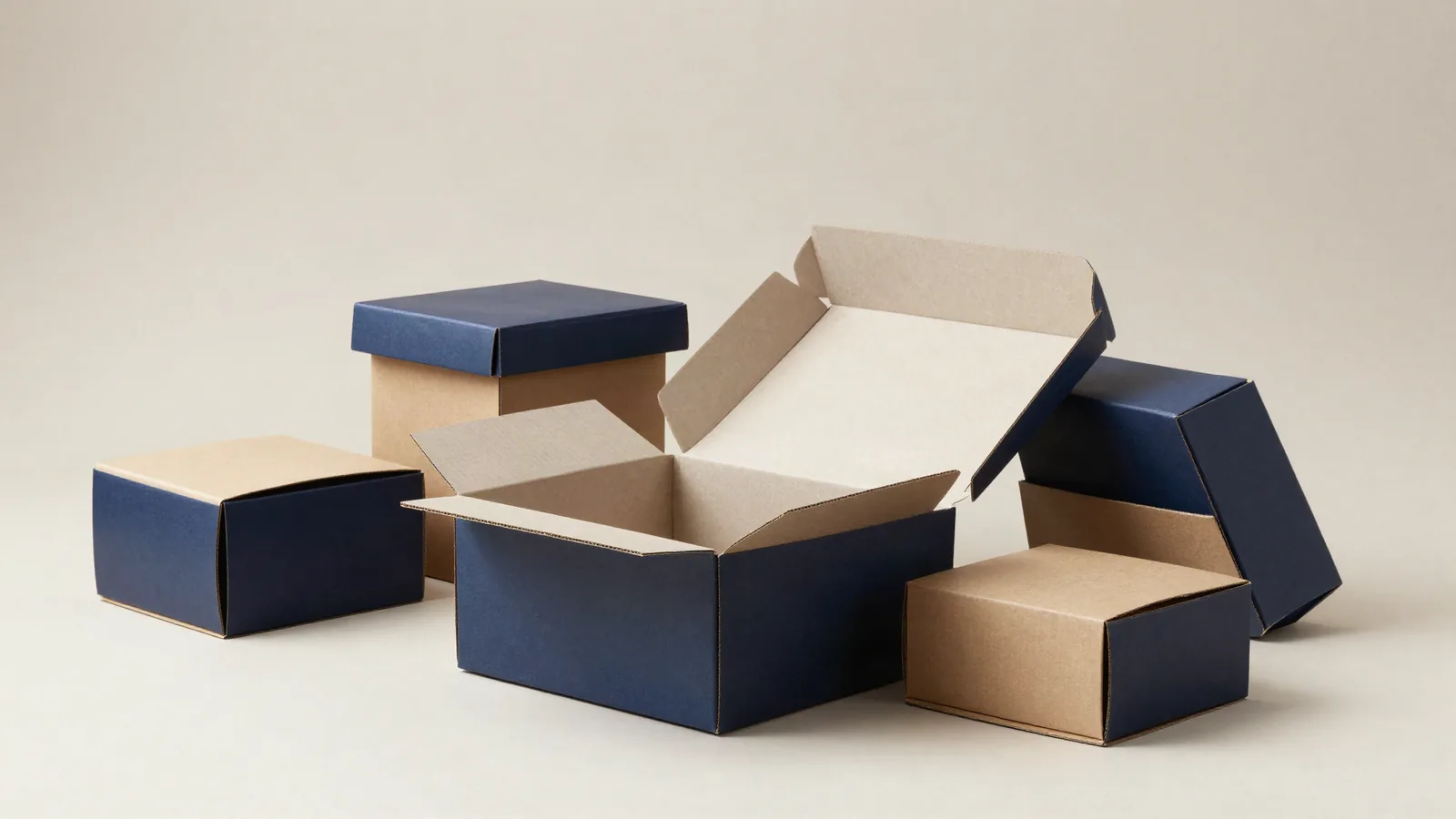
Flat folding cartons take less formed space before assembly, while rigid boxes and tins arrive with more three-dimensional volume. Flat blanks still need protection from crushed scores, bent corners, and mixed artwork versions. Rigid boxes need shelf depth that matches their assembled size. Tins may nest, stack, or need separators. A sleeve and tray create two pieces that must stay paired through picking and replenishment.
| Format | Typical industry reference | Warehouse check |
|---|---|---|
| Flat folding carton | SBS, C1S, or C2S paperboard, 12 to 24 pt | Count flat blanks by stack or master carton |
| Rigid presentation box | 1.5 to 3 mm chipboard wrapped in 100 to 157 gsm art paper | Plan shelf depth for formed volume |
| Metal tin | Formed shell with fitted lid or closure | Check nesting and separator needs |
| Corrugated shipper | E, B, or C flute, with 32 ECT as a common reference | Record outside size and pack-out pattern |
Real catalog formats make the request easier to describe. Custom tin packaging brings nesting and lid fit into the discussion. Custom taper candle packaging raises questions about long product orientation. Custom stevia packaging gives a compact carton reference, while custom drone packaging boxes show why inserts and larger outer dimensions need their own lines.
Which dimensions should be recorded for each packaging SKU?
A packaging SKU is one named variant or component set, and its measurements should appear on separate product, inside-package, assembled outside-package, and shipper lines. Write rectangular dimensions as length x width x depth. Inside dimensions describe the cavity and clearance. Outside dimensions describe shelving, pallet, bag, and parcel space. About 1/16 in, or 1.5 mm, is a common packaging reference for tolerance, but the finished result still depends on board, structure, closure, and surface treatment.
Record the insert separately. An insert cut to the exact product size can slow loading if the product has no removal clearance. An insert with too much room lets the product rattle. The same distinction matters when a flat blank is confused with the assembled carton footprint.
How do print and finish choices affect warehouse handling?
The package record should place the variant code beside the substrate, print method, and finish. Offset CMYK is common for detailed paperboard artwork. Flexo is common for corrugated surfaces. Digital printing can suit short runs or artwork tests. Matte or gloss lamination changes the surface, while soft-touch, spot UV, foil stamping, embossing, and debossing create separate finish notes. Keep glue tabs, scores, barcode space, and variant identifiers visible in the proof file.
How should replenishment be mapped at the packing bench?
The operator should be able to see which component is pulled first and which pieces stay paired. Write the sequence for each variant, such as carton, insert, product, closure, and outer shipper, then mark any step that changes between variants. State whether a component can substitute for another one. Include the unit of issue, carton labels, and delivery destination so a replenishment request does not become a guessing exercise.
What should I send with a warehouse-oriented quote request?
Send quantities by variant, the delivery destination, and a package list with the information below.
- Flat or assembled storage state and unit of issue.
- Product, inside package, outside package, insert, and shipper dimensions.
- Board, tin, rigid, corrugated, print, closure, and finish preferences.
- Pack-out order, replenishment notes, and any separate storage question.
Custom Packaging Lane quotes custom packaging warehousing to spec from a 100-unit minimum. Pricing is from $0.49 per unit at volume, quoted to spec. Production is typically 8 to 10 business days after proof approval, plus delivery. Free US shipping, free design support, and a free dieline are available. The $19.99 sample kit is credited toward the first order. Start the request through wholesale custom packaging.
Frequently Asked Questions
Does custom packaging warehousing include storage or fulfillment?
Custom packaging warehousing planning does not by itself assign a storage or fulfillment arrangement. The brief should say who holds inventory, who assembles the package, and who dispatches the finished order. Treat those duties as separate service requirements so the packaging specification is not mistaken for a warehouse contract.
Why do flat cartons and rigid boxes need different storage plans?
Flat cartons are stored as blanks before assembly, while rigid boxes already occupy formed volume. Flat blanks need protection for scores and corners. Rigid boxes need shelf depth and stacking rules. A sleeve and tray also create matched components, so the picking record should identify them as one package set.
Which measurements matter for warehouse package planning?
Warehouse package planning uses separate product, inside package, assembled outside package, and outer shipper measurements. Rectangular dimensions are usually written as length x width x depth. About 1/16 in, or 1.5 mm, is a common tolerance reference, but the board and structure still need a proof check.
How should several packaging variants be labeled?
Give every packaging variant a distinct name tied to the product, structure, artwork version, and finish. State which parts are interchangeable and which parts must stay together. Quantities should be listed by variant, not only as one combined total, so picking and replenishment records match the cartons on the shelf.
Why should print and finish appear in the warehouse record?
Print and finish notes prevent similar cartons from being mixed during picking. Record the substrate, print method, lamination, soft-touch treatment, spot UV, foil, embossing, or debossing beside the variant identifier. The artwork file should also leave scores, glue tabs, closures, and barcode space clear.