




























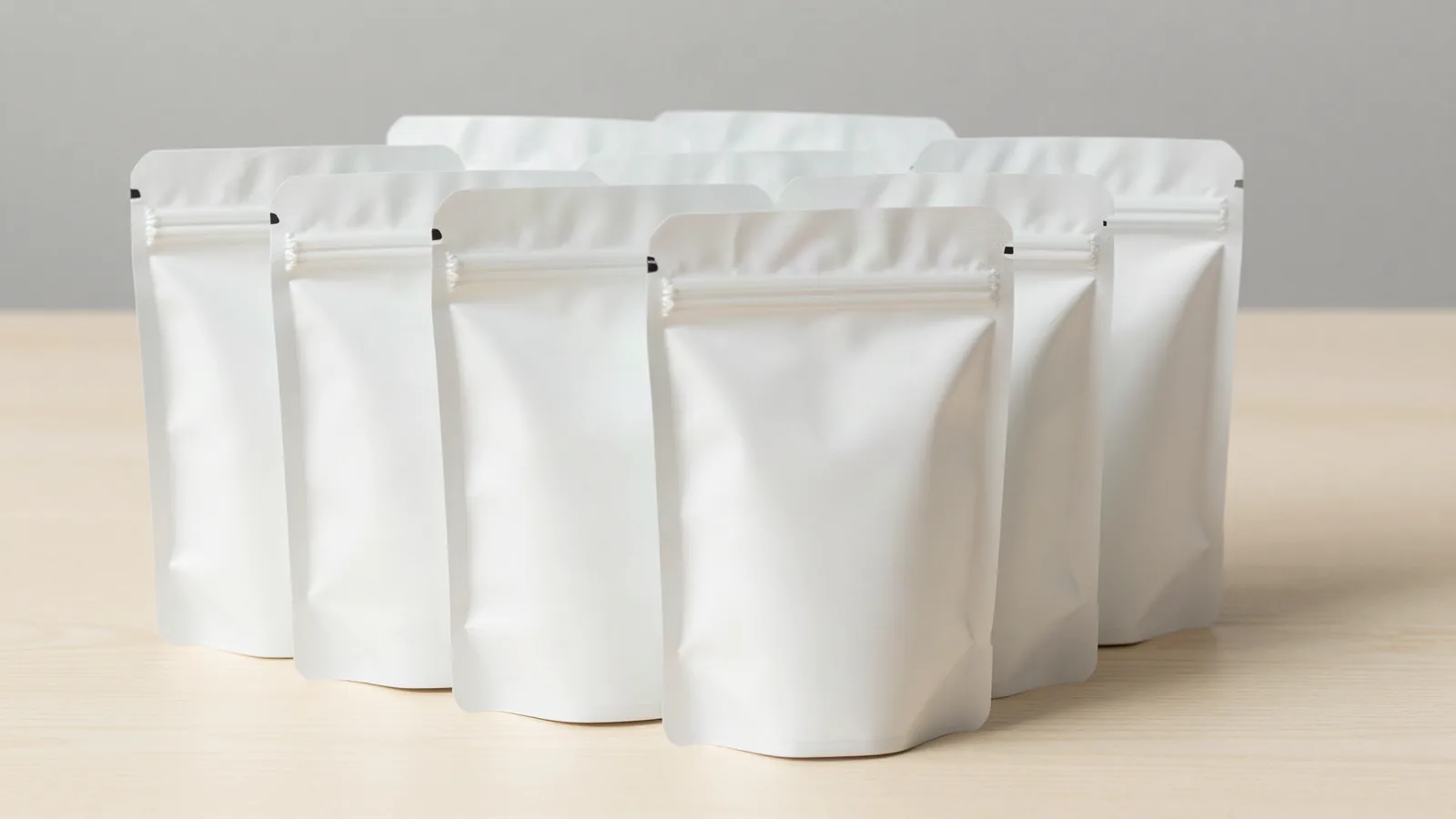




















































The buyer searching for custom pouch bags manufacturer in USA is usually trying to identify the supplier and get a quote tied to an actual bag construction. A product photo is not enough. The quote should show the proposed material, opening, closure, dimensions, artwork path, and delivery destination.
Start with the job the bag must perform. A pouch bag may carry a retail item, hold a dry product, protect an odor-sensitive product, distribute a sample, or serve as a handled shopping format. Those jobs can look similar online while requiring different substrates, seams, closures, and loading methods.
A barrier layer is a film layer selected to slow light, moisture, or odor transfer. The layer stack and seal still need to match the product and use. For a broader format comparison, use custom packaging solutions.
What does the search phrase custom pouch bags manufacturer in USA mean?
The phrase usually signals a need for supplier clarity before artwork is shared. The buyer wants a construction discussion, a proof path, and written delivery terms in the same conversation.
Describe what happens before filling, during use, and after opening. Note whether the product enters a wide mouth, drops into a flat bag, or loads into a handled format. Say whether the unit stands, lies flat, closes again, carries weight, or moves through a shipping case.
How do I tell a pouch bag from a handled bag?
A flexible product pouch is specified by its product cavity and seal, while a handled bag is specified by its load path and grip.
| Package job | Useful comparison | Specification to settle |
|---|---|---|
| Flexible product bag | Barrier film pouch | Layer stack, seal, opening, and filled footprint |
| Repeat-access bag | Zipper or fold-and-close construction | Closure position, headspace, and reseal behavior |
| Paper-led presentation | Kraft or white paper bag | Paper direction, fold, handle or tin tie, and print area |
| Carryout format | Handled shopping bag | Handle placement, load path, outside size, and storage |
| Odor-control brief | Barrier Mylar bag | Film construction, seal quality, closure, and use conditions |
A pouch and a shopping bag are not interchangeable because both can carry a branded graphic. The material, opening, load, and customer interaction control the recommendation. A tin tie asks the user to fold the top. A handled bag is carried rather than stored as a sealed barrier package.
Which package job should I describe first?
The packed item determines whether the bag needs a cavity, a gusset, a handle, a barrier layer, or a repeat-access closure.
For a paper reference, compare custom white paper bags and custom tin-tie kraft bags. For carryout presentation, see custom shopping bags. If barrier and flexible film lead the brief, custom smell-proof Mylar bags can frame the construction discussion.
What should a pouch quote make visible?
A useful quote names the substrate or laminate, finished dimensions, inside measurements where relevant, gusset, opening, closure, seal area, print coverage, finish, quantity, and ship-to ZIP.
Mylar or foil laminates commonly use PET / AL / PE layers. PET can provide a printable film surface, AL can add opacity and block light, and PE is commonly used as a heat-seal layer. Non-woven polypropylene commonly falls around 80 to 120 gsm for certain bag applications. A PET window can commonly be about 0.2 to 0.3 mm when a transparent panel is part of the approved construction.
Print and finish belong in the production fields. Digital printing can suit short runs. Offset CMYK is common for detailed graphics on paperboard components. Matte or gloss lamination, soft-touch, spot UV, foil stamping, embossing, and debossing create different surface and registration discussions.
How do paper, film, and carry formats differ?
A tin tie closes by folding and pressing the top. A zipper closes by aligning and pressing a track. A handled bag is carried rather than stored as a sealed barrier package.
A Mylar or foil laminate is selected around the product and seal brief, not because the surface looks metallic. Compare filling, opening, storage, display, delivery, and customer handling. If contents touch food, ask us about food-contact options for your product and identify the product-facing surface and proposed seal in the written specification.
What should I inspect before approving a pouch?
Inspect the formed bag with the actual product loaded. The flat artwork file cannot show the filled footprint, closure action, handle load path, or way the gusset settles.
- Check the physical fit, filled footprint, opening direction, closure action, and any handle, fold, zipper, or tin-tie interaction.
- Check artwork safe areas around seams, seals, folds, handles, gussets, and any window.
- Check printed color direction, lamination or soft-touch surface, and foil, spot UV, embossing, or debossing placement.
- Check the packed outside size if units move inside a case or mailer. US ground dimensional weight is commonly calculated at L x W x H / 139.
- Check the written supplier identity, construction, proof status, quantity, destination, and delivery terms.
Which catalog products help define the format?
The product pages give the brief a concrete starting point. Use custom white paper bags for a paper-led direction, custom tin-tie kraft bags for a fold-and-close top, custom shopping bags for a carryout format, and custom smell-proof Mylar bags for a flexible barrier discussion. Request the final construction around the actual product rather than copying a catalog size.
How can I start the supplier conversation?
Put the package job, product form, packed dimensions, fill method, closure, material direction, artwork status, and ship-to ZIP in the first message.
Custom Packaging Lane quotes from a 100-unit minimum, with pricing from $0.49 per unit at volume, quoted to spec. Production is typically 8 to 10 business days after proof approval, plus delivery. Free US shipping, free design support, and a free dieline are available. The $19.99 sample kit is credited to the first order. Confirm the exact material and package job before approval.
Frequently Asked Questions
Why are pouch and shopping bag quotes different?
Pouch and shopping bag quotes differ because the formats solve different physical jobs. A pouch centers on a product cavity, seal, closure, and storage behavior. A shopping bag centers on carrying, handle placement, loading, and retail handoff. Compare the filled product, opening, load path, outside dimensions, and customer interaction before choosing a format.
What do PET, AL, and PE mean on a pouch quote?
PET, AL, and PE identify common laminate layers. PET can provide a printable film surface, AL can add opacity and block light, and PE is commonly used as a heat-seal layer. The order of the layers affects print, product visibility, barrier direction, and sealing, so the written construction should be settled before final artwork.
When does a tin tie make sense?
A tin tie makes sense when the user will fold the top closed after opening and the bag does not need a zipper track. The brief should show the fold, top clearance, closure position, fill line, and artwork safe area. Kraft and white paper bags create different surfaces, so place important copy away from the fold.
How do I map a pouch window on artwork?
Map a pouch window directly on the dieline and label its finished position, size, and surrounding safe area. PET window material can commonly be about 0.2 to 0.3 mm. Keep the window clear of seals, zippers, gussets, folds, and important copy, then check the formed bag with the product loaded.
Does a supplier's location state package origin?
A supplier's location and package origin are separate fields. A written quote should identify the supplier, proposed construction, delivery path, and package specifications without assigning an origin claim to every package. Ask for the actual material and production details tied to the approved construction.












