




























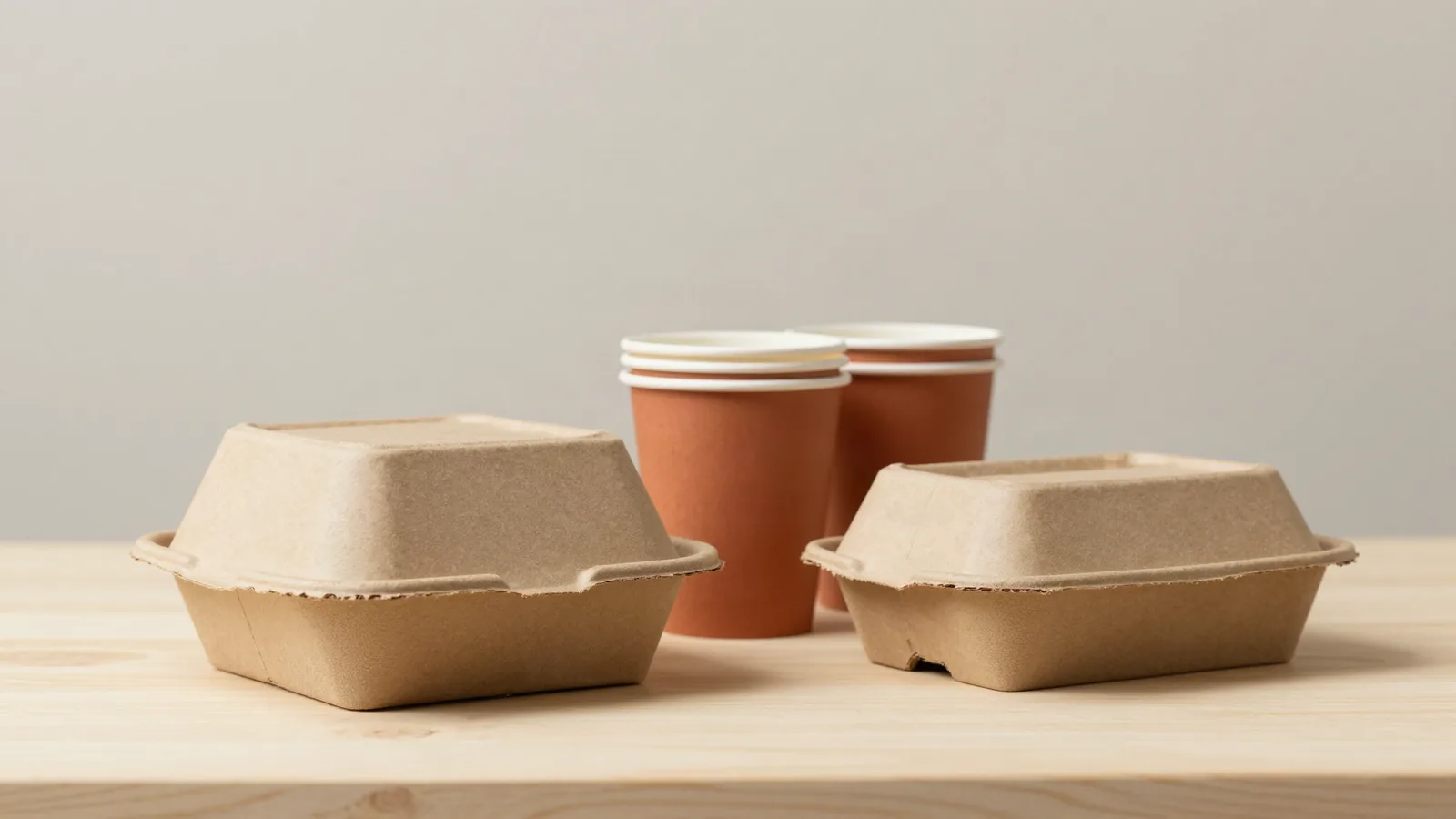




















































A takeout bag brief starts with the packed order, not the logo. A paper carry bag, paper lunch bag, reusable bag, pouch, and takeout mailer box have different openings, bases, handles, closures, and delivery behavior. Begin with custom white paper bags, then compare a box if the order needs a defined parcel structure.
A dieline is the flat template that shows the bag's panels, folds, gussets, handle area, opening, and print zones before the bag is formed. The filled package matters first, because a logo placed on an empty face can land under a fold or behind a handle.
What should a takeout bag carry?
List every container, cup, wrapped item, napkin, card, and accessory that belongs inside, then show the loading order and lifting action. A bag sized for one flat item may fail after a meal is stacked. Mark the opening, side folds, base, handles, printed panels, and any area that must stay clear after filling.
Write the carry route down before choosing the face artwork. A counter pickup has a different loading rhythm from a delivery order with several containers and a receipt. The bag has to open, accept the packed order, close if required, and lift without blocking the printed panel.
Which takeout bag format fits the handoff?
A paper carry bag suits a counter pickup or retail handoff. A paper lunch bag fits a compact packed meal or snack route. A tin-tie kraft bag adds a resealable paper top, while a reusable bag changes the job to repeat carry. A takeout mailer box replaces the flexible opening with a carton closure.
| Format | Common role | What to define |
|---|---|---|
| Paper carry bag | Counter pickup or retail handoff | Opening, side folds, base, handles, and print face |
| Paper lunch bag | Compact packed meal or snack route | Folded top, gusset, loading order, and closure |
| Tin-tie kraft bag | Resealable paper-led package | Tin-tie position, fill height, face, and seal area |
| Reusable bag | Repeat carry or event handoff | Material weight, handle length, panel size, and load |
| Takeout mailer box | Structured delivery presentation | Inside fit, closure, carton size, and outer shipping |
Custom tin-tie kraft bags let you compare a resealable top with a standard carry opening. Custom paper lunch bags give a compact paper reference. If the filled order needs a rigid route, compare custom takeout mailer boxes with the bag.
Which materials are common for reusable takeout bags?
Non-woven polypropylene commonly falls in the 80 to 120 gsm range, while cotton canvas commonly falls in the 8 to 12 oz range. Paper bags use a different fold, handle, and base construction. Material choice follows the intended load, handle attachment, panel size, repeated-use plan, and storage method.
For contents that touch the package, ask us about food-contact options. Describe the inner wrap, bag material, print surface, closure, and loading method so the discussion matches the actual handoff.
How should I choose handles and closures?
Handle attachment changes the lift path and the position of the printed face. Mark the top fold, side gusset, base, handle attachment, and clear space around the opening. A tin-tie closure has a different action from a folded paper top or an open carry bag.
If a card or receipt rides inside, show its position. It should not block the closure, handles, or the face the customer needs to see. Check a filled sample, not an empty bag alone.
How should a takeout bag be printed?
Flexographic printing is commonly considered for paper bag surfaces. Digital printing can suit a short run or artwork test. Offset CMYK can suit a detailed paperboard sleeve or mailer box. Mark the front, back, side panels, gussets, handle area, fold lines, seams, and unprinted zones.
Matte or gloss lamination, soft-touch, spot UV, foil stamping, embossing, and debossing need a surface check before approval. Keep important copy away from folds, seams, handles, and areas covered after filling.
What dimensions matter for a takeout bag?
Record the filled width, height, base depth, gusset, handle position, and opening clearance. For a box or outer carton, give inside length x width x depth and record the assembled outside size separately. About 1/16 in, or 1.5 mm, is a common packaging tolerance reference.
US ground carrier dimensional weight commonly uses L x W x H / 139, so the outside packed route belongs in the worksheet. That number matters when a flexible bag is paired with a box, carton, or other parcel component.
Which catalog formats can guide the bag brief?
Custom shopping bags frame a carry-focused structure and printed panel plan. Compare the bag with the contents, handle, closure, and delivery method in mind. A paper bag can fit a counter handoff, while a mailer box can fit a more structured parcel. For wider format planning, see custom packaging solutions.
What belongs in a takeout bag worksheet?
List every packed item, its orientation, loading order, carry action, chosen format, filled dimensions, inside and outside measurements, tolerance reference, handles, folds, gussets, base, closure, artwork panels, seams, delivery route, artwork status, quantity, destination, and any food-contact question.
Custom Packaging Lane quotes to spec from a 100-unit minimum, with pricing from $0.49 per unit at volume. Production is typically 8 to 10 business days after proof approval, plus delivery. Free US shipping and free design support are included, with a free dieline. The $19.99 sample kit is credited to the first order. Send the filled dimensions and carry details before requesting a proof.
Frequently Asked Questions
What is the difference between a takeout bag and a mailer box?
A takeout bag uses a flexible opening, side folds, base, handle, and carry action. A mailer box uses a defined carton shape, closure, inside fit, and parcel route. Compare the packed items, loading order, delivery handling, printed surface, and customer opening before choosing the format.
Which materials are common for reusable takeout bags?
Non-woven polypropylene commonly falls in the 80 to 120 gsm range, and cotton canvas commonly falls in the 8 to 12 oz range. The material choice follows the intended load, handle attachment, panel size, storage method, and repeat-use plan. Paper bags use a different fold and base construction.
How are custom takeout bags printed?
Flexographic printing is commonly considered for paper bag surfaces, digital printing can suit a short run or artwork test, and offset CMYK can suit a paperboard sleeve or mailer component. Mark the front, back, side panels, gussets, folds, seams, handles, and clear zones so the artwork stays aligned after forming.
How do I measure a takeout bag?
Measure the filled width, height, base depth, gusset, opening, handle position, and clearance around the packed items. For a box or outer carton, give inside length x width x depth and record the outside size separately. About 1/16 in, or 1.5 mm, is a common packaging tolerance reference for the structure.
What should I ask about food-contact use?
Describe the packed items, inner wrap, bag material, print surface, closure, and any box or pouch used with the bag. Ask Custom Packaging Lane about food-contact options for the product rather than making a general claim about paper, film, ink, or finish. Include the seams, handles, and loading method in the request.












