









































































The phrase Jordan boxes is buyer shorthand for branded footwear boxes. The physical specification still begins with the pair, size run, storage location, and retail or fulfillment handoff. If a Jordan name, logo, photograph, or other protected mark appears in the artwork, submit only files you are authorized to reproduce. The request should stand on physical fit and information needs, with no assumed affiliation.
How should a Jordan box fit the warehouse flow?
The box specification should start with the pair and the storage face, then map the size run around that workflow. A closed box needs to show its identifying information in the same place across the range, so staff can pick and replenish without opening each package.
Record the smallest, middle, and largest representative sizes, pair orientation, accessory placement, tissue or insert needs, and the identifier used by the warehouse. If a label is applied after printing, show its position on every relevant panel.
Which information should a size-run label show?
A size field is useful only when staff can read it on a closed, stacked box. Keep the size, style code, color, or internal SKU field in a fixed zone, and check that adjacent boxes do not hide it.
| Inventory field | Reason to standardize it | Practical check |
|---|---|---|
| Size identifier | Supports picking across a run | Read it while the box is closed and stacked |
| Style or color code | Separates similar pairs | Compare adjacent variants in a shelf or tote |
| Pair orientation | Keeps the opening consistent | Mark toe direction and accessory placement |
| Storage face | Reduces repeated box handling | Choose the face visible in the actual location |
Use the same field order across every relevant panel. A label that moves from lid to side panel across a size run creates a picking problem even when every individual box looks clear.
What should a team test on the shelf?
A filled sample in the intended shelf, tote, or storage bay reveals clearance problems that a desk test misses. Check whether the size field stays visible, whether the box comes out without catching adjacent packages, and whether the lid or sleeve stays aligned after repeated movement.
Test a small, middle, and large representative size. Record dimensions as length x width x depth, and label inside versus outside measurements. About 1/16 in, or 1.5 mm, is a common tolerance reference. Final clearance depends on the shoe, tissue, insert, folds, and board. If the shoe box sits inside a parcel shipper, test that nested arrangement too.
How should authorized artwork pass through proofing?
A dieline is the flat cutting template, and it should show every logo area, size label, side information, lid graphic, seam, and clear space needed around folds. Separate artwork review from physical fit review, then bring both checks together on the assembled sample.
Offset CMYK is a common reference for detailed folding-carton graphics, while digital printing can suit short-run design checks. A digital proof should show the label zone and panel order before anything prints. Low-resolution art softens small type, RGB art can shift after press conversion, type too close to a score can break on the fold, and missing bleed can expose an unprinted edge.
Which board and finish suit the footwear box?
Matte or gloss lamination changes glare; soft-touch changes hand feel. Spot UV, foil stamping, embossing, and debossing can draw attention to selected panels, but the finish should not hide the size field or side information.
Review the printed sample under the lighting used in storage or retail. Check the lid graphic, label zone, seam, and small type at the angle staff and customers will actually see.
What should protect the box in parcel handling?
A retail shoe box should travel inside a separate parcel shipper unless the complete path has been tested. Corrugated packaging commonly references E, B, or C flutes. ECT means edge crush test, and 32 ECT is a common strength reference for corrugated material.
The filled arrangement, stacking pattern, route, and handling path decide the outer construction. Define the outer layer separately from the presentation box, then test the pair inside the retail box and the retail box inside the shipper.
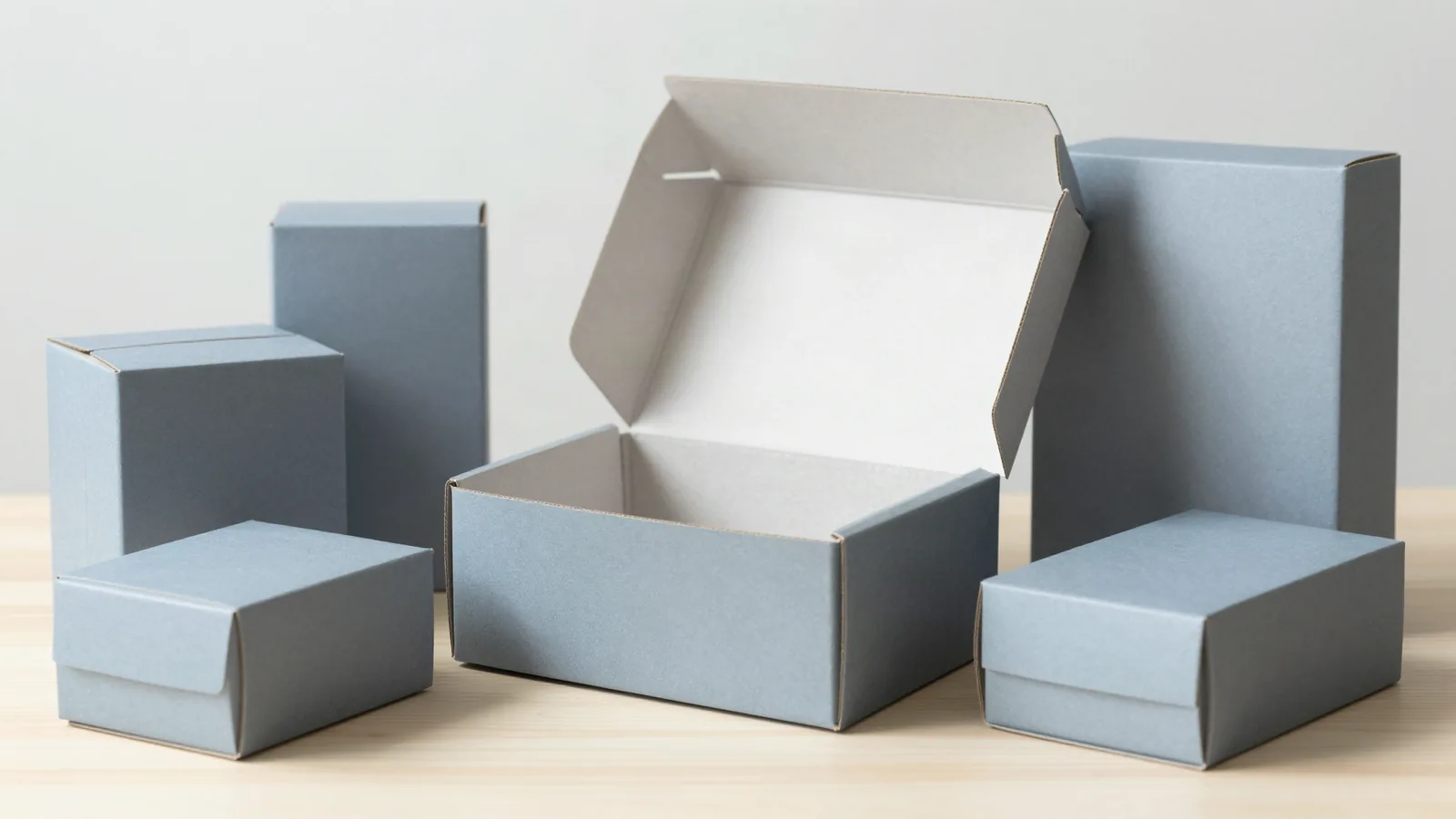
Catalog references can frame the product discussion. Shoe box packaging gives a direct footwear comparison. Wallet box packaging can inform compact product organization. Window display boxes can prompt questions about visibility and information placement without assuming a clear panel is needed.
What should go in a Jordan box quote?
The quote request needs the size coverage, pair orientation, accessory list, inside measurements, storage arrangement, label plan, artwork status, board direction, outer shipping context, and destination. Include the protected artwork files only when you have permission to reproduce them.
Custom Packaging Lane quotes to spec from a 100-unit minimum. Pricing is from $0.49 per unit at volume, quoted to spec. Production is typically 8 to 10 business days after proof approval, plus delivery. Free US shipping, free design support, and a free dieline are available. The $19.99 sample kit is credited toward the first order. For the branded carton route, see custom boxes with logo.
Frequently Asked Questions
What details make a Jordan box brief usable?
A useful Jordan box brief lists size coverage, pair orientation, accessory placement, tissue or insert needs, storage location, label or SKU zones, opening sequence, artwork status, and destination. If the box travels inside another package, include that nested arrangement. These details let the supplier discuss fit and handling without guessing at the intended use.
How should I test a footwear box across sizes?
Use a small, middle, and large representative size from the intended range. Check insertion, lid clearance, pair orientation, accessory space, label placement, and removal without dragging the shoe across an edge. Stack and move the filled samples as staff would, because size extremes can expose clearance or access problems.
Where should size information appear on a footwear box?
Place the size field in one consistent zone that staff can read on a closed, stacked box. Check the actual shelf, tote, or storage bay so adjacent packages do not hide it. Add style, color, or internal SKU information where the warehouse needs it, then verify the placement across the size run.
Can I submit Jordan names and logos for box artwork?
Submit Jordan names, logos, photographs, or other protected artwork only when you are authorized to reproduce them. Identify each approved mark on the dieline and keep the request focused on physical fit, information hierarchy, print process, and finish. The packaging request does not establish an affiliation with the mark owner.
What does 32 ECT mean for an outer footwear shipper?
ECT means edge crush test, a common corrugated strength reference. A 32 ECT outer shipper can be considered alongside E, B, or C flute, the filled arrangement, stacking pattern, route, and handling path. Test the retail shoe box inside the shipper before treating the outer construction as settled.