




























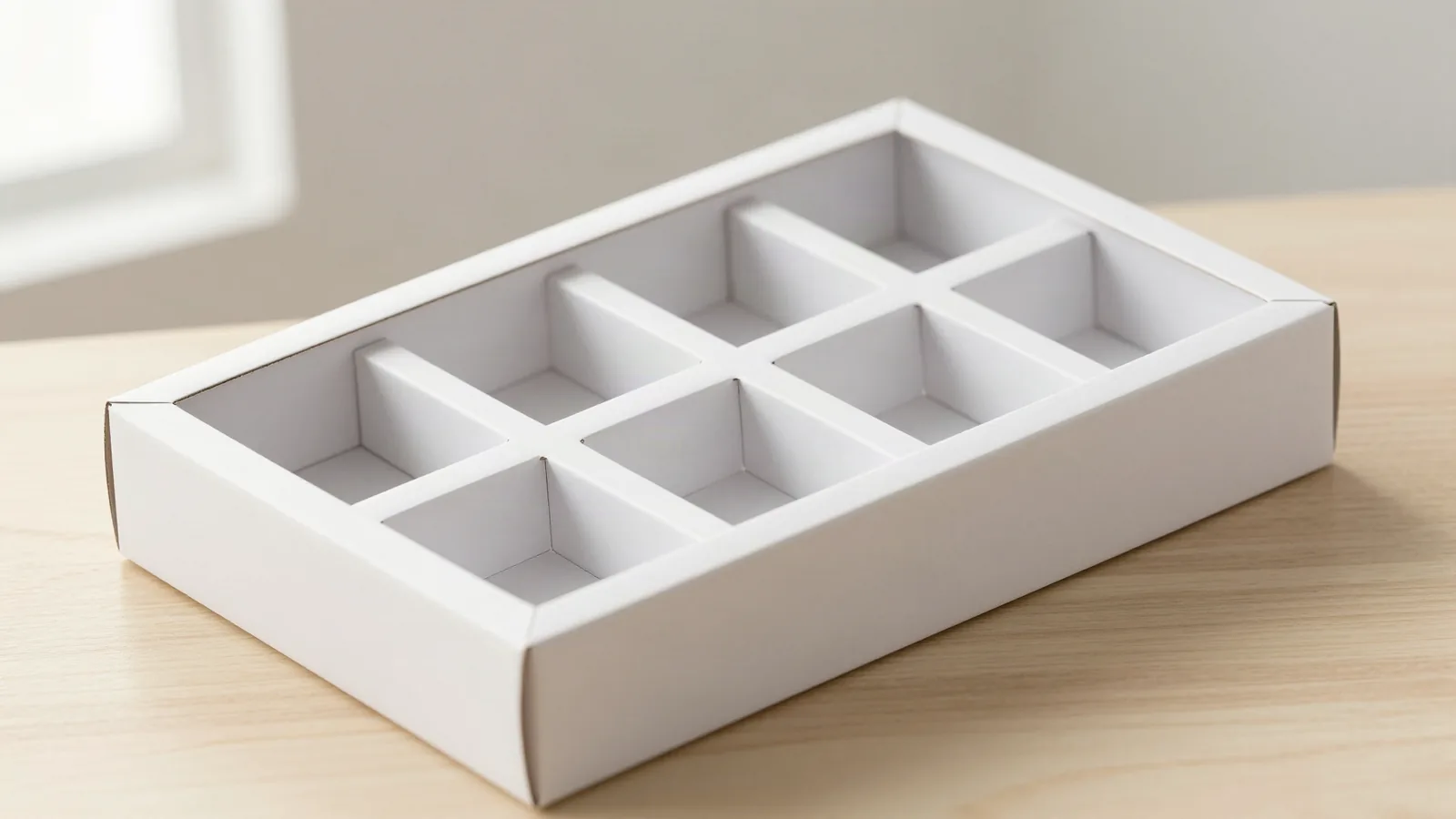




















































A custom polyfoam insert is a shaped foam support placed inside an outer package. Polyfoam can form cavities, ledges, channels, and nests, but the cavity layout only works when the box interior, lid clearance, removal path, and packing sequence are known. Start with the product geometry and the job the insert must perform: hold, separate, cushion, or present.
What does a custom polyfoam insert do?
The cavity layout controls where each product sits and how it comes out. One cavity can hold one item, while a multi-cavity insert can separate a set into a fixed arrangement. Depending on the shape, the insert may be cut, routed, layered, or assembled. Mark the supported surfaces, hand-access points, and the direction a packer or customer will use to remove each item.
Which outer package should hold the insert?
The box interior sets the available height and the closing clearance. A custom mailer box with insert suits a parcel-oriented presentation when the insert does not press against the closing panels. For bottles, compare custom Woozy bottle boxes and provide the bottle profile, closure, orientation, and neck clearance. Smaller cylindrical products can be compared with custom vial boxes, while custom votive candle boxes provide another contained-product reference.
| Package situation | Insert job | Information to provide |
|---|---|---|
| Mailer with interior support | Limit shifting while preserving opening clearance | Outer inside measurements, orientation, closure clearance |
| Bottle presentation | Hold the bottle below the lid or top flap | Bottle profile, cap shape, neck position, removal path |
| Vial or small cylindrical item | Keep the item aligned in a defined cavity | Diameter, height, cavity count, access direction |
| Gift or candle set | Separate components into a planned arrangement | Component map, spacing, dividers, presentation order |
How should I measure products for an insert?
Measure every item in the position it will occupy. Record the widest point, tallest point, closure, handle, cap, accessory, and any surface that needs clearance. State whether each figure is an inside or outside measurement, and map the arrangement for a multi-item set. A common planning tolerance is about 1/16 in, or 1.5 mm. Review the physical product against the cavity, not an empty box drawing.
How does polyfoam compare with board-based supports?
Polyfoam is the practical choice when the job needs a shaped cavity, soft contact, retention, or cushioning. Chipboard suits organized compartments, layered support, or a wrapped presentation. Paperboard dividers separate components, while corrugated pads suit a shipper-oriented arrangement. The mechanism matters: foam follows the product shape, while board creates walls and partitions. Match the support to the product surface, handling, removal path, and outer package.
Which material standards matter for the outer box?
SBS, C1S, and C2S paperboard in the 12 to 24 pt range are common folding-carton references. A rigid outer box commonly uses chipboard in the 1.5 to 3 mm range, wrapped in 100 to 157 gsm art paper. If the insert sits inside a corrugated shipper, E, B, and C flute references and 32 ECT may be part of the outer-box brief. These are general industry references, so the insert still has to match the actual product and box interior.
How should the insert and artwork work together?
Place the cavity map first, then check the box opening panel, logo, information areas, lid clearance, closure, and hand access. Offset CMYK is a common paperboard print reference. Matte or gloss lamination changes the surface, and soft-touch, spot UV, foil stamping, embossing, or debossing can be assigned to suitable outer panels. Keep the insert edge and cavity openings clear of scores, glue tabs, and decorative features that could interfere with assembly or removal.
What should I send to a polyfoam insert supplier?
A supplier cannot draw the cavity correctly from an outside box photo alone. Send the product or accurate drawing, outer-box inside measurements, product orientation, cavity map, access direction, quantity, artwork status, material preference, and delivery location. State whether the insert is hidden, visible at opening, removable, layered, or divided. For several components, label every cavity and give the packing order. A custom packaging design brief keeps the box and product in the same review.
Custom Packaging Lane quotes custom polyfoam inserts to spec from a 100-unit minimum, with pricing from $0.49 per unit at volume, quoted to spec. Production is typically 8 to 10 business days after proof approval, plus delivery, with free US shipping, free design support, and a free dieline. The $19.99 sample kit is credited to the first order. Send the product, outer box, and cavity map when the insert is ready for proofing.
Frequently Asked Questions
What goes into a polyfoam cavity map?
A polyfoam cavity map identifies every product, its orientation, supported surfaces, hand-access points, removal direction, and position inside the outer box. For a multi-item set, label each cavity and state the packing order. Include closures, caps, handles, accessories, lid clearance, and the outer-box inside measurements so the insert is drawn as part of the complete package.
How much clearance does a foam insert need?
A foam insert needs clearance around closures, handles, accessories, lid areas, and the surfaces that must not touch the box. Measure each product in its packed position and state the removal direction. A common planning tolerance is about 1/16 in, or 1.5 mm, but the physical product still needs to be checked against the cavity.
When should chipboard replace polyfoam?
Chipboard may replace polyfoam when the job needs organized compartments, layered support, dividers, or a wrapped presentation rather than a shaped soft cavity. Polyfoam follows product geometry and can provide soft contact or retention. Chipboard creates walls and partitions. Compare surface contact, handling, removal, presentation, and the outer package before choosing.
Can a mailer close over a foam insert?
A mailer can close over a foam insert when the box interior, insert height, closure clearance, product orientation, and cavity layout are coordinated. The insert cannot force the contents against the lid or prevent the mailer from closing. Provide the product, box, cavity map, and packing order for a complete fit review.
How do I lay out several products in one insert?
Several products can share one multi-cavity polyfoam insert when each item has a mapped position, labeled cavity, access path, and packing order. Leave room for outer walls, lid clearance, closure movement, and hand access. The layout should separate components and control movement without making the customer remove one product to reach another.












