




























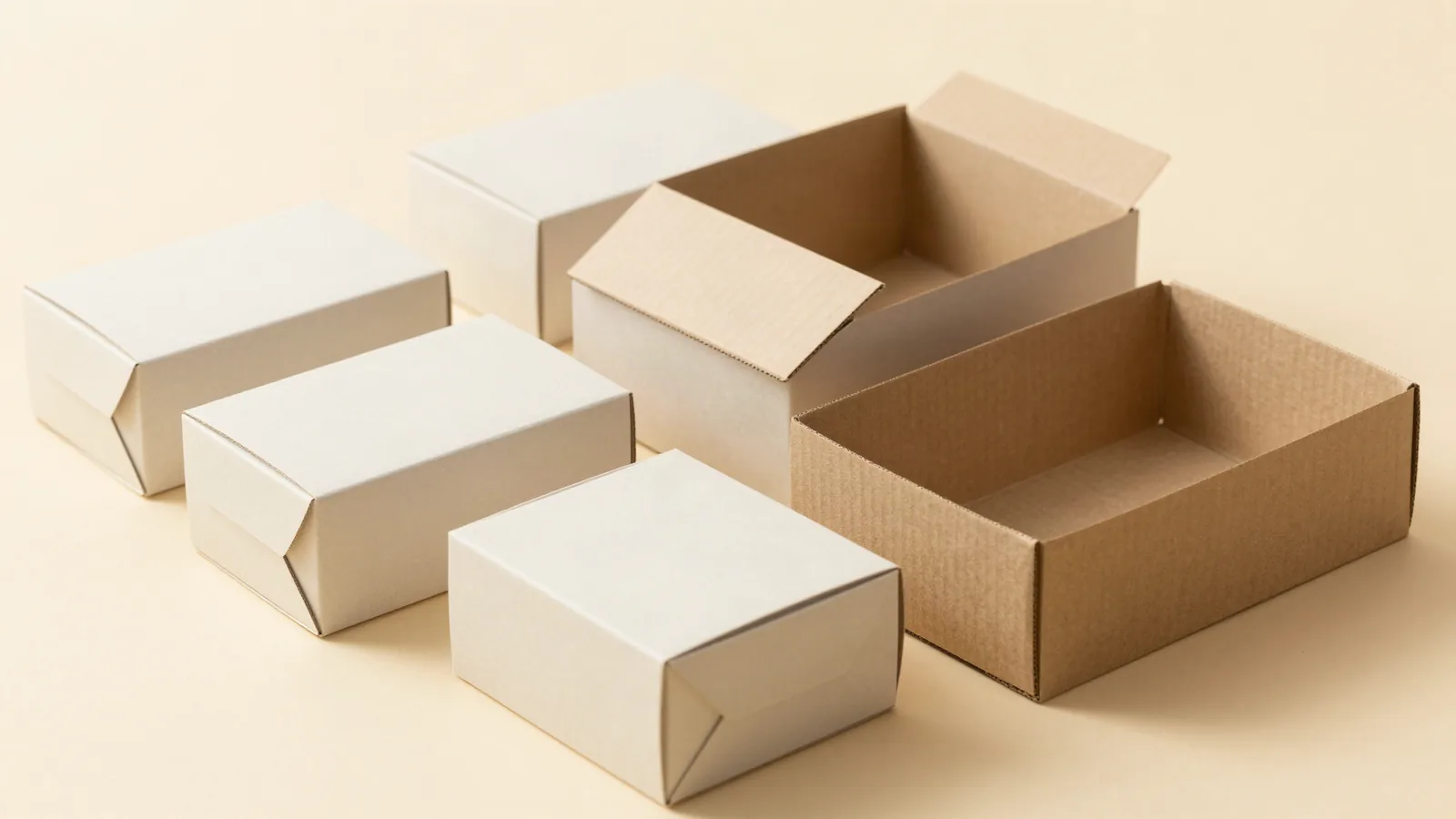




















































Custom packaging experts are useful when a package has to connect product dimensions, structure, board, artwork, finish, and handling in one brief. A dieline is the flat cutting template that shows how a package will be cut and folded. Start with the packed product, then test the structure against the intended opening and delivery role. The catalog covers metal-format, long-product, and organized-interior directions. Use custom packaging design for broader design planning.
What should a packaging expert inspect first?
The packed product comes first, with inside length x width x depth and orientation recorded before a structure is selected. About 1/16 in (1.5 mm) is a common tolerance reference for fit discussions. Measure the product in its packed position, note clearance, and separate a retail carton from any outer shipper. A product that fits the drawing but forces the walls outward needs a different cavity or structure.
- Define the product orientation and the points that must remain visible.
- Separate the retail package from any outer shipper or protective layer.
- Mark folds, glue areas, windows, inserts, and information panels on the dieline.
- Describe whether the package will sit on a shelf, travel to a customer, or do both jobs.
Which material gives the package the right balance?
Paperboard, kraft, rigid chipboard, and corrugated board solve different packaging problems. SBS, C1S, or C2S paperboard in the 12 to 24 pt range is a common folding-carton reference. Kraft board in the 18 to 24 pt range changes the surface and stiffness direction. Rigid chipboard in the 1.5 to 3 mm range can be wrapped in 100 to 157 gsm art paper. Corrugated E, B, and C flutes, commonly 32 ECT, are a separate reference for shipping-led construction.
| Packaging question | Useful standard reference | What to check |
|---|---|---|
| Does the carton need a printed folding surface? | SBS, C1S, or C2S, 12 to 24 pt | Creases, panel order, and print coverage |
| Should the surface feel more natural? | Kraft board, 18 to 24 pt | Artwork contrast and fold behavior |
| Does the pack need a rigid presentation format? | Chipboard, 1.5 to 3 mm, wrapped in 100 to 157 gsm art paper | Wrap seams, corners, lid fit, and interior support |
| Does the outer package need corrugated board? | E, B, or C flute, 32 ECT | Board depth, stack pattern, closure, and route |
How should print and finish follow the structure?
Printing method follows the substrate: offset CMYK suits detailed paperboard artwork, digital printing suits short runs or artwork that may change, and flexo is commonly used on corrugated surfaces. Matte or gloss lamination changes the surface. Soft-touch changes hand feel. Spot UV creates a hard glossy area. Foil stamping, embossing, and debossing need clear placement around folds and seams. PET window material commonly falls around 0.2 to 0.3 mm, and window patching needs a defined sightline before approval.
Which product examples help compare packaging choices?
A long taper candle, a tin, and a drone each expose a different design constraint. Custom drone packaging boxes prompt questions about organized interiors and protective spacing. Custom taper candle packaging tests long-product fit, clearance, and panel proportion. Custom tin packaging frames a container-led opening against a paperboard outer. These catalog references frame questions about shape, insert, opening, and outside dimensions; they do not set a package size for another product.
What should proof approval check?
A proof earns approval when folded behavior, fit, panel order, and finish placement are all visible. Inspect the closed pack first, then open it in the intended sequence. Confirm the front panel after folding, keep type away from creases and glue, and check that the product sits without forcing the walls outward. If an insert or window is included, check its cavity and sightline. A physical sample is useful for rigid corners, lamination, foil, embossing, debossing, or a closure that is hard to judge on a flat screen.
- Check inside measurements, product orientation, and tolerance.
- Check artwork safe zones, barcode placement, and panel order.
- Check insert fit, window position, closure movement, and opening force.
- Check the package closed, open, stacked, and ready for handling.
How do expert decisions make quoting clearer?
A quote becomes easier to define when the brief names board caliper, print coverage, finishing, quantity breaks, tooling, and shipping zone. Outside carton dimensions matter because US ground carriers commonly calculate dimensional weight with L x W x H / 139. State the destination and whether the package ships alone or inside another shipper. A clear brief gives each cost and construction input a place before artwork is finalized.
Custom Packaging Lane quotes custom packaging to a 100-unit minimum, with pricing from $0.49 per unit at volume, quoted to spec. Production is typically 8 to 10 business days after proof approval, plus delivery. Free US shipping and free design support are available, with a free dieline. The $19.99 sample kit is credited to the first order.
Frequently Asked Questions
What does a packaging expert inspect first?
A packaging expert inspects the packed product first, with inside length x width x depth, orientation, clearance, and the separate outer shipper recorded. The next checks are structure, folds, glue areas, inserts, windows, information panels, and opening sequence. This order keeps a finish or visual idea from driving a package that does not fit.
How do board choices affect a custom package?
Board changes stiffness, fold behavior, surface appearance, and how the package holds its shape. SBS, C1S, and C2S paperboard in the 12 to 24 pt range are common folding-carton references. Kraft board in the 18 to 24 pt range has a different surface, while wrapped rigid chipboard creates a firmer presentation format.
Which print process suits custom packaging?
Offset CMYK is commonly used for detailed paperboard artwork. Digital printing suits short runs or designs that may change, and flexo is commonly used for corrugated surfaces. The choice should follow the board, artwork coverage, quantity, and finish plan. Check color, folds, and legibility on the actual dieline before proof approval.
Why is a physical proof useful?
A physical proof reveals fit and handling issues that a flat artwork file cannot show. Check the product cavity, folds, panel order, insert, closure, window sightline, and important text. It is also the right time to inspect lamination, foil, embossing, debossing, and spot UV under ordinary viewing conditions.
What information makes a packaging quote clearer?
A clear packaging quote needs packed product dimensions, preferred structure, board or material direction, artwork status, print coverage, finish priorities, tooling needs, quantity breaks, and shipping destination. Outside carton size matters because US ground dimensional weight is commonly based on L x W x H / 139.












