


































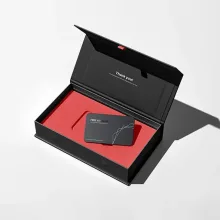














































What should a sushi tray supplier help me decide?
The filled arrangement sets the tray brief. Give the product footprint, depth, lid or sleeve preference, display direction, and handling sequence, then decide whether the package is a folding paperboard structure or a more substantial rigid format.
A tray is the shaped base that holds the product. Its depth, rim, corners, opening direction, and contact surfaces control the lid clearance and the usable printed area. For packaging intended to touch sushi, identify the contact surfaces and ask us about food-contact options for your product.
Which materials are common for tray-and-sleeve packaging?
Paperboard references include SBS, C1S, and C2S in the 12 to 24 pt range. Kraft board is commonly around 18 to 24 pt when the kraft tone is part of the visual direction. Rigid chipboard commonly ranges from 1.5 to 3 mm and may be wrapped in 100 to 157 gsm art paper.
| Material direction | Where it fits | What to confirm |
|---|---|---|
| SBS, C1S, or C2S paperboard | Printed cartons, sleeves, and folding tray structures | Caliper, fold behavior, interior surface, and contact use |
| Kraft board | Paper-led sleeves or folding structures | How the kraft tone changes printed color and contrast |
| Rigid chipboard with art paper | Two-piece rigid or sleeve-and-tray presentation | Board thickness, wrap direction, tray fit, and lid clearance |
Which tray structures should I compare?
The opening experience separates the main options. A sleeve-and-tray format uses a printed outer sleeve around a sliding tray, while a two-piece rigid format uses a separate base and lid. A folding carton can use straight tuck end, reverse tuck end, auto-lock bottom, or crash-lock construction.
| Structure | Best comparison question | Design implication |
|---|---|---|
| Sleeve and tray | Should the tray slide from a printed sleeve? | Check sleeve friction, pull area, and end clearance |
| Two-piece rigid | Does the package need a separate base and lid? | Check board thickness, wrap joins, and lid depth |
| Straight or reverse tuck end | Is a folding-carton opening sufficient? | Keep locking panels and folds clear of artwork |
| Auto-lock or crash-lock bottom | Does the base need a formed locking bottom? | Check panel sequence, machine folding, and tray support |
A sleeve needs enough friction to hold the tray closed, but too much friction makes the package awkward to open and can scuff the printed surface. A rigid lid needs clearance over the tray rim and the filled product. Test the actual opening motion before artwork is finalized.
How should I specify tray dimensions?
Record inside length x width x depth first, then label any outside measurement separately. Include the number and orientation of pieces, dividers, garnish or accessory space, tray rim, and the height needed for the lid, sleeve, or insert.
About 1/16 in, or 1.5 mm, is a common planning tolerance reference, subject to the structure and material. Do not estimate from a photograph. Measure the filled arrangement and say whether it should sit loosely, nest in the tray, or stay separated from the lid.
What printing and finish choices make sense?
Offset CMYK is a common print reference for folding paperboard and art-paper wraps. Matte or gloss lamination changes the surface appearance, soft-touch changes the hand feel, and spot UV isolates a selected area. Foil stamping, embossing, and debossing can be used on sleeves or exterior panels, but the artwork needs clear space around folds, wraps, and tray openings.
For food-contact packaging, ask us about food-contact options and keep the contact surface decision separate from the decorative exterior finish. A finish on the sleeve does not answer what touches the sushi inside the tray.
Which CPL tray products should I compare?
Use the custom sushi boxes page as the closest sushi reference. Compare custom sleeve and tray boxes when an outer printed sleeve is part of the opening. rigid boxes with sleeve and tray give a reference for rigid construction, and custom lid and tray boxes frame separate-base-and-lid decisions. Confirm the final structure from the actual filled arrangement.
What should I send for a sushi tray quote?
Send the filled product layout, inside dimensions, tray depth, lid or sleeve preference, material direction, artwork status, finish request, contact path, and ship-to location. The $19.99 sample kit gives you physical references for construction and surface direction before the proof is approved. If the structure is still open, compare a custom packaging solution against the measured arrangement.
Custom Packaging Lane is a US-based packaging supplier with a 100-unit minimum. Pricing is from $0.49 per unit at volume, quoted to spec, and production is typically 8 to 10 business days after proof approval, plus delivery. Free US shipping, free design support, and a free dieline are available. Ask us about food-contact options for your product, then send the measured arrangement for a quote.
Frequently Asked Questions
What is a sushi tray package?
A sushi tray package combines a shaped tray base with a lid, sleeve, or other closure. The tray depth, filled arrangement, opening direction, printed exterior, and contact surfaces determine the right structure. Start with inside length x width x depth and a filled layout, then compare sleeve-and-tray, lid-and-tray, folding-carton, or rigid construction.
Which board grade should I consider for a sushi tray?
SBS, C1S, and C2S paperboard are common references in the 12 to 24 pt range, and kraft board is commonly around 18 to 24 pt. Rigid chipboard commonly ranges from 1.5 to 3 mm and may be wrapped in 100 to 157 gsm art paper. Confirm caliper, folds, interior surface, lid clearance, and intended contact use before final artwork.
Should I choose a sleeve and tray or a lid and tray?
A sleeve-and-tray package creates a sliding opening around a printed sleeve. A lid-and-tray package uses separate top and base pieces and opens from above. Compare sleeve friction, tray pull area, lid clearance, stacking, and the user's opening motion. The filled sushi arrangement should remain stable in either structure.
How do I measure a sushi tray?
Measure the filled arrangement inside the proposed tray and record length, width, and depth. Include piece height, dividers, garnish space, tray rim, and anything that affects the lid or sleeve. State whether measurements are inside or outside dimensions. About 1/16 in, or 1.5 mm, is a common planning tolerance reference.
Can printed packaging touch sushi?
Sushi-contact packaging needs each contact surface checked before board, coating, ink, adhesive, liner, or tray choices are finalized. Identify what touches the sushi and what is separated by an inner component. Ask us about food-contact options for your product. A decorative exterior finish does not answer the direct-contact question.