




























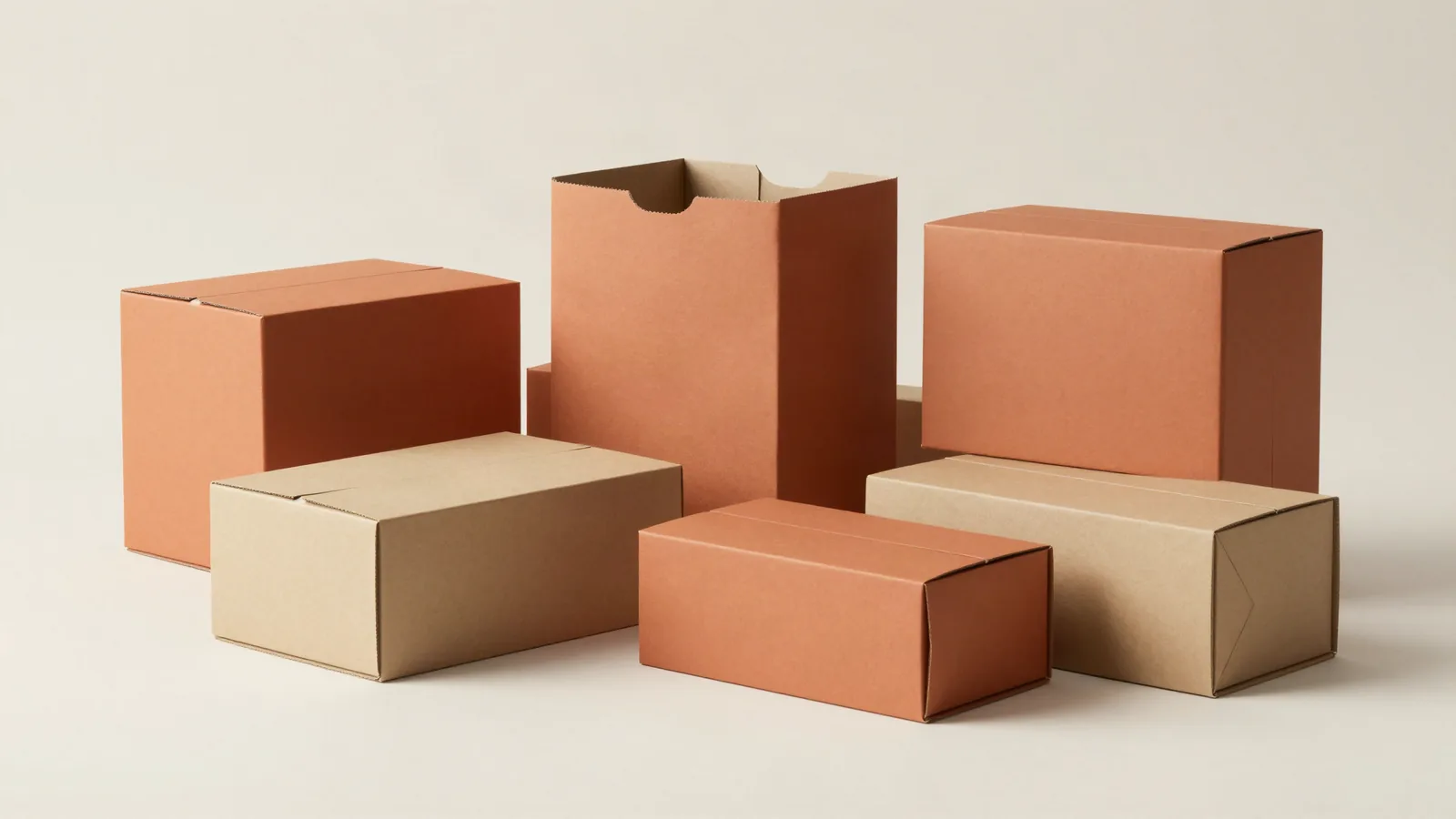




















































What should macaroon boxes hold?
The first sizing decision is whether the product is a coconut macaroon or a sandwich-style macaron. Those formats can differ in height, fragility, filling, and how the customer lifts the piece from the box. Put the product name, count, arrangement, widest point, highest point, base contact, and liner or divider plan into the brief.
Inside length x width x depth should describe the usable cavity. Measure the filled arrangement, then account for the board, window, folds, closure, and insert. About 1/16 in (1.5 mm) is a common tolerance reference, but the loaded package still needs a physical fit check.
How do macaroon boxes present the product?
A window answers the visibility question before the lid opens. A closed carton gives the artwork more uninterrupted panel area, while a sleeve can cover a tray. Pillow and gable formats change the way a bakery package is carried. Choose the opening around the product shape, display direction, handoff, and first view of the contents.
| Presentation direction | Common industry reference | Buyer checkpoint |
|---|---|---|
| Printed folding carton | SBS, C1S, or C2S paperboard, 12 to 24 pt | Inside cavity, panel hierarchy, closure, and fold behavior |
| Natural board carton | Kraft board, 18 to 24 pt | Board color, contrast, creases, and artwork coverage |
| Visible display carton | PET window, 0.2 to 0.3 mm | Window area, patch edge, trim, and product visibility |
| Delivery-oriented package | Mailer with roll end tuck top, FEFCO 0427 | Outside footprint, closure, and packed orientation |
Which structure works for a bakery handoff?
A straight tuck end suits a compact folding carton, while a mailer changes the handoff and shipping job. A reverse tuck end changes the top-panel relationship. An auto-lock bottom or crash-lock base changes how the box is erected and packed. A pillow or gable shape changes carrying and display. A mailer with a roll end tuck top, also referenced as FEFCO 0427, can suit delivery when the closure and outside footprint are checked around the packed confection.
Do not choose the structure from the flat front panel alone. Check the loaded tray, window, fold lines, closure, and place where the package will be handed over. If the product is arranged in rows, show the divider or cavity pattern in the proof. If it is packed as one presentation piece, show the lift point and clearance around the highest section.
Which materials and windows are common?
SBS, C1S, and C2S paperboard in the 12 to 24 pt range are common folding-carton references. C1S has one coated face, C2S has coated faces on both sides, and SBS is commonly used for a bright print surface. Kraft board in the 18 to 24 pt range gives the carton a natural board color and a different artwork starting point.
A PET window is a clear plastic film patch, with 0.2 to 0.3 mm a common reference range for window patching. These are typical industry references, not a promise that one board or window suits every confection. Ask us about food-contact options before finalizing a surface, liner, window, or insert that may touch the product.
How should macaroon box artwork be printed and finished?
Offset CMYK is commonly used for detailed carton artwork, product names, flavor hierarchy, and decorative patterns. Digital printing can suit a short run or a layout test. Matte or gloss lamination changes surface sheen. Soft-touch changes the hand feel. Spot UV can isolate a logo or selected pattern. Foil stamping, embossing, and debossing can reserve a tactile accent for a panel or mark.
Build artwork from the approved dieline. A dieline is the flat cutting template that maps panels, scores, trim, bleed, and glue tabs before the printer cuts the sheet. Keep important copy away from scores, trim, glue tabs, tuck areas, window edges, and product contact points. RGB artwork can shift when it is converted for press, and low-resolution art can print soft. Leave bleed on the file.
What should a macaroon box proof show?
A useful proof shows the actual product arrangement inside the assembled structure. It should show the flat sheet, inside length x width x depth, outside size, scores, folds, seams, glue tabs, trim, closure, window edges, divider or liner, highest point, and removal direction.
- Show the actual confection arrangement, highest point, divider or liner, window area, and removal direction.
- Label inside length x width x depth, outside size, scores, folds, seams, glue tabs, trim, closure, and window edges.
- Separate board, base print, lamination, soft-touch, spot UV, foil, embossing, and debossing layers.
- Mark the first-open panel, visible product area, handoff orientation, and any outer delivery package.
- Ask about food-contact options before the final proof if the package surface or insert will contact the product.
At a press check, inspect ink coverage, small type, color blocks, fold lines, and the area around the window patch. A flat file can look right while the assembled package hides part of the panel.
Which catalog pages help compare macaroon formats?
Compare window boxes when the central decision is product visibility. See window display boxes for another front-facing presentation reference. The waffle boxes page is a useful bakery-format reference for an open-and-carry structure. These pages name possible directions; the confection arrangement and intended handoff set the final package brief.
How can I request macaroons boxes?
A quote brief should begin with the filled product and packed arrangement. Send the confection format, filled dimensions, count, window or divider plan, structure, material, print coverage, finish, quantity, artwork status, food-contact use, and delivery location.
Custom Packaging Lane quotes to spec from a 100-unit minimum, with pricing from $0.49 per unit at volume. Production is typically 8 to 10 business days after proof approval, plus delivery. Free US shipping, free design support, and a free dieline are available. The $19.99 sample kit is credited to the first order. Use the custom packaging for small business hub for bakery package planning.
Frequently Asked Questions
How should I size a macaroon box?
Measure the confection in the arrangement used for packing. Record inside length x width x depth, widest point, highest point, base contact, divider position, and removal direction. About 1/16 in (1.5 mm) is a common tolerance reference. Then check the loaded carton, window, closure, and liner together instead of approving a flat drawing alone.
Can macaroon boxes include a window?
A macaroon package can include a PET window when visibility is part of the presentation plan. PET at 0.2 to 0.3 mm is a common reference for window patching. Map the visible area with the board, trim, folds, seams, and artwork panel so the patch does not interfere with loading, closing, or product removal.
Which structure works for a confection box?
A straight tuck end, reverse tuck end, auto-lock bottom, or crash-lock base changes the carton opening and assembly path. A pillow or gable shape changes carrying and display. A mailer with a roll end tuck top, also referenced as FEFCO 0427, can suit delivery when the closure and outside footprint are checked around the packed confection.
What print finishes suit macaroon packaging?
Offset CMYK is commonly used for detailed carton artwork, while digital printing can suit a short run or layout test. Matte or gloss lamination changes the surface, soft-touch changes the hand feel, and spot UV, foil stamping, embossing, or debossing can isolate selected art. Keep finishes away from scores, seams, folds, and window trim.
What should I discuss about a package that touches the product?
Discuss the actual confection, filling or topping, package surface, packed arrangement, liner, window, handling path, and closure as one project. The material choice should be checked for the specific use. Ask us about food-contact options before finalizing the structure, dieline, insert, and artwork.












