




























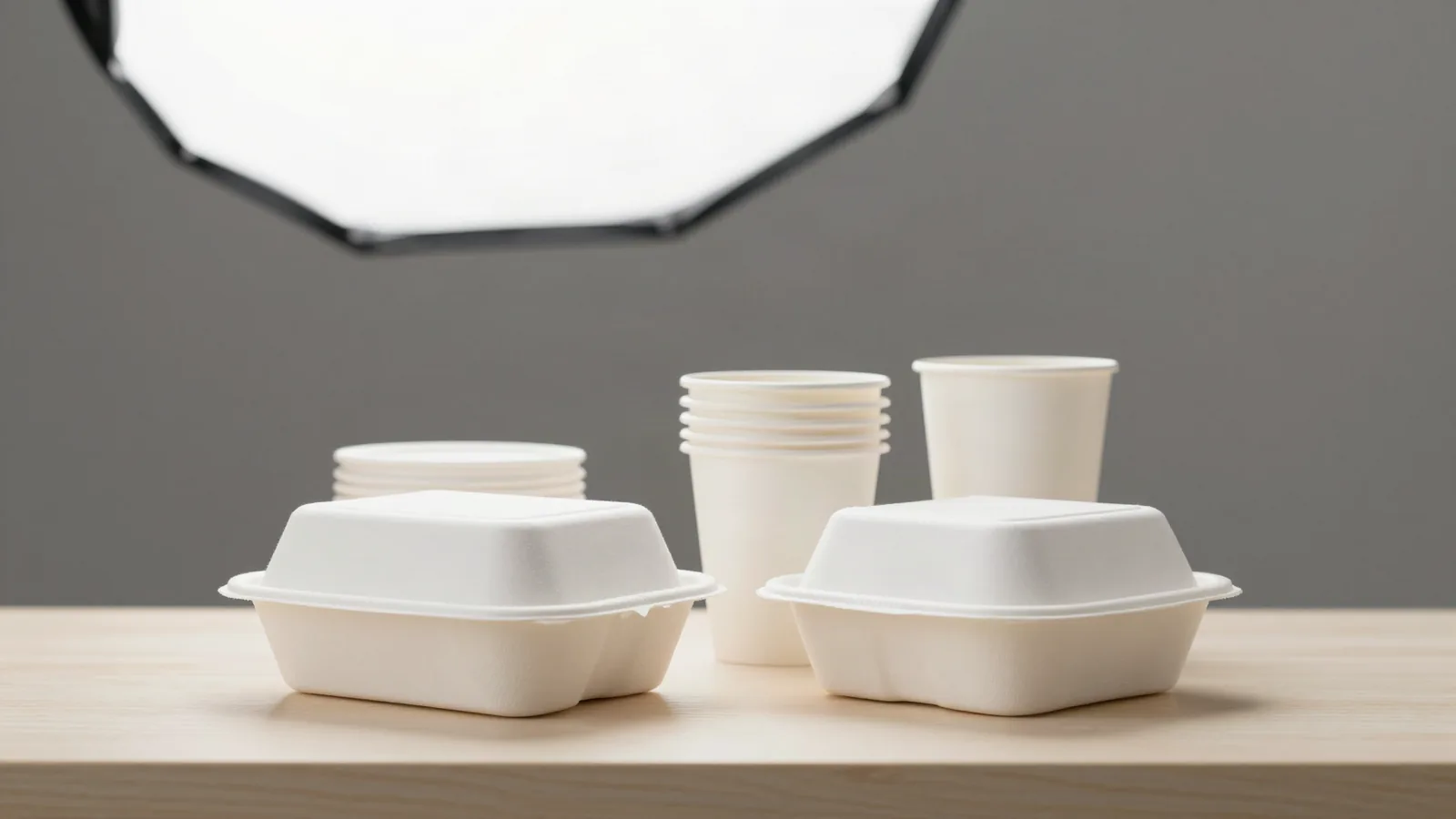




















































What should packaging for sushi do?
The filled sushi set determines the package before the graphics do. A custom paperboard carton can organize rolls, nigiri, or combination sets, but the brief must also cover the tray, liner, divider, closure, handling path, and whether the product touches the package.
SBS, C1S, and C2S are common paperboard references in the 12 to 24 pt range. Kraft board is commonly 18 to 24 pt when the natural tone belongs in the design. Caliper is the sheet thickness, and it affects stiffness, fold behavior, and the space left for the filled set.
Which sushi box structure fits pickup or delivery?
Opening direction is the first structural split. Straight tuck end and reverse tuck end cartons use different tuck relationships, while auto-lock bottom and crash-lock bases change how the bottom forms. A mailer, roll end tuck top, or FEFCO 0427 format suits a more ship-oriented opening.
| Structure | What it changes | Buyer check |
|---|---|---|
| Straight tuck end | Folding-carton access and front-panel layout | Will the closure stay secure during pickup? |
| Reverse tuck end | Tuck direction and panel relationship | Does staff workflow suit the opening? |
| Auto-lock bottom | Formed base setup | Will the base support the filled set? |
| Crash-lock base | Pre-glued locking bottom | Can it be assembled without disturbing the set? |
| Mailer, roll end tuck top, FEFCO 0427 | Ship-oriented closure and outside footprint | Will the package travel inside a delivery bag or shipper? |
Start fit checks with inside length x width x depth. About 1/16 inch, or 1.5 mm, is a common packaging tolerance reference, but the tray, liner, divider, and product presentation still need a physical check. For a window, PET film is commonly around 0.2 to 0.3 mm, and the patch must clear folds, seams, trim, and closure panels.
Which print and finish details suit a sushi package?
Offset CMYK is a common choice for detailed paperboard graphics. Digital printing can suit a short run or an early layout direction, while flexo is commonly associated with corrugated surfaces. Matte or gloss lamination changes the surface character, soft-touch changes the hand feel, and spot UV isolates a selected logo or pattern.
Foil stamping, embossing, and debossing need separate artwork layers and room around folds. Kraft board supports a natural paper tone, but that tone changes the appearance of printed color. SBS with offset CMYK gives the artwork a lighter surface for fine type, solid fills, and color separation.
How should I prepare the sushi packaging dieline?
A dieline is the flat cutting and creasing template for the package. Send the assembled tray or insert, product orientation, opening direction, and inside dimensions so the template follows the filled set.
Mark the front panel, closure panels, window area, glue tabs, scores, bleed, and copy that must stay clear of cuts. RGB art can shift when converted for press, low-resolution files can soften, and type too close to a score can fold into the wrong reading angle. A digital proof is where those errors should be caught.
Which related packaging formats can I compare?
The wine box packaging page gives a reference for structured presentation. The private label packaging page is useful for brand-forward panel planning, and perforated packaging shows how a tear-open feature changes the panel and opening. These are catalog references, not claims that any one format fits every sushi configuration.
How should pickup and delivery change the package?
Pickup prioritizes quick opening, stable carrying, and a presentation that staff can check at the counter. Delivery adds the outer footprint, stacking orientation, delivery bag or shipper, and the risk of the lid catching the contents. Compare the filled inside size with the outside dimensions after board, wall, tray, or insert choices are set.
For US ground shipping, carrier dimensional weight commonly uses L x W x H / 139. That is a planning convention, not a shipping quote. It explains why a wider wall or outer box can change the delivery package even when the sushi carton is light.
How do I move from a concept to a quote?
Send the filled layout, inside length x width x depth, tray or insert, opening direction, board direction, artwork status, finish layers, contact path, and ship-to location. The $19.99 sample kit can help you inspect construction, board feel, closure behavior, window treatment, and finish direction before finalizing the format. For design planning, see custom packaging design.
Custom Packaging Lane is a US-based packaging supplier with a 100-unit minimum. Pricing is from $0.49 per unit at volume, quoted to spec, and production is typically 8 to 10 business days after proof approval, plus delivery. Free US shipping, free design support, and a free dieline are available. Ask us about food-contact options for your product, then request a quote from the measured packed set.
Frequently Asked Questions
What should I measure before requesting sushi packaging?
Measure the filled sushi presentation, tray, liner, or insert and record inside length x width x depth, including the clearance needed for closing. Note whether the package is for pickup, delivery, display, or mixed use. About 1/16 inch, or 1.5 mm, is a common planning tolerance reference, but the finished fit should be checked with the actual packed set.
Is a window useful for packaging for sushi?
A sushi package window can show the presentation without opening the carton. PET window film is commonly around 0.2 to 0.3 mm, and placement depends on the opening size, board construction, folds, closure, and printed brand area. Check the clear panel against the contact path and lid movement so visibility does not crowd the package or weaken a working fold.
Which paperboard is common for custom sushi cartons?
SBS, C1S, and C2S paperboard are common references for printed sushi cartons in the 12 to 24 pt range. Kraft board is commonly 18 to 24 pt when the natural paper tone supports the design. The choice affects stiffness, folds, printed color, interior space, closure behavior, and the intended contact path.
Can I add specialty branding to a sushi box?
Offset CMYK supports detailed graphics, while matte or gloss lamination changes the surface appearance. Soft-touch, spot UV, foil stamping, embossing, and debossing can emphasize selected exterior elements. Keep finishes away from scores, glue tabs, window patches, and small functional copy, then check the artwork at actual size.
How should pickup and delivery formats be compared?
Pickup and delivery sushi packaging should be compared by opening direction, base construction, inside fit, outside footprint, stacking orientation, and any outer bag or shipper. Straight tuck, reverse tuck, auto-lock bottom, crash-lock, and mailer structures create different setup and closure behavior. Include the tray or insert in the test, then check carrying, closing, and presentation.












