





























































Philadelphia is the market or delivery destination in this search, not proof of a local plant or a special delivery promise. A printed box quote becomes useful when the product, pack-out, board, structure, artwork, and outer shipping plan are written in the same brief. Start with the item in front of you. Flat artwork comes later.
How should I brief a Philadelphia box supplier?
Inside fit should describe the product packed exactly as it will be sold or shipped. A dieline is the flat cutting template that shows cut edges, scores, panels, glue areas, and print placement. Record length x width x depth, product orientation, wrap, insert, lid, accessory, closure, print coverage, finish, quantity, and destination. State whether the printed box is a retail carton, gift box, inner pack, or outer shipper. The custom packaging solutions hub is a useful starting point for the brief.
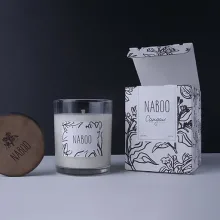
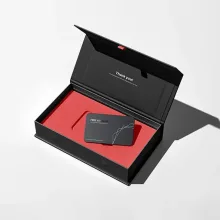
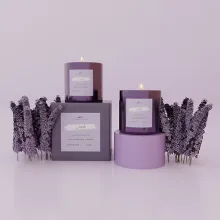
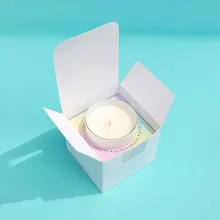
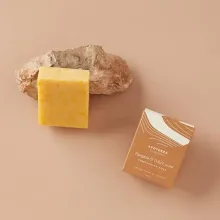
Catalog references make the request easier to discuss. Custom printed macaron packaging boxes show a compact printed format. Custom votive candle boxes give another small-product reference. Rigid printed boxes are useful when the opening sequence and wall stiffness matter. None of these pages replaces a drawing based on the actual product.
Which board should I put on the quote?
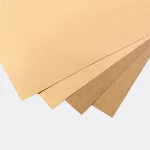
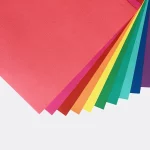
The board family sets the print surface and fold behavior before ink is considered. SBS, C1S, and C2S paperboard are commonly discussed from 12 to 24 pt, while kraft board is commonly discussed from 18 to 24 pt. Rigid construction commonly uses chipboard from 1.5 to 3 mm wrapped in 100 to 157 gsm art paper. Corrugated E, B, and C flutes change the profile and stacking behavior, with 32 ECT as a common strength reference.
| Board or format | Common reference | Buyer checkpoint |
|---|---|---|
| SBS, C1S, or C2S | 12 to 24 pt paperboard | Print coverage, fold behavior, and inside fit |
| Kraft board | 18 to 24 pt | Natural board tone, ink appearance, and edge feel |
| Rigid construction | 1.5 to 3 mm chipboard with 100 to 157 gsm wrap | Lid fit, wall stiffness, and opening motion |
| Corrugated shipper | E, B, or C flute, with 32 ECT as a common reference | Outer case, stacking, and parcel handling |
Which box construction matches the opening?
The opening motion separates similar-looking packages quickly. Straight tuck end and reverse tuck end cartons keep the blank compact. Auto-lock bottom and crash-lock structures change the base folds and the loading sequence. A sleeve can fit over a tray or inner box. A drawer or slide uses an inner part and an outer sleeve. A two-piece rigid box separates the base and lid. List the opening action before placing artwork so the front panel, seam, and customer-facing copy stay in the right places.
How do print finishes behave on a box?
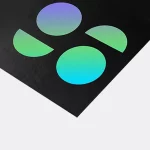
A printed box can look different at a score than it does on a flat screen. Offset CMYK is a common reference for detailed paperboard graphics. Digital printing can suit short runs or controlled artwork tests. Flexographic printing is commonly associated with corrugated shipping components. State whether the design needs full coverage, a spot color, or a restrained panel mark, and identify the unprinted board tone.
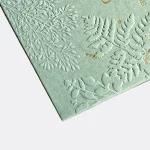
Matte or gloss lamination changes reflection. Soft-touch changes the tactile feel. Spot UV can create contrast on selected artwork. Foil stamping, embossing, and debossing add focused surface effects, but scores, glue flaps, and tight folds need clear margins. If a window is part of the package, PET around 0.2 to 0.3 mm is a common reference. Low-resolution art, RGB conversion, missing bleed, and type too close to a score are prepress problems to catch in the digital proof.
When does a printed box need a corrugated shipper?
The inner printed box and the outer shipper have different jobs. A folding carton can present the product, while a corrugated case can group and protect packed units during movement. If the box travels inside a case, list folded box size, assembled size, case count, and case orientation as separate fields. If it becomes the outer parcel, compare E, B, or C flute and use 32 ECT as a common planning reference where it fits the application.
Write dimensions as length x width x depth and label inside or outside measurements. Inside measurements control the cavity. Outside measurements affect case packing and carrier planning. About 1/16 in, or 1.5 mm, is a common packaging tolerance convention, subject to the approved construction. US ground dimensional weight commonly uses L x W x H / 139, so outer dimensions can affect the shipping plan even when the product is compact.
Which product references can narrow the choice?
Use custom printed macaron packaging boxes when the package is compact and panel proportion matters. Compare custom votive candle boxes when the product needs a small carton and a clear closure. Review rigid printed boxes when the opening should feel fixed and the walls should hold their shape. Treat every page as a format reference and send the real product dimensions for the quote.
What should I send before artwork approval?
- Send packed product inside length x width x depth, including wrap, insert, lid, and accessories.
- Identify the box role, opening direction, closure, seam position, and whether a separate shipper is used.
- Specify SBS, C1S, C2S, kraft, rigid, or corrugated direction, plus any window requirement.
- Mark CMYK coverage, logo placement, barcode clearance, lamination, spot UV, foil, embossing, or debossing.
- Include destination, artwork status, packing sequence, and the proof questions that must be answered before approval.
What happens before a Philadelphia box runs?
Before production, the product dimensions, construction, artwork, finish, quantity, and destination should agree with the written quote and approved dieline. Custom Packaging Lane quotes from a 100-unit minimum. Pricing is from $0.49 per unit at volume, quoted to spec. Production is typically 8 to 10 business days after proof approval, plus delivery. Free US shipping, free design support, and a free dieline are available. The $19.99 sample kit is credited to the first order.
Frequently Asked Questions
How should Philadelphia buyers start a custom printed box project?
Philadelphia buyers should start with the product as it will be packed, including wraps, inserts, lids, and accessories. Record inside length x width x depth, opening direction, box role, board direction, print coverage, finish, destination, and proof questions. Those details let the supplier quote a construction instead of guessing from the city name.
Which paperboard is commonly used for printed boxes?
SBS, C1S, and C2S paperboard are commonly discussed in the 12 to 24 pt range. Kraft board is commonly around 18 to 24 pt, while rigid construction may use chipboard wrapped in 100 to 157 gsm art paper. The choice follows product weight, fold pattern, print surface, closure, and edge appearance.
What printing method can suit a custom box?
Offset CMYK is a common reference for detailed paperboard graphics. Digital printing can suit short runs or controlled artwork tests. Flexographic printing is more commonly associated with corrugated shipping components. Choose after checking substrate, board tone, coverage, artwork versions, score lines, glue areas, and the way finished panels will be viewed.
How should box dimensions be written for a quote?
Write box dimensions as length x width x depth and identify inside or outside measurements. Use inside measurements for the product cavity, then list wraps, inserts, lids, and clearance. About 1/16 in, or 1.5 mm, is a common packaging tolerance convention, but the approved structure still controls the working allowance.
What belongs in a Philadelphia packaging brief?
A Philadelphia packaging brief should include the packed product, inside dimensions, orientation, box role, closure, board direction, artwork status, print coverage, finishes, window needs, packing sequence, and destination. Note whether the package travels inside a case or as the outer parcel. This gives the dieline, fit, surface treatment, and shipping plan the same reference.