


























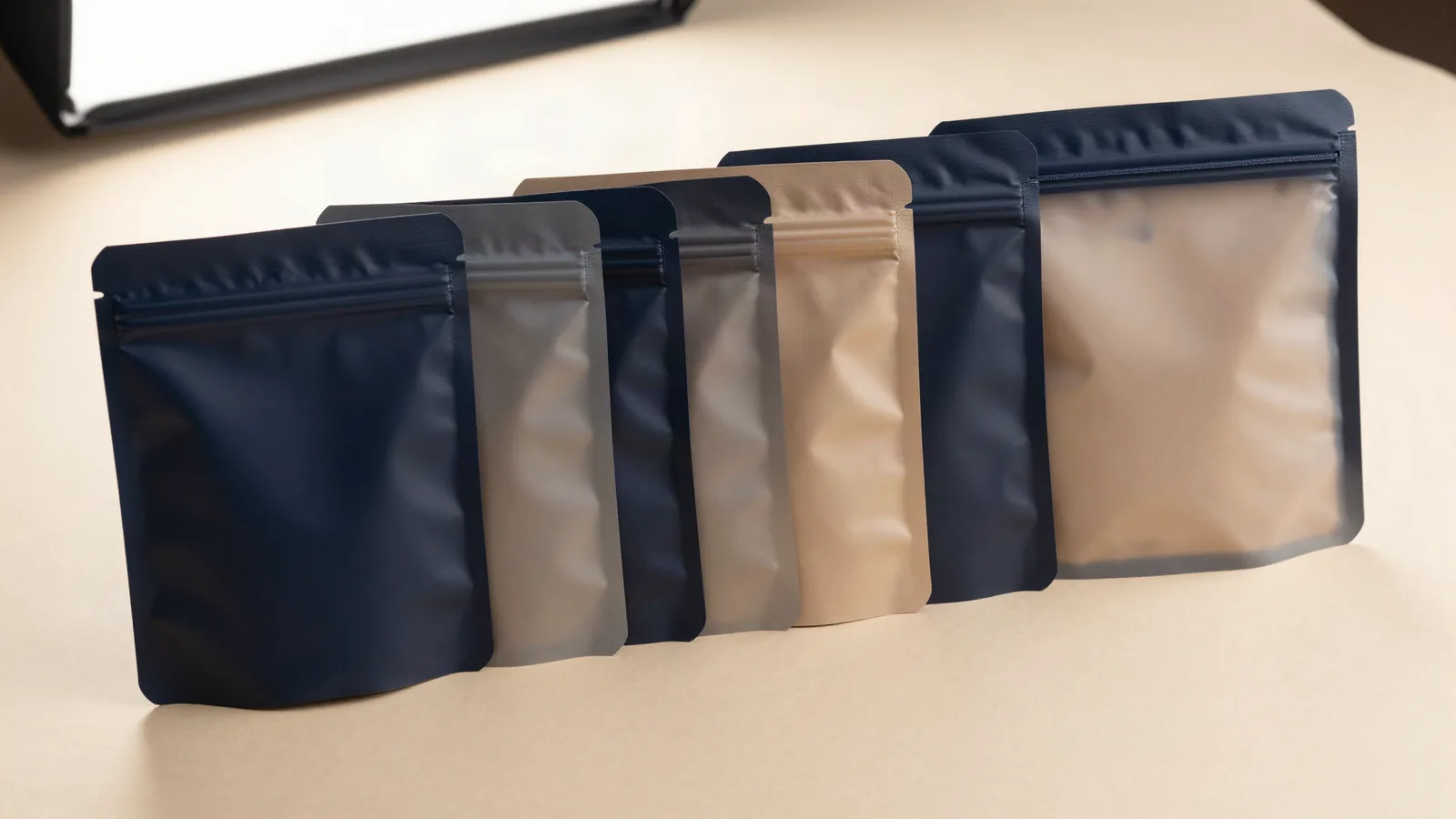





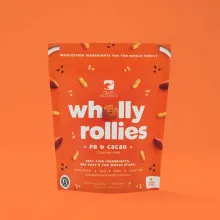





































A small stand-up pouch run is a controlled test of the filled package, not a shrunken version of a later order. The useful record includes the product fill, finished dimensions, material direction, closure, artwork revision, finish, packout, and delivery scope. A SKU, or stock keeping unit, is one defined version of the package that can be reordered without guessing which file or structure changed. A dieline is the flat cutting template that marks cuts, folds, seams, gussets, and safe artwork areas.
What does a small pouch pilot need to prove?
The filled pouch, not the flat film, tells you whether the format earns a reorder. Check upright behavior, front-panel readability, opening cues, finish, base stability, and how units sit in an outer case. Stand-up pouches commonly measure about 3 to 7.5 in wide, but record that width beside finished height, gusset, seal area, zipper position, and fill level.
| Pilot question | Evidence to keep | Why it matters later |
|---|---|---|
| Does the package present upright? | Filled sample viewed from the customer side | Checks the display role before a larger run |
| Does the artwork remain readable? | Approved formed sample and artwork revision | Prevents a reorder from using the wrong panel version |
| Does the opening cue make sense? | Closure and seal check with the product inside | Connects first use to the packout |
| Does the outer case work? | Units grouped for storage or parcel handling | Shows whether the pilot fits the intended handoff |
How should I compare quantity breaks?
A quantity break is only useful when the package specification stays fixed as the requested run changes. Compare the same film, finished width, height, closure, print coverage, finish, tooling, and shipping zone in every row. If one option changes those inputs, label it as a different specification. A unit figure without its package assumptions tells you very little.
Which variables should stay fixed across a quantity test?
Keep the product role, finished dimensions, gusset, material direction, closure, seal area, artwork revision, and finish unchanged while quantity moves. PET, AL, and PE are common laminate layers, and mylar or foil constructions can change visible surface and opacity. Record the layer direction in the comparison sheet. Otherwise, a later result may reflect a material change rather than the quantity break under review.
How can a pilot expose artwork and packout problems?
A formed, filled pouch exposes errors that a flat proof hides, especially across the gusset, bottom, seal, and zipper. Digital printing can suit short runs and artwork version testing. Low-resolution art looks soft at final size, RGB files can shift during press conversion, and type set too close to a score can disappear into a fold. Leave bleed beyond the cut line.
Matte or gloss lamination changes the surface sheen. Soft-touch changes the feel of the film, spot UV adds gloss to selected areas, and foil stamping adds a metallic panel effect when the construction supports it. Check the finished surface beside the approved artwork, then save the revision used for the pilot.
When should a small run become a repeatable SKU?
The next reorder should point to one approved structural record, one artwork revision, one packout note, and a short list of changes. If the product, fill, front panel, or closure changes, treat that change as a new check instead of carrying the old approval forward. A low-minimum purchase becomes useful when it creates a clean reference for the next order.
Which catalog pages help with a pouch pilot?
The catalog separates upright pouch construction from adjacent film and zipper references. Review custom stand-up pouches for the upright format, custom printed mylar bags for a film-forward artwork direction, and zipper pouches when repeated opening belongs in the test. The actual pilot still needs the product, fill, dimensions, closure, artwork, and delivery scope.
How does CPL quote a low-minimum pouch run?
The quote follows the selected material, finished dimensions, closure, print coverage, finish, quantity, tooling, and shipping scope. Custom Packaging Lane is a US-based packaging supplier. Quotes are made to spec from a 100-unit minimum, with pricing from $0.49 per unit at volume. Production is typically 8 to 10 business days after proof approval, plus delivery. Free US shipping, free design support, and a free dieline are available. The $19.99 sample kit is credited to the first order. Use custom packaging for small business when the pilot record is ready.
Frequently Asked Questions
What proof should a small pouch run produce?
A small pouch pilot should record filled presentation, upright behavior, front-panel readability, opening cue, finish appearance, base stability, and outer-case fit. Check the product inside the pouch, because a flat sample cannot show how the gusset, seal, zipper, or fill level changes the final shape. Save the result with the approved specification.
How do I compare two pouch quantities?
Compare two pouch quantities only when the dimensions, material direction, closure, seal area, print coverage, finish, tooling assumptions, and shipping scope stay the same. If one row changes a structural input, treat it as a separate specification. Record each quantity beside its package assumptions so the comparison remains usable for a reorder.
Which dimensions matter in a stand-up pouch?
A stand-up pouch request should state finished width, height, bottom gusset, seal area, zipper position, and fill level. Stand-up pouches commonly measure about 3 to 7.5 in wide, but that width does not describe the usable cavity. Check the package after filling because the product changes the base, panel shape, and opening clearance.
Can digital printing handle a short pouch run?
Digital printing can suit a short pouch run when the buyer needs to test an artwork version before expanding the program. The file still needs a defined dieline, panel orientation, safe areas, closure position, seal zones, and finish notes. Review the formed pouch beside the approved artwork, because folds and filling change the final panel.
When is a pouch pilot ready for a reorder?
A pouch pilot is ready for a reorder when one structural record, one approved artwork revision, one packout note, and one written change list describe the next purchase. Keep the filled-product observations with that record. If the product, fill, closure, or front panel changes, run another check before treating the package as the same SKU.