




























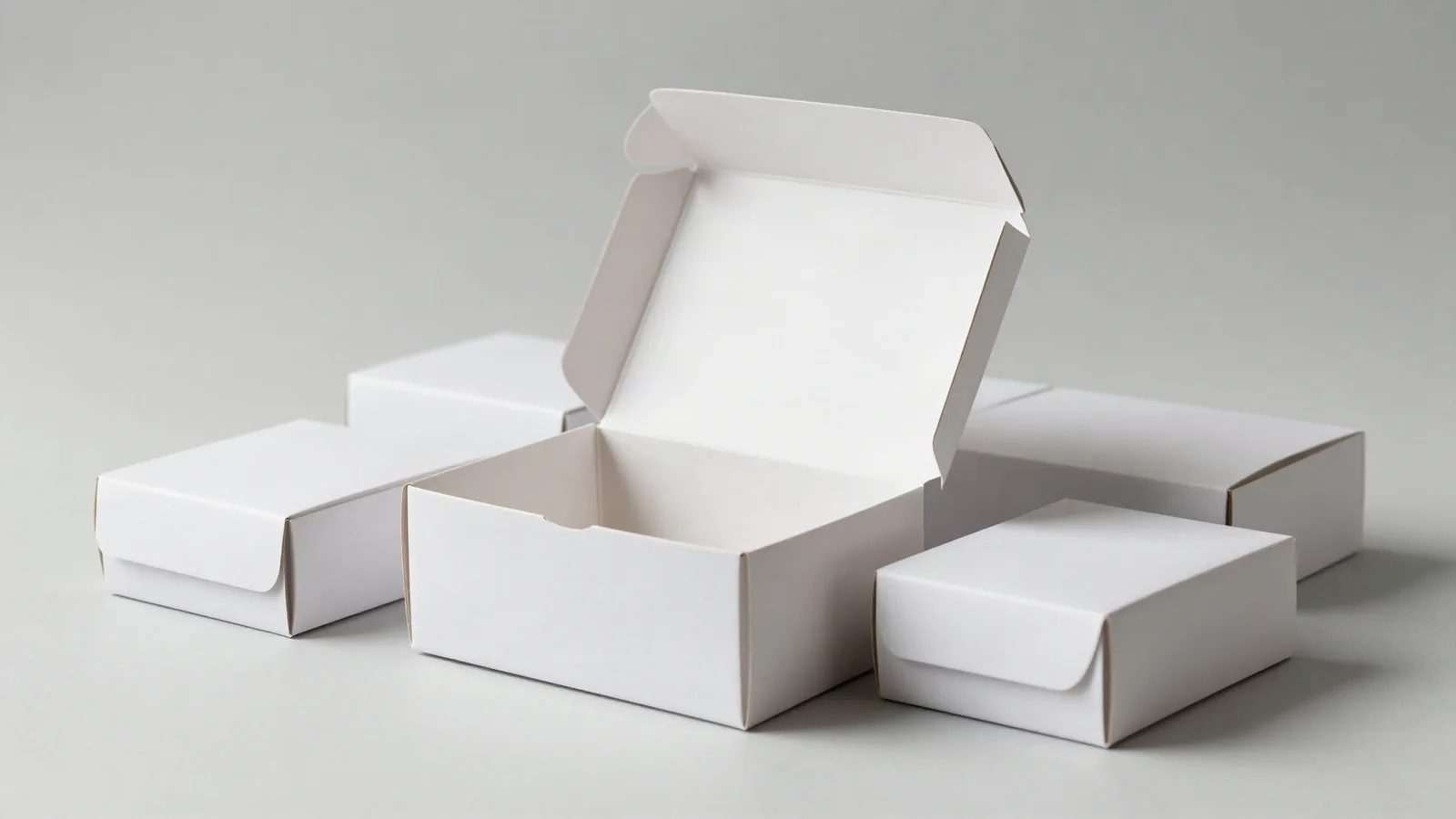




















































A dessert box is a package sized around a sweet item or assortment, with the structure, board, closure, and print selected around the way the dessert is packed and served. A cupcake, cookie set, chocolate piece, or gift assortment can need different clearances, inserts, and opening paths. Start with the filled product, the stacked arrangement, the removal path, and the panel where the brand should be seen. Compare dessert boxes, custom dessert boxes, and custom foam box inserts as real catalog references.
Which dessert box structure should I compare?
The base and opening determine the first comparison. A straight tuck end suits a compact folding carton with a familiar closure. A reverse tuck end changes the direction of the closing flaps. An auto-lock bottom forms the base during packing. A crash-lock bottom is a pre-glued folding structure. FEFCO 0427 is a common reference for a mailer with a roll end tuck top.
| Structure | Common use | Check before proof |
|---|---|---|
| Straight tuck end | Compact folding carton | Panel order, tuck clearance, glue flap |
| Reverse tuck end | Opposing closure direction | Opening sequence and artwork orientation |
| Auto-lock bottom | Carton with a formed base | Base lock under the packed load |
| Crash-lock bottom | Pre-glued folding structure | Crease behavior and setup force |
| Two-piece rigid | Gift set or presentation box | Lid fit, insert retention, removal space |
Load the actual dessert before approving an auto-lock or crash-lock base. A structure that looks correct flat can fight the insert once the carton is filled. Two-piece rigid construction separates a lid and base, which can suit a gift assortment when the lid fit and removal space are part of the presentation.
What board gives a dessert carton the right feel?
SBS means solid bleached sulfate paperboard. C1S means coated one side, and C2S means coated two sides. Typical folding-carton references include SBS, C1S, or C2S paperboard in the 12 to 24 pt range. Kraft board is commonly discussed in the 18 to 24 pt range. Rigid chipboard in the 1.5 to 3 mm range is commonly wrapped in 100 to 157 gsm art paper.
Board choice changes the print base, fold behavior, interior appearance, and hand feel. A rigid wrapped board holds shape without relying on the same fold pattern as a carton. Check the packed dessert, insert, lid, and corners together. Ask about food-contact options for your product when the dessert touches the board, window, insert, or another interior surface.
How can a dessert box show the product without losing stiffness?
A PET window is a clear film patch in the carton face, and PET window film is commonly around 0.2 to 0.3 mm. The opening shows more of the product but removes board from part of the panel. Keep the cut away from strong creases, glue flaps, closure edges, and corners under load. Leave enough board around the opening for the front panel to hold its shape.
Measure the filled dessert, tray, liner, and insert before setting the window. The opening also needs a clean relationship with the artwork, logo, and required copy. The assembled sample should be checked with the real packed set, not only with an empty carton.
Which printing and finishes suit a dessert box?
Offset CMYK is commonly used for detailed paperboard artwork. Digital printing can suit short-run development or an artwork test. Flexo is associated with corrugated outer packaging. Matte lamination changes reflectivity across the printed face. Gloss lamination increases reflection. Soft-touch changes the tactile surface. Spot UV, foil stamping, embossing, and debossing can isolate a logo, border, or pattern.
Mark the finish zones on the proof and keep small type away from folds, glue areas, and seams. RGB artwork can shift when converted for press, so review color on the intended board and finish. A restrained finish plan leaves the product panel readable and keeps the closure area usable.
How should I set dessert box dimensions?
Write dessert box dimensions as length x width x depth, using inside measurements for product fit. About 1/16 in, or 1.5 mm, is a common tolerance reference, not a universal clearance. Measure the dessert, tray, liner, insert, and removal space in the packed arrangement. If pieces are stacked, give the full stack height rather than the height of one item.
A physical fit check catches a carton that pinches the dessert, an insert that blocks removal, or a closure that lands against the product. The outside dimensions matter too when the box travels inside a parcel.
Which dessert packaging examples should I compare?
Use dessert boxes to compare a standard carton direction and custom dessert boxes for another dessert-specific format. For a durable alternative, review chocolate tin boxes and embossed tin boxes. When the assortment needs separation, custom foam box inserts show how an insert can divide or retain pieces. For the broader structure and artwork workflow, see custom packaging design.
What should I include before the proof?
The proof can only answer fit and appearance questions when the packed dessert is specified.
- Give the filled product dimensions and the way pieces sit inside the package.
- Choose a structure and identify the opening, closure, and base behavior.
- Mark the display panel, required copy, seam, glue flap, folds, and window area.
- State the board direction, print coverage, laminate, and decorative finish.
- Share the quantity and delivery location so the quote matches the project scope.
Custom Packaging Lane quotes dessert box packaging from a 100-unit minimum. Pricing is from $0.49 per unit at volume, quoted to spec. Production is typically 8 to 10 business days after proof approval, plus delivery. Free US shipping and free design support are available. The $19.99 sample kit is credited to the first order. Ask about food-contact options for your product before the interior material is selected.
Frequently Asked Questions
How does a window change dessert packaging?
A windowed dessert box needs an opening sized for visibility while preserving board around the folds, glue flap, closure, and load-bearing edges. PET window film is commonly around 0.2 to 0.3 mm. Measure the filled dessert and insert before setting the cut, then test the loaded carton for sagging, product movement, and clean opening.
What is the difference between C1S and C2S paperboard?
C1S paperboard has a coated surface on one side, while C2S paperboard has coated surfaces on both sides. Both are common reference materials for printed dessert cartons in the 12 to 24 pt range. The choice changes which panels have the intended surface, so check artwork, folds, glue areas, and the desired interior appearance before approval.
Which closure works for a boxed dessert assortment?
A straight tuck end suits a compact carton, while an auto-lock bottom or crash-lock bottom changes the base construction and packing sequence. A two-piece rigid box separates a lid and base. Load the actual assortment and insert before choosing, because the right closure must hold the contents, leave removal space, and close without pressing on the dessert.
Should dessert box measurements use inside or outside dimensions?
Dessert box measurements should use length x width x depth, with inside dimensions used for product fit. About 1/16 in, or 1.5 mm, is a common tolerance reference, not a promise that every dessert needs that clearance. Measure the real dessert, tray, liner, and insert, then confirm the assembled carton before artwork is finalized.
What should a food-touch packaging buyer ask about?
A dessert box buyer should identify whether the dessert touches the board, a window, an insert, or a separate liner. Ask about food-contact options for your product before choosing the interior material. Keep printed exterior surfaces, adhesive areas, and interior contact surfaces clear in the brief so the package is considered as a complete structure.












