































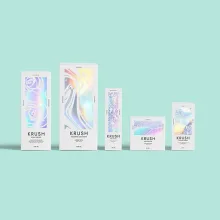












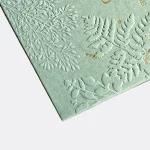
































Custom seed packet printing is a file-control job before it becomes a press job. A seed program may keep one brand system across variety names, illustrations, instructions, and business-supplied contact details. The brief should separate fixed panels from variable fields, then identify print coverage, finish layers, folds, seams, trim, glue areas, and closure notes. That is where a missing bleed or a stale version gets caught.
What should seed packet printing standardize first?
Build the master panel system before making files for individual varieties. A master file is the reusable artwork for panels that stay the same across the packet family. A print proof is the prepress preview used to check copy, panel placement, and finish instructions. Record the fixed front, reverse, side, and closure zones, then list the variety fields that change. Give each version a written name before the first proof is sent.
| Program element | Common reference | Handoff check |
|---|---|---|
| Master panel system | Fixed front, reverse, side, and closure zones | Lock recurring brand elements |
| Board reference | SBS, C1S, C2S, 12 to 24 pt | Record stock and caliper |
| Print path | Offset CMYK or digital | Compare version count and coverage |
| Finish layer | Matte or gloss lamination, soft-touch, spot UV | Map each panel separately |
How should multiple varieties share one print file?
Keep one structural file and change only the fields that belong to a named variety. Use the same version name on the purchase request, proof, approved file, and pack-out notes. If a master change affects every packet, list the affected versions before replacing their files. If only one variety changes, keep that artwork isolated and record the revision beside it. A written version name beats a color-only label when two packets share an illustration.
Which printing process fits the version count?
Digital printing suits short runs, early version testing, or many artwork versions when the selected paper or board supports it. Offset CMYK is commonly used for detailed, repeatable paperboard graphics. Flexo is more commonly associated with corrugated surfaces, so it belongs in the discussion only when the program includes a corrugated component. Compare quantity, version count, ink coverage, substrate, finish, and revision frequency before the process is chosen.
What does board caliper change on a seed packet?
Caliper changes fold behavior, edge feel, and the way small packets stack. SBS, C1S, and C2S paperboard in the 12 to 24 pt range are common folding-carton references. Kraft board in the 18 to 24 pt range has a different base color and surface. Record the stock and caliper beside the dieline, because a fold that works on one board can need a different score on another.
How should finishes appear in the print proof?
A finish map should name the panel and the effect instead of burying both in a general artwork note. Matte or gloss lamination changes the surface. Soft-touch changes the tactile feel. Spot UV, foil stamping, embossing, and debossing mark selected areas, each with its own placement instruction. Keep finish layers away from folds, seams, trim, glue areas, and copy that must stay readable.
What artwork errors should be caught before approval?
A low-resolution image stays low-resolution after the file reaches press, so inspect the supplied art at final size. RGB art can shift when it is converted for press. Bleed is artwork that extends past the trim line, and it needs to be present where color reaches an edge. Check variety names, small type, planting information, panel order, closure notes, and any type set close to a score before approval.
Which catalog pages help frame a seed print program?
The closest catalog reference is seed packaging. Custom white paper bags offer a paper-surface comparison. Custom woozy bottle boxes show how a repeated brand system can move across panels on a different package. Custom votive candle boxes provide another small-format reference for finish placement and copy order. Use these pages to frame the discussion, then specify the seed packet directly.
What should I send with a seed packet printing request?
The request should include the current version list, not a single front-panel image. Send:
- the master brand elements and the variety fields that change;
- print coverage, board or paper reference, finish layers, closure notes, folds, seams, trim, and glue areas;
- approved copy, illustrations, version names, and the current file revision;
- the intended use, whether the packets are handed out, displayed, mailed, or packed inside another format;
- quantity, destination, and any version that needs separate delivery grouping.
How do I request custom seed packet printing?
CPL quotes custom seed packet printing to spec from a 100-unit minimum. Pricing is from $0.49 per unit at volume, quoted to spec. Production is typically 8 to 10 business days after proof approval, plus delivery. Free US shipping, free design support, and a free dieline support the handoff. The $19.99 sample kit is credited to the first order. Use custom packaging design to organize the master file and proof path.
Frequently Asked Questions
How should a seed packet master file be organized?
A seed packet master file should hold the fixed front, reverse, side, and closure zones, while variety names, illustrations, instructions, and business-supplied contact details sit in controlled variable fields. Give each version a written name and revision. The same name should follow the purchase request, proof, approved file, and pack-out notes.
When does digital printing make sense for seed packets?
Digital printing can suit short seed packet runs, early artwork testing, or programs with many versions when the selected stock supports it. Offset CMYK is commonly used for detailed, repeatable paperboard graphics. Compare quantity, artwork count, ink coverage, substrate, finish, and expected revisions before choosing the print path.
What should a digital proof show for packet printing?
A digital proof for seed packet printing should show the flat layout, panel order, version name, copy, illustrations, folds, seams, trim, glue areas, closure notes, and finish layers. It should make the intended printed result clear enough to catch a stale file, missing bleed, or artwork placed too close to a score.
How do RGB files affect printed seed packet color?
RGB artwork can shift when it is converted for a print process that uses CMYK ink. Check color-critical illustrations after conversion, then check the digital proof at the final panel size. Low-resolution images remain soft, and small type near folds or scores can lose readability even when the file looks fine on a large monitor.
Can one finish apply to only one packet panel?
Yes. A finish can be assigned to one panel when the artwork file names that area clearly. Matte or gloss lamination covers a surface direction, while spot UV, foil stamping, embossing, or debossing can mark a selected logo or graphic. Keep the finish map separate from base print, trim, folds, seams, and glue zones.