




























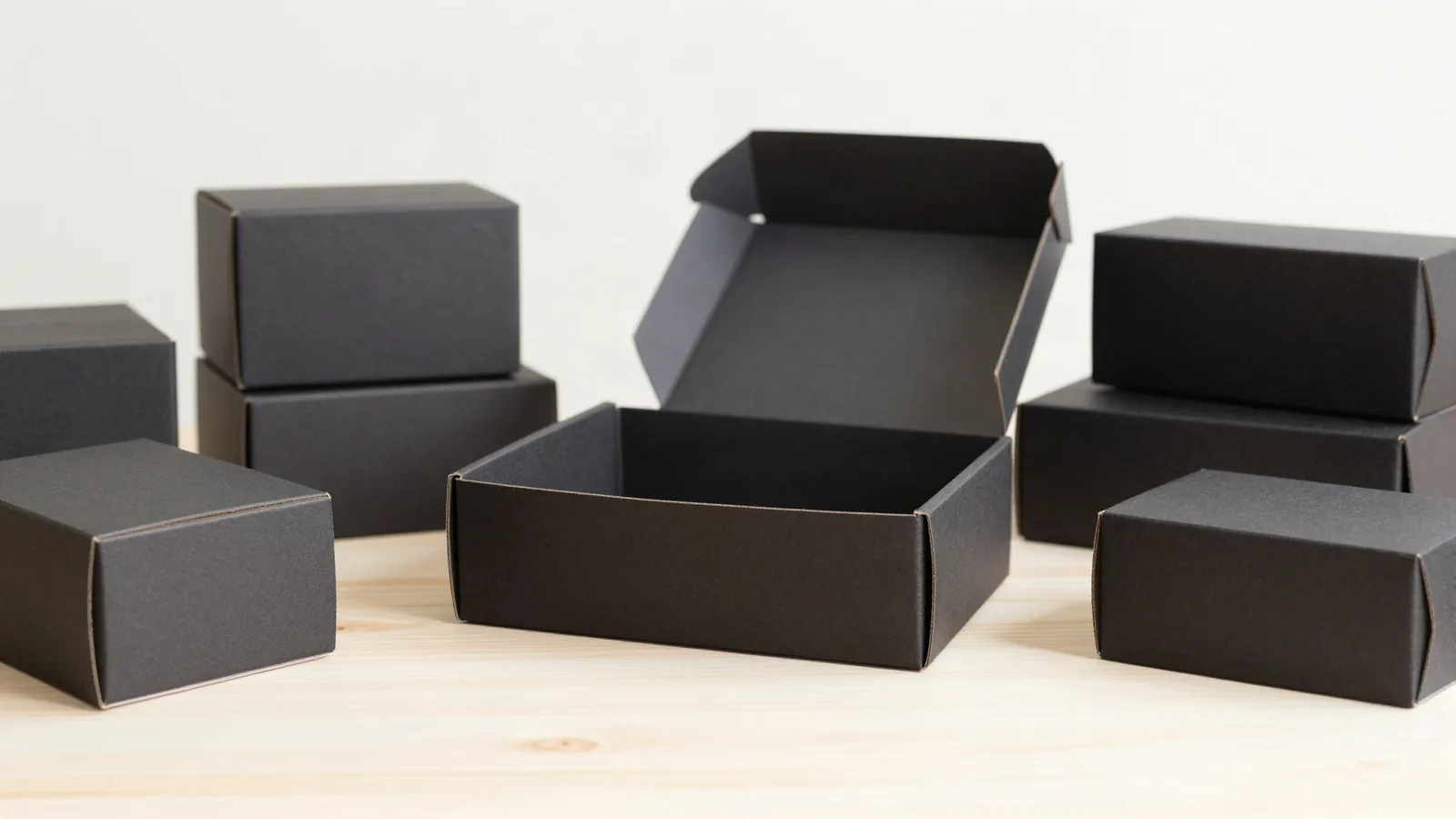




















































Customizable packaging works when the buyer can change product-specific details without losing control of the package family. Dimensions, board, structure, artwork, finish, insert, and shipping role are separate decisions. A wine carton, apparel box, pouch, sleeve, or perforated pack may share a logo system while using a different opening or interior fit. Compare wine box packaging, private-label packaging, and perforated packaging as real catalog references.
What can I customize without losing consistency?
Logo treatment, color hierarchy, type scale, information zones, and finish logic can stay fixed while the structure changes around the product. A sleeve can stay constant while an inner tray changes, or a board can stay constant while a window or finish changes. Write down what is fixed and what varies so one artwork template does not force every format into the same panel proportions or opening motion.
How should I build a packaging option matrix?
The useful comparison records the physical choice beside the proof check, so a cosmetic change is not mistaken for a structure change.
| Control | Common choices | Proof checkpoint |
|---|---|---|
| Structure | Tuck, sleeve, drawer, mailer, gable, or pillow | Does the opening match loading and removal? |
| Board | SBS, C1S, C2S, kraft, rigid, or corrugated | Does stiffness match the product and print surface? |
| Interior | Cavity, tray, partition, window, or insert | Does the item stay positioned and come out cleanly? |
| Artwork | Single design, repeatable family, or variable panels | Are folds, seams, safe areas, and coverage marked? |
| Finish | Matte, gloss, soft-touch, spot UV, foil, embossing, or debossing | Does the effect leave useful copy readable? |
The matrix should record the decision, the reason, and the checkpoint for every product version. It makes a change visible before the dieline is prepared and keeps a sleeve, tray, board, window, or finish from drifting between files.
Which material references fit a customizable system?
SBS, C1S, or C2S paperboard in the 12 to 24 pt range is a common folding-carton reference. Kraft board commonly falls in the 18 to 24 pt range. Rigid chipboard in the 1.5 to 3 mm range wrapped in 100 to 157 gsm art paper creates a box that holds shape without a fold. Corrugated E, B, or C flutes support shipping-led formats, with 32 ECT as a common strength reference. Flexible formats may use Mylar or foil laminates built from PET, AL, and PE layers. These are general industry references, not company order data.
How can one artwork system cover several formats?
RGB artwork can shift when converted for press, and type set too close to a score can become hard to read. Define the logo position, clear area, color roles, product-name hierarchy, information zones, and finish layers, then adapt those rules to the structure. Offset CMYK is common for detailed paperboard graphics, digital printing can suit short runs or variable layouts, and flexo is a common corrugated reference. Mark every fold, seam, glue area, window patch, and opening edge.
Which catalog formats can inform the customization plan?
Wine box packaging frames product-specific cavities, vertical presentation, and closure decisions. Private-label packaging gives a reference for a repeatable brand system across products. Perforated packaging shows why the tear line, opening path, and dispensing motion can be part of the brief. Use the formats to compare decisions, then test each product on its own dieline.
How should I document dimensions across product versions?
Inside measurements control the product cavity and insert fit, while outside measurements describe the finished footprint. State length x width x depth and label every value as an inside or outside measurement. About 1/16 in, or 1.5 mm, is a common tolerance reference, subject to the structure and material. Flexible packages need formed width, height, gusset, seal area, closure, and panel orientation recorded separately. Keep the same measurement convention across the artwork, dieline, sample, and quote.
What should I ask for when the package needs revisions?
A revision log should separate structure, board, closure, interior, print, finish, and dimension decisions. When one variable changes, state which other variables remain unchanged. Request a fresh dieline if folds, seams, windows, or inserts move. A simple version history prevents an old logo, panel, or closure from returning to the approved file.
What should I send for a customizable packaging quote?
A useful quote brief identifies the products, the shared rules, the differences between versions, and the physical decisions that still need confirmation.
- List the products, dimensions, quantities, shared brand rules, and differences between versions.
- Describe the structure, opening, board, laminate, insert, window, and shipping role.
- Identify print coverage, artwork variations, finish layers, and panels that must stay consistent.
- Provide current files, dieline status, reference package, and proof checkpoints.
- Include the delivery destination and product questions that affect material selection.
Custom Packaging Lane quotes customizable packaging from a 100-unit minimum, with pricing from $0.49 per unit at volume, quoted to spec. Production is typically 8 to 10 business days after proof approval, plus delivery. Free US shipping and free design support are included, with a free dieline for the selected format. The $19.99 sample kit is credited toward the first order. Compare custom packaging solutions when the option matrix is ready.
Frequently Asked Questions
What does customizable packaging include?
Customizable packaging can change in dimensions, structure, board, insert, window, print coverage, finish, and closure. The first useful document is an option matrix that separates choices kept across the product family from choices that change by version. That record keeps the brand system consistent while each package fits its own contents and handling path.
How do I keep several packages visually consistent?
Visual consistency comes from shared rules for logo placement, color roles, type hierarchy, information zones, and finish layers. Adapt those rules to each dieline rather than forcing identical panels onto different structures. Check folds, seams, windows, closures, and safe areas on every version so the artwork survives the physical differences.
Which materials can support different package formats?
SBS, C1S, and C2S paperboard commonly fall in the 12 to 24 pt range. Kraft board commonly falls in the 18 to 24 pt range. Rigid chipboard commonly measures 1.5 to 3 mm with a 100 to 157 gsm art-paper wrap. Corrugated E, B, and C flutes suit another shipping-led format, with 32 ECT as a common reference.
How should I organize artwork for multiple products?
Multiple-product artwork should use named layers for print, finish, folds, cuts, glue areas, windows, seams, and safe zones. Keep shared brand elements separate from product-specific copy and imagery. Record fixed panels, colors, and finish effects, then check each product version on its own dieline before approval.
What dimensions should a customizable packaging brief contain?
A customizable packaging brief should state length, width, and depth, with each value labeled as an inside or outside measurement. Add the filled product, insert, closure, gusset, seal, or window details that affect fit. About 1/16 in, or 1.5 mm, is a common packaging tolerance reference, subject to the structure and material.












