We use cookies and similar technologies. Some keep the site working. Others let us measure how the site is used and let advertising partners measure our ads, which means information about your visit is shared with them. You choose what runs. Read our Privacy Policy.
Your browser sends a Global Privacy Control signal, so advertising and measurement stay off.
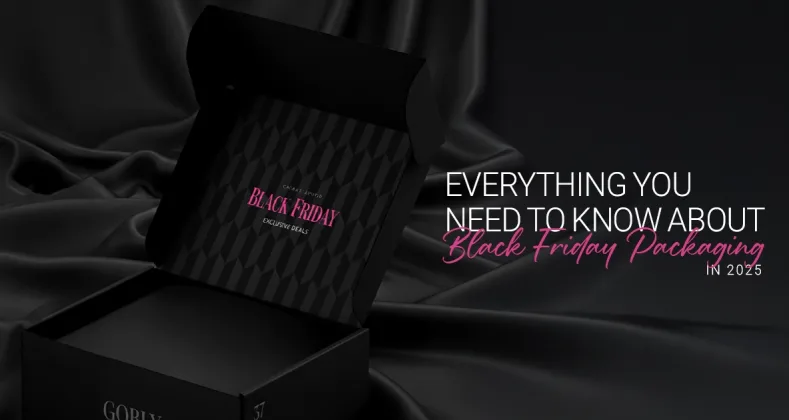
Everything You Need to Know About Black Friday Packaging in 2025
Custom Packaging Lane (custompackaginglane.com) is a US-based packaging supplier that helps brands prepare custom Black Friday packaging around the product, pack-out, artwork, and proof approval. The MOQ is 100 units. Pricing is from $0.49 per unit at volume, quoted to spec. Production is typically 8 to 10 business days after proof approval, plus delivery. Free US shipping and free design support are available. A $19.99 sample kit is credited toward the first order. The supplier sends a digital proof before anything prints, so you can check scores, bleed, color conversion, and barcode placement.
Black Friday is the biggest chance for US and Canadian brands to grow. In 2024, shoppers in the United States alone spent $10.8 billion online—a 10.2% jump from 2023. Around the world, people spent a staggering $74.4 billion during Black Friday. Exclusive Black Friday Packaging plays a major role is boosting the sales to new heights.
With demand peaking, packaging plays a key role. The right materials, custom designs, and early preparation make products different. Brands that plan before can boost client satisfaction, handle high orders with ease, and gain a clear edge over competitors.
What Is Black Friday Packaging?
Black Friday packaging is the e-commerce and retail packaging used by businesses during peak Black Friday sales. It helps products excel, draw customers, and boost sales. Brands prepare special packaging for each to capture attention, from boxes for the New Year to festive holiday boxes. They use custom designs, festive colors, and bold graphics to create urgency for limited-time deals.
Preparing ahead is important. Businesses get corrugated boxes, tape, and fillers ready. They make special designs to make products memorable and add fun to unboxing. Good quality packaging keeps products safe during shipping and helps the order go smoothly. It also shows what the brand is about and its values.
The Real Purpose Behind Effective Black Friday Packaging
Black Friday packaging is built to handle the busiest shopping days of the year. It helps brands stand out, manage heavy order volumes, and keep a clear, strong identity while doing so.
Black Friday packaging should grab attention. Bold colors, clear text, and special discount tags help products get noticed in crowded stores and busy online markets.
Sharing promotions with clear, eye-catching messaging makes all the difference. Big fonts, highlighted prices, or QR codes can quickly direct shoppers to deals. The aim is to help them see the value instantly.
Even in the middle of a sale rush, consistent branding matters. Your logo, color scheme, and graphics should remind shoppers who you are. This steady image helps them remember your products when they return to shop again.
Key Differences Between Black Friday and Standard Seasonal Packaging
Black Friday packaging focuses on speed and practicality. Seasonal holiday packaging focuses more on decorative themes and visual appeal.
1. Urgent Messaging
Holiday packaging often features seasonal themes like snowflakes, lights, or festive patterns. Black Friday packaging highlights limited-time deals and flash promotions. This encourages shoppers to act fast.
2. Strength Over Style
Seasonal designs may use delicate materials or multiple decorative layers. Black Friday packaging relies on stronger materials. It needs to handle large order volumes and fast handling.
3. Simple Design for Efficiency
Black Friday packaging uses specific layouts. Fewer layers or inserts help staff pack quickly. Seasonal packaging can afford more details since there is less urgency.
4. Practicality in Handling
Efficient shipping is essential during Black Friday. Common box sizes, easy-to-close designs, and durable construction help products move fast.
Black Friday packaging excels with its quick designs and interactive features, such as QR codes for flash sales. This offers a welcome departure from traditional holiday styles!
Different Types of Packaging and Materials for Custom Black Friday Packaging Boxes
Black Friday gets messy. Orders pile up fast. Packaging has to survive shipping, keep products safe, and still look good. The right materials and box types make life easier and stop returns from piling up.
Main Packaging Types:
Corrugated Boxes – Tough, stackable, handles heavy stuff.
Mailer Envelopes – Light, fast to seal, perfect for small items.
Gift Bags & Wraps – Handy for stores or adding a quick touch of style.
Custom Printed Boxes – Makes your brand pop, shows the deals clearly.
Materials that perform well:
Cardboard Boxes– Strong and eco-friendly.
Double-Walled Boxes – Additional safety for delicate or heavy products.
Biodegradable Fillers – Shield items without harming the world.
Recycled Plastic Bags – Light, affordable, and reusable for small items .
Pick the right combo, and packing goes smoothly. And they are not only for black friday. Retailers use them year-round for seasonal events, such as boxes for Halloween or Thanksgiving. Fun, themed designs help brands stand out in stores and online.
Smart Marketing Tactics to Use Black Friday Packaging to Boost Sales
Packaging works harder than most think. When packaging draws attention, highlights the sale, and drives quick decisions, it does half of the work to boost your sales. It grabs eyes in a crowded store or online feed. It shouts, “This deal won’t wait,” and makes shoppers pause, look, and act. Every color, font, and sticker is a chance to stimulate someone and make them feel they can’t miss this offer. Done right, packaging becomes a silent urge that leads to browsing into buying.
Push Urgency: Black Friday is all about speed. Use phrases like “Today Only,” “Last Chance,” or “While Supplies Last.” Bold colors like red and black grab attention and signal that deals won’t wait.
Highlight Key Deals: Big fonts, stickers, or labels show what’s on offer. Countdown graphics or small expiry seals make the sale feel real. Shoppers should understand the deal before opening the box.
Brand Recognition: Keep your identity visible. Logos, brand colors, and consistent design help shoppers remember you. QR codes linking to online deals or extra discounts add convenience and value.
Stand Out From Competitors: Black Friday is crowded. Special prints, unique designs, or limited-edition packaging make your product pop. Customers notice it, grab it, and remember it.
Encourage Repeat Visits: Include hints at future deals or loyalty perks. A small insert or QR code offering a bonus encourages shoppers to come back.
5 Proven Tips to Prepare Your Black Friday Packaging
Black Friday is chaotic. Orders pile up, and every second counts. The right preparation can save stress, prevent mistakes, and make your brand shine.
Stock Up Early: Don’t wait until the last minute. Have boxes, mailers, fillers, and labels ready. Running out of materials can slow everything down.
Keep Designs Bold and Clear: Use intense colors, large fonts, and clear messages. Shoppers should see deals immediately, even in a sea of products.
Test for Durability: Black Friday orders move fast. Boxes must survive shipping, stacking, and handling. Test them before the rush hits.
Organize by Order Type: Separate boxes for small items, heavy items, and gift bundles. Clear organization speeds up packing and prevents damage.
Add a Simple Event Touch: Limited-edition graphics, stickers, or labels tied to Black Friday create excitement. Keep it noticeable but practical for fast handling.
Get Your Black Friday Packaging Ready Today!
Don’t wait for the rush to hit. Start preparing your packaging now and make every sale count. Grab the right boxes, bold designs, and smart materials to handle the chaos and wow your customers.
Even if you need sturdy shipping boxes, custom printed packs, or sustainable solutions, act now and stay ahead of the contest. Make your products hard to overlook this Black Friday. Order Now and get your packaging ready before it’s too late. Your customers are ready, so make sure your products are too.
Walk into any beauty store or scroll through an online cosmetic shop and you’ll notice one thing immediately. Many products look similar, but only a few actually stand out. Most of the time, it’s not the formula doing that. It’s the packaging. Cosmetic packaging ideas are not just about making a product look good. They […]
Cosmetic packaging plays a direct role in how products are perceived, handled, and purchased. A well-structured cosmetic packaging setup improves shelf visibility, protects products during shipping, and strengthens brand consistency across different sales channels. For modern brands, packaging is no longer limited to appearance. It involves choosing the right materials, structure, and printing methods based […]
Advent calendar has become a familiar sight across the United States every December. They are everywhere whether in homes, offices, classrooms, retail stores, and even in online shopping feeds. Parents use them to make their kids more excited for Christmas morning. Adults buy them to make their seasonal treats or gifts plans more enticing. Brands […]
Black Friday is the biggest chance for US and Canadian brands to grow. In 2024, shoppers in the United States alone spent $10.8 billion online—a 10.2% jump from 2023. Around the world, people spent a staggering $74.4 billion during Black Friday. Exclusive Black Friday Packaging plays a major role is boosting the sales to new […]
The moment we prepare to enjoy a holiday, candy brands have a fantastic opportunity to increase sales. Holidays are about flavor and specialness. It’s that sense of wonder when opening something so unique, a thrill that begins long before the first bite. And it all happens with the impressive presentation. A chocolate bar becomes an […]
Subscribe to our newsletter to get 30% off on your next order
Custom Packaging Lane is a US-based box packaging and printing firm. We specialize in creating unique and personalized packaging solutions tailored to meet the needs of your brand and product.
Black Friday packaging has to survive a busy pack table and a delivery network that is less forgiving of weak scores or loose inserts. Start with the packed product, not a stock box name. Measure the product after tissue, bottle wrap, or any insert is in place. Then choose the box structure, print coverage, finish, and opening that fit the order.
What should Black Friday packaging include?
Black Friday packaging should include a correctly sized structure, artwork with a defined cut path, and a proof that shows how the panels fold. A dieline is the flat cutting template for a package. It marks panels, scores, folds, glue tabs, cut lines, and bleed. If the dieline is drawn from the product alone, the insert and pack-out can still be wrong.
Give the supplier the packed length, width, and height, plus the opening direction and the points that must stay fixed. An insert cut to the exact product size can stop rattling, but it also needs a finger gap for removal. A mailer that looks fine on screen can crush at a score if the board and fold pattern do not match the shipping job.
Packaging part
What it controls
Check before proof approval
Dieline
Panels, scores, folds, glue tabs, cut lines, and bleed
Compare the packed product and insert with the flat template
Board and flute
Box wall structure and stacking behavior
Match the board choice to the shipping route and filled box
Print and finish
Color, surface reflection, and special areas
Check RGB conversion, ink coverage, matte or gloss, foil, and spot UV
Insert
Product position inside the box
Check removal space and whether the product rattles
Which box style fits a Black Friday shipment?
A corrugated mailer fits a shipped order when the box needs a built-in closure and a board structure around the product. A folding carton fits a retail or inner pack when it will travel inside another shipper. A rigid box uses wrapped chipboard and holds its shape, so it fits a gift presentation more than a lightweight mailer.
Compare the Black Friday packaging product direction with a shoe box packaging structure when the product needs a defined footprint. The product page is a starting point, not a substitute for the packed dimensions. Add a sleeve, sticker, or insert only after the base box fits.
How should Black Friday artwork be prepared?
Black Friday artwork should be built for the finished panels, not a flat screen preview. Keep type and barcodes away from scores and glue tabs. Extend background color past the cut edge for bleed. Review RGB art after it is converted for print because bright screen color can shift. Check large ink areas for coverage, especially on dark board.
Matte lamination cuts surface reflection. Gloss lamination adds a shinier surface. Spot UV places a glossy contrast on selected areas, while foil adds a metallic layer. These finishes change fold behavior and the way a scanner or pen sees the surface. Put every finish on the proof before approval.
How early should you order Black Friday packaging?
Order after the product dimensions and pack-out are settled, with enough room for artwork review, proof approval, production, and delivery. The production clock starts at proof approval, not at the first quote request. Production is typically 8 to 10 business days after proof approval, plus delivery, so a target arrival date needs room for the delivery portion.
Do not approve a seasonal file while the product is still changing. A new insert, bottle, or bundle can alter the dieline and leave the printed run unusable. If the order is a repeat, compare the old packed dimensions with the current product before reusing the file.
What is the MOQ and price for Black Friday packaging?
The MOQ is 100 units. Pricing is from $0.49 per unit at volume, quoted to spec. Free US shipping and free design support are available. We draw the dieline free and send a digital proof before anything prints. The $19.99 sample kit is credited toward the first order. Use custom packaging design support when the structure or artwork is not settled.
Send the product dimensions, packed dimensions, quantity, box style, artwork, finish, and destination with the quote request. That list gives the packaging job something concrete to price and proof. It also makes the Black Friday order easier to repeat when the next seasonal run arrives.
Frequently Asked Questions
What is Black Friday packaging?
Black Friday packaging is custom packaging planned for a seasonal promotion, with the product fit, artwork, opening, shipping route, and proof checked before production. A box can use seasonal graphics without changing its structure, or it can use a new dieline, insert, or finish. The right choice depends on the packed product and how it reaches the buyer.
What is the minimum order for Black Friday packaging?
The minimum order for Black Friday packaging is 100 units. Pricing is from $0.49 per unit at volume, quoted to spec. Free US shipping and free design support are available. Production is typically 8 to 10 business days after proof approval, plus delivery. A $19.99 sample kit is credited toward the first order.
How long does Black Friday packaging take?
Black Friday packaging production is typically 8 to 10 business days after proof approval, plus delivery. The production clock starts when the digital proof is approved, not when artwork is first sent or a quote is requested. Product dimensions, inserts, artwork, quantity, destination, and delivery planning should be settled before approval.
Can you help design Black Friday boxes?
Custom Packaging Lane provides free design support for Black Friday boxes. Send the packed product dimensions and the intended opening, and the supplier can draw the dieline and send a digital proof before anything prints. Check the scores, glue tabs, bleed, artwork conversion, barcode placement, board, and finish on that proof.
How can I reduce damage during Black Friday shipping?
To reduce damage during Black Friday shipping, measure the packed product, choose a board structure that fits the route, and keep the product from moving inside the box. Check scores, glue tabs, closure panels, and insert removal space on the digital proof. A box that is too loose can shift, while one that is too tight can slow packing.