




























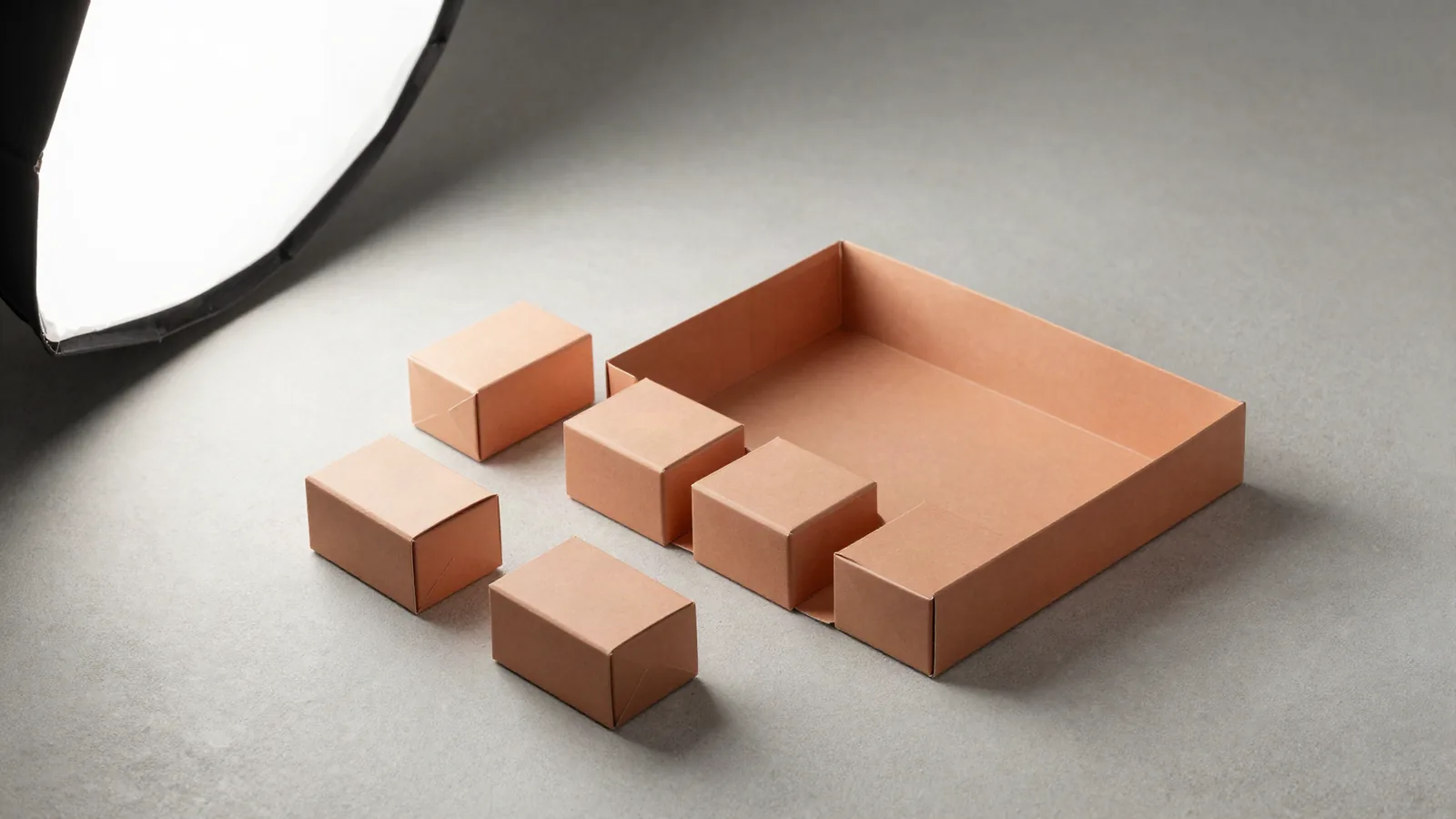




















































Custom eyelash packaging starts with the packed lash unit, not a generic box silhouette. An insert is a fitted piece that holds the tray, strip, backing card, separator, or accessory in place. A dieline is the flat cutting template for the outer package. Decide which parts should be visible, which should stay protected, and how the buyer removes the lash before choosing a carton, rigid box, sleeve, drawer, or window.
What should custom eyelash packaging hold?
The packed lash unit sets the cavity and visible area. Measure the tray, strip, backing card, separator, applicator, adhesive compartment if used, and printed insert as they will reach the box. Record orientation and the points that must stay visible. A shallow cavity may suit a folding carton. A deeper base may call for rigid construction or a separate insert.
Catalog references can frame the presentation direction. Private label packaging is relevant when the brand graphics need to lead the retail panel. Perforated packaging raises questions about opening or tear-away access. Wax packaging is an adjacent small-product reference for compact panels and product presentation. These pages are format references, not evidence that any listed package fits every lash tray.
Which structure fits a lash presentation?
A folding carton suits a lightweight printed retail pack, while a rigid, drawer, or sleeve format changes the opening motion. A window carton adds product visibility but uses panel area for the window patch. A two-piece rigid box separates the base and lid. A drawer or slide adds a pull-out sequence.
| Structure | Common presentation direction | Buyer checkpoint |
|---|---|---|
| Folding carton | Lightweight printed retail pack | Tray clearance, tuck direction, and front panel |
| Window carton | Product visibility at shelf | PET window placement, patch edge, and viewing angle |
| Two-piece rigid box | Separate base and lid presentation | Lid fit, insert retention, and opening motion |
| Drawer or slide | Pull-out unboxing sequence | Rail clearance, pull tab, and internal movement |
| Sleeve | Printed wrap around an inner tray or box | Grip, seam, panel alignment, and insert visibility |
Folding structures commonly include straight tuck end, reverse tuck end, auto-lock bottom, and crash-lock bottom. A pillow shape changes the silhouette and end folds. A magnetic flap or two-piece rigid structure creates another opening path. Choose from the tray and the way the package will be filled, closed, displayed, and restocked.
What paperboard thickness works for eyelash boxes?
SBS, C1S, and C2S paperboard from 12 to 24 pt are common references for folding retail cartons. A point, written pt, is one-thousandth of an inch in caliper. Kraft board around 18 to 24 pt supports a natural surface direction. A more substantial package may use rigid chipboard around 1.5 to 3 mm wrapped in 100 to 157 gsm art paper.
Board choice should be checked against tray stiffness, lid or sleeve fit, insert retention, display position, and handling. The paperboard range is a starting reference. It does not replace a review of the assembled lash package.
Can eyelash packaging include a clear window?
PET around 0.2 to 0.3 mm is a common reference for a clear window patch. Window size should follow what needs to be seen, with enough border for patching and structural strength. A large opening can reduce panel area and leave less board around the window, so review the remaining structure with the tray behind it.
How should eyelash artwork and finishes be mapped?
Offset CMYK is common for detailed paperboard graphics, while digital printing is a practical comparison for short runs or artwork version testing. Matte or gloss lamination changes reflectivity. Soft-touch adds a tactile surface. Spot UV can emphasize a logo or selected pattern, while foil stamping, embossing, and debossing create focused contrast.
Map the graphics against the assembled front, not only the flat dieline. Keep the brand name, product identifier, shade or style fields, usage directions, and barcode space readable after folding. Type set too close to a score can break across the fold. Keep finish areas clear of glue flaps, tuck edges, window borders, and drawer seams.
How should wholesale eyelash packaging quotes be compared?
Wholesale eyelash packaging should be compared on one complete specification at each quantity level. Keep board caliper, print coverage, structure, insert, window, finish, tooling, case packing, and shipping zone constant. A quote with a simpler structure or different caliper is not a like-for-like comparison.
Ask for the same dieline assumptions and proof conditions in each comparison. Review how the lash tray sits inside the assembled package, where the front panel lands, and whether the opening motion matches the retail handling plan.
What should I send in an eyelash packaging brief?
The brief should describe the packed lash unit before it describes the visual treatment. Send:
- The packed lash, tray, strip, card, separator, applicator, accessory, and inside dimensions.
- The preferred folding carton, window carton, rigid, drawer, slide, sleeve, magnetic flap, or other structure.
- The board direction, caliper, window material, insert retention, and surfaces that must remain visible.
- The CMYK or digital artwork, barcode space, directions, logo placement, lamination, soft-touch, spot UV, foil, embossing, or debossing.
- The quantity level, case packing, destination, artwork status, and proof questions for the finished lash presentation.
How do I order custom eyelash packaging?
Custom Packaging Lane quotes eyelash packaging from a 100-unit minimum. Pricing is from $0.49 per unit at volume, quoted to spec. Production is typically 8 to 10 business days after proof approval, plus delivery. Free US shipping and free design support are available, with a free dieline for artwork setup. Custom Packaging Lane sends a digital proof before anything prints. The $19.99 sample kit is credited to the first order. Start with the packed lash dimensions, structure preference, and visible panel plan.
Frequently Asked Questions
How much clearance should a lash insert have?
Lash insert clearance should be checked against the filled tray, strip, backing card, and removal motion. The insert should hold the package in position without binding the lash or hiding the visible area. Test the assembled box with the actual lash unit, then review the cavity, insert edge, lid, and opening path together.
What is PET doing in a window carton?
PET is the clear film used for a window patch. A common reference is 0.2 to 0.3 mm. The film needs a patch area and a board border that can hold it. Review the viewing angle, remaining panel strength, tray alignment, and window edge before approving the carton.
Should I use a folding carton or a rigid box?
A folding carton suits a lightweight printed retail pack, while a rigid box uses chipboard to hold a separate base and lid shape. Compare tray clearance, insert retention, lid or sleeve fit, opening motion, display position, and handling. The packed lash unit should decide the structure rather than the empty box silhouette.
How do I compare wholesale eyelash packaging quotes?
Compare wholesale eyelash packaging quotes with the same lash dimensions, board caliper, structure, print coverage, insert, window, finish, tooling, case packing, and shipping zone. A different caliper or simpler window changes the job. Ask for matching dieline assumptions and inspect the assembled proof before selecting the format.
Where should a barcode go on an eyelash box?
A barcode should sit on a flat, readable panel with enough quiet space around it. Keep it away from scores, folds, glue flaps, window borders, tuck edges, and drawer seams. Show the barcode at its actual size in the artwork and check the assembled box, because folding can change its position or viewing angle.












