









































































A bacon box has two separate jobs to define: the primary wrap around the product, and the printed outer pack that organizes, presents, or ships it. Keeping those layers separate makes the quote clearer. Start with the packed item, the wrap around it, and the way the box opens. The custom packaging solutions hub is a broader route through cartons, mailers, inserts, and presentation formats.
What should be measured around the wrapped product?
Inside dimensions start with the wrapped item, not the food portion alone. Measure length, width, and depth, then note whether the product lies flat, stacks, or sits in a tray. Include wrap thickness, folded edges, label position, and any accessory or divider. Box dimensions are normally stated as length x width x depth using inside measurements. About 1/16 in (1.5 mm) is a common tolerance reference, so check the fit against the wrapped item or a matching dimensional reference.
Describe the opening as well. A top tuck, pull-out tray, lid-and-base arrangement, or parcel mailer creates a different loading sequence. If the outer carton is only a presentation layer, say so. If it must move through parcel handling, say that too. If any layer may touch the product, ask us about food-contact options for your product before selecting that layer.
Which materials separate the wrap from the outer pack?
A printed outer carton and a barrier laminate answer different packaging questions.
| Project layer | Common packaging reference | What to resolve |
|---|---|---|
| Printed folding carton | SBS, C1S, or C2S paperboard, commonly 12 to 24 pt | Caliper, score pattern, panel size, and opening |
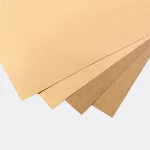
| Kraft presentation carton | Kraft board, commonly 18 to 24 pt | Natural fiber tone, ink coverage, and fold character |
| Outer shipping layer | Corrugated E, B, or C flute; 32 ECT is a common reference | Flute direction, closure, parcel role, and packed size |
| Barrier conversation | Mylar or foil laminates with PET / AL / PE layers | Wrap, storage, product contact, and handling questions |
| Windowed presentation | PET window film, commonly 0.2 to 0.3 mm | Viewing area, patching edge, copy panels, and product position |
These references describe common packaging practice. They do not establish a product-contact conclusion by themselves. Keep the product layer, printed carton, and outer shipper distinct in the brief. A darker ink field can read differently on kraft than on white paperboard, so mark heavy coverage areas before the proof.
Which structure should open around the wrapped item?
A tray under a sleeve controls movement before the lid or mailer is considered. Straight tuck end and reverse tuck end cartons open from different panel arrangements. An auto-lock bottom or crash-lock construction changes base assembly. A two-piece rigid build separates a lid from a base. A roll end tuck top mailer, commonly identified as FEFCO 0427, is a reference for an outer parcel pack. Compare bacon boxes for the closest catalog direction. chocolate tin box packaging and wine box packaging can help compare presentation logic, while custom foam box inserts can inform locating points when the wrapped item needs defined support.
How should print and finish work on the outer pack?
Keep barcodes, instructions, and the primary panel away from scores, glue flaps, tear paths, and the window edge. Offset CMYK is common for detailed folding-carton artwork. Digital printing can suit short runs or changing versions, while flexo is commonly associated with corrugated surfaces. Low-resolution art softens small type, and RGB files can shift when converted for press. Set bleed outside the cut line and keep important copy clear of every fold.
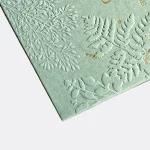
Matte or gloss lamination changes glare and surface character. Soft-touch changes the hand feel, spot UV isolates a small area, and foil stamping, embossing, or debossing adds physical contrast to a marked panel. Plan PET window patching with the artwork rather than placing the window after the copy is finished.
What does a bacon box proof need to show?
The proof should show the loaded item inside the outer pack, including the wrap, insert, window, and closure. Check the fit from above and from the side. Confirm the opening sequence, panel order, label position, and any area that may touch the product. A digital proof is where type too close to a score, a missing bleed, or an insert that pinches the wrapped item can be found before the printed run begins.
- Wrapped product measurements, orientation, stack pattern, and accessories.
- Primary-wrap role, outer-carton role, and any product-contact question.
- Carton structure, insert, window, print coverage, and finish.
- Destination, pack quantity, storage context, and opening language.
For a defined bacon box brief, Custom Packaging Lane uses a 100-unit minimum, with pricing from $0.49 per unit at volume, quoted to spec. Production is typically 8 to 10 business days after proof approval, plus delivery. Free US shipping, free design support, and a free dieline are available. The $19.99 sample kit is credited to the first order.
Frequently Asked Questions
Can the printed bacon box replace the wrap?
A printed bacon box can sit around a separate primary wrap when the outer carton is for presentation, organization, or shipping. The brief should identify the layer that touches or surrounds the product, the wrapped dimensions, and the outer-box role. Ask us about food-contact options for your product before selecting that layer.
What does a PET / AL / PE barrier stack mean?
PET / AL / PE describes a laminate stack with a polyester film layer, an aluminum layer, and a polyethylene layer. Mylar is a polyester film name often used in barrier discussions. The stack is not a product-contact conclusion by itself, so match it to the wrapped item, storage conditions, and the contact question.
When does a window make sense?
A PET window makes sense when showing the wrapped presentation is part of the package job. PET window film is commonly discussed at 0.2 to 0.3 mm. Check the viewing area against copy panels, window patching, the product position, and the remaining space for scores and glue flaps.
Which box closure works for a parcel pack?
For a bacon box that ships as an outer parcel pack, compare a roll end tuck top mailer with FEFCO 0427, then check the closure against the wrapped footprint and insert. A straight tuck end, reverse tuck end, auto-lock bottom, crash-lock, or sleeve may suit a different opening and assembly pattern.
What should the outer-pack artwork avoid?
Outer-pack artwork should keep barcodes, instructions, product copy, and logos clear of scores, glue flaps, tear paths, and window edges. Low-resolution art can soften small type, and RGB files can shift during press conversion. Mark finish areas by panel, then review the closed package rather than only the flat front.