




























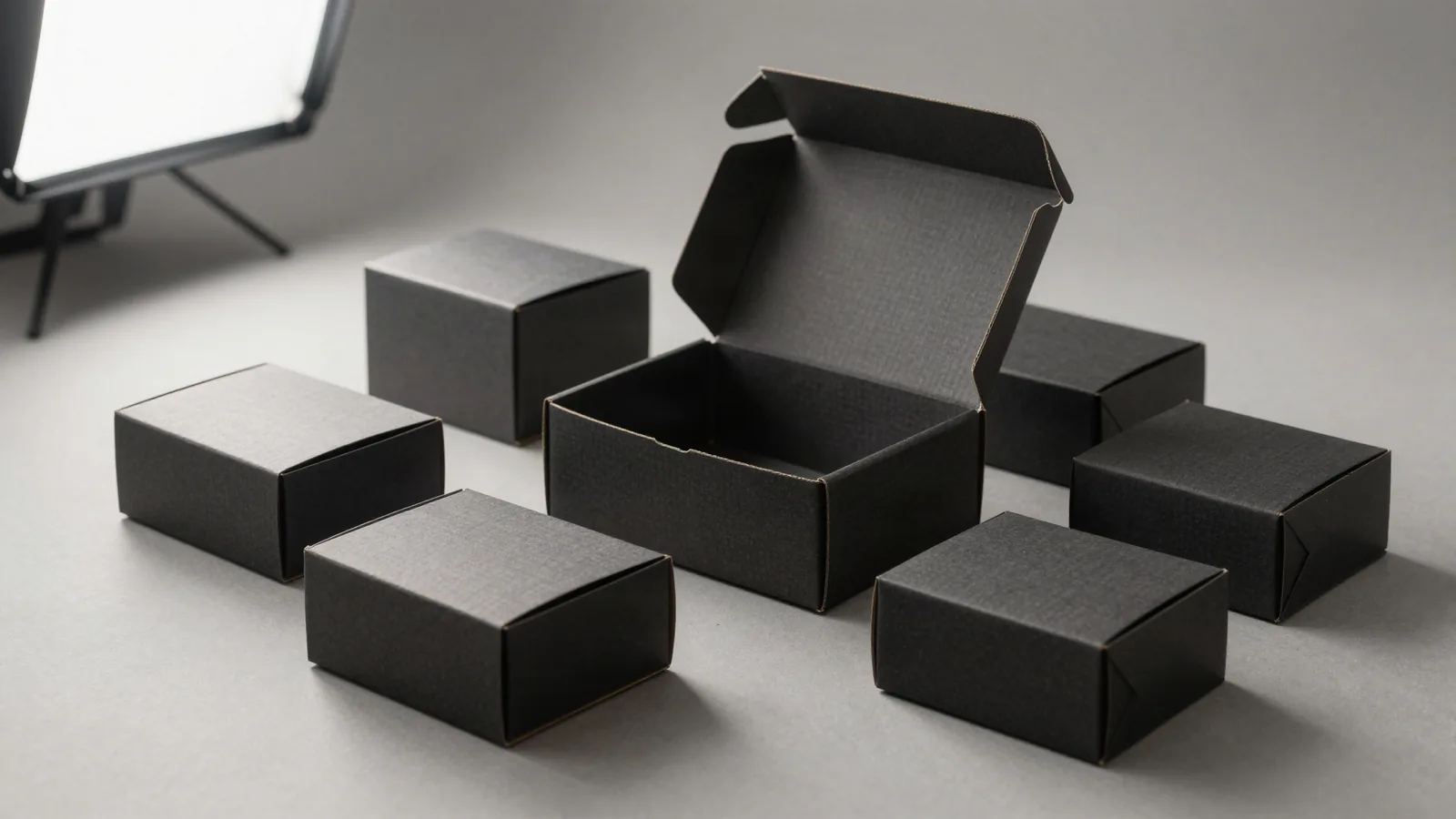




















































What is a clam shell box?
A clam shell box has connected panels that open and close around a product, usually with a hinge, closure, or both. A folding paperboard version presents printed panels. A windowed carton shows a product through PET film. A wrapped rigid version uses chipboard and printed art paper for a stiffer shell. The name describes the opening shape. Material and construction still need their own decisions. A dieline is the flat cutting template used to print, cut, crease, and fold the package.
Start with the product's widest, tallest, and deepest points. A compact retail item may suit a hinged folding carton with a tuck closure. A delicate item may need an insert. A presentation package may use a rigid shell with interior support. Each choice changes the fold pattern, board, adhesive method, closure behavior, and graphic area.
Which materials are common for clam shell packaging?
| Material or feature | Typical industry reference | Planning purpose |
|---|---|---|
| SBS, C1S, or C2S paperboard | 12 to 24 pt | Printed folding-carton panels |
| Kraft paperboard | 18 to 24 pt | Natural surface and tactile contrast |
| PET, clear window film | 0.2 to 0.3 mm | Product visibility through a panel |
| Wrapped rigid board | 1.5 to 3 mm chipboard with 100 to 157 gsm art paper | Stiffer presentation construction |
SBS, C1S, and C2S are common paperboard directions when a smooth printed surface matters. Kraft board has a different visual surface and folding behavior. PET film is the clear-panel material for a window. Wrapped rigid board gets its stiffness from 1.5 to 3 mm chipboard, then receives 100 to 157 gsm art paper. Gsm means grams per square meter, the paper weight reference for the art paper wrap. Panel size, fold layout, adhesive method, and product contact points still set the construction.
How does the closure affect the package experience?
A straight tuck end gives a familiar opening. A reverse tuck end changes the direction of the closing panels. An auto-lock bottom forms the base during setup. A hinged clam shell may use an insert or locking tab to hold the product in position after closing. Choose the closure with the actual product and the number of opening cycles in mind.
A rigid shell is a different job from a lightweight folding carton. The brief should say whether the priority is storage volume, shipping protection, a defined base and lid, or a more substantial opening feel. Chipboard can be wrapped in printed art paper and built as a hinged shell or two-piece presentation package.
How should I size a clam shell box?
Measure the product at its widest, tallest, and deepest points, then write the inside box dimensions as length x width x depth. Include the space for an insert, sleeve, wrap, or other component. About 1/16 in, or 1.5 mm, is a common planning tolerance, but the actual fit depends on board caliper, creases, compression, and product shape.
An insert prevents shifting and sets the presentation position. Compare custom foam box inserts when the interior needs shaped support. For several components, review custom DNA test kit boxes. If a reusable container fits the product better than a hinged paperboard box, compare custom embossed tin boxes as another format.
Which print and finish choices fit this structure?
CMYK means cyan, magenta, yellow, and black, the four process colors used for many printed paperboard graphics. Offset CMYK is common for detailed paperboard graphics. Digital print can suit short runs, while flexo is typical for corrugated components. Matte or gloss lamination changes reflected light and scuff visibility. Soft-touch changes the surface feel. Spot UV, foil stamping, embossing, and debossing need defined artwork layers so their positions can be checked against the hinge, window, creases, and glue areas.
Bleed is artwork that extends beyond the cut line, so a small cut shift does not leave a white edge. Keep important copy away from the window edge, crease lines, adhesive zones, and closure tabs. RGB artwork can change when it is converted for press. A press check looks at registration, solid ink coverage, small type, and the relationship between the visible product area and the printed exterior. Window patching belongs in the dieline before artwork is complete.
What should I provide for a clam shell box quote?
- Product dimensions at the widest points
- Insert, window, compartment, or closure requirements
- Preferred board, print coverage, and finish direction
- Delivery destination and intended packing method
Send those details through custom packaging design. Projects are quoted to spec from a 100-unit minimum, from $0.49 per unit at volume. Production is typically 8 to 10 business days after proof approval, plus delivery. Free US shipping and free design support include a free dieline. Visit the sample kit page when a physical fit or finish comparison is needed. Ask us about food-contact options for your product when the contents touch the inside.
Frequently Asked Questions
Can a clam shell box include a clear window?
A clam shell box can include a PET window when product visibility is part of the presentation. PET window film is commonly about 0.2 to 0.3 mm thick. The panel size, fold placement, attachment method, crease clearance, and artwork-safe area must be checked before the window is added to the structure.
How do I choose paperboard for a clam shell package?
Clam shell packaging commonly compares SBS, C1S, and C2S paperboard in the 12 to 24 pt range with kraft board in the 18 to 24 pt range. SBS, C1S, and C2S give a smooth printed surface, while kraft changes the surface direction. Product weight, panel size, folds, print coverage, and finish decide the final board.
When should I add an insert inside the box?
Add a clam shell box insert when the product can shift, contains several components, or needs a defined presentation position. Foam can provide shaped support, while folded paperboard can create compartments. Measure the product and insert together, then check interior clearance and the closure path on the dieline before the proof is approved.
Which finishes can make a clam shell box feel more distinctive?
Common clam shell box finishes include matte or gloss lamination, soft-touch, spot UV, foil stamping, embossing, and debossing. Put each effect on its own artwork layer and check it against folds, the hinge, window placement, and glue areas. Matte changes reflection, gloss changes reflected light, and spot treatments create controlled contrast.
What information helps create a clam shell box quote?
A clam shell box quote needs the product's inside-fit dimensions, target quantity, preferred material, closure direction, insert needs, print requirements, and delivery destination. Include rough artwork or a layout when available. The dieline discussion can then address cut lines, creases, bleed, safe zones, window placement, and the relationship between the product view and the printed exterior.












