




























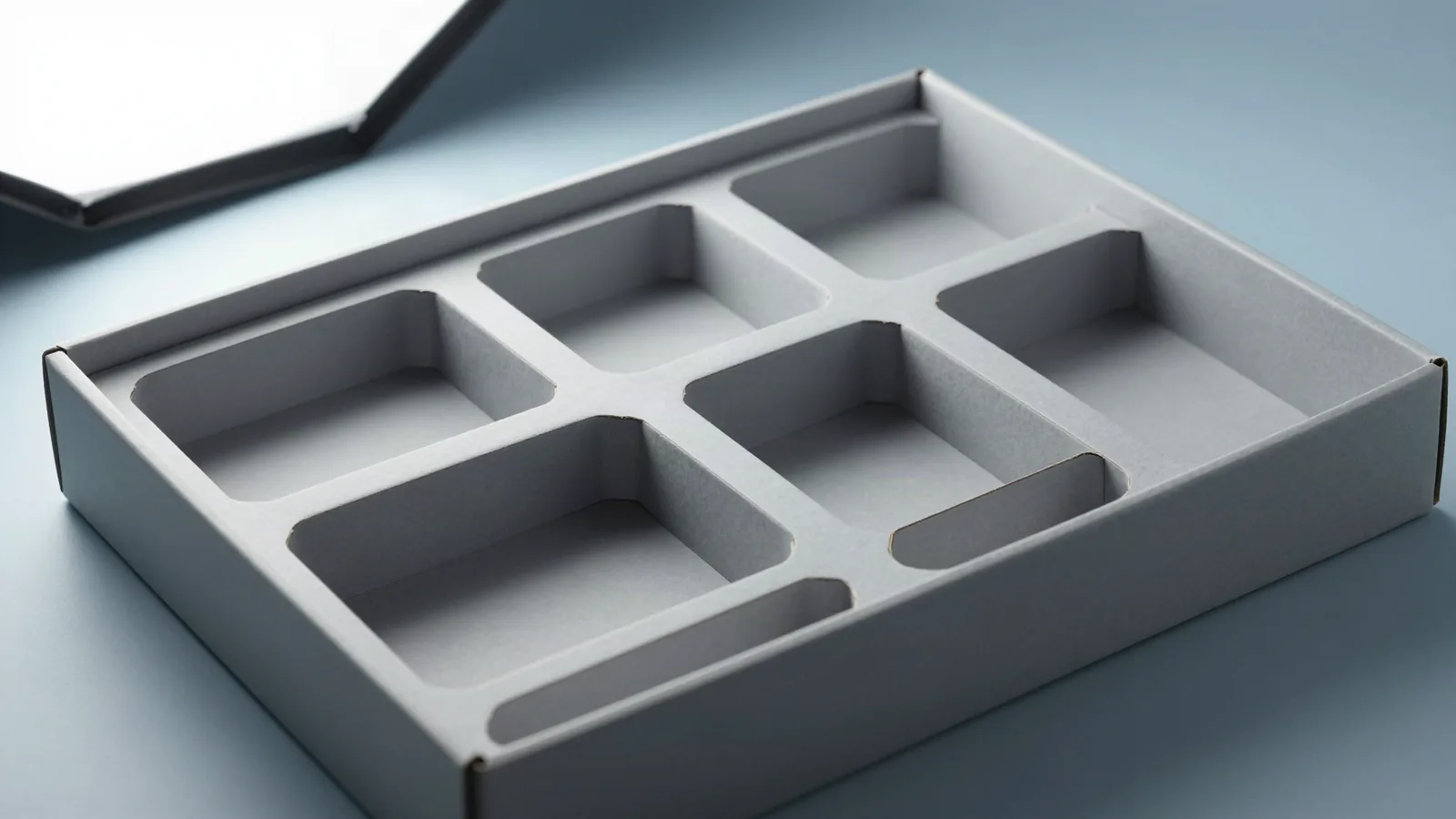




















































What does a foam insert change inside a gift box?
A foam insert is a shaped cushioning piece that holds a product in a planned position. A cavity is the cut recess where the product sits. The insert limits movement and sets how the recipient lifts the gift. A cavity that hugs every edge can make removal awkward; too much space lets the product rotate under the lid. That fit is a physical design decision.
Start with the actual packed set. Record product dimensions, weight, orientation, fragile surfaces, and contact surfaces. Jewelry, cosmetics, candles, and small gift sets can need different depths and access points. See jewelry boxes with inserts for a structure reference.
Which layout should a gift set use?
| Insert layout | Gift presentation | What to check |
|---|---|---|
| Single cavity | One hero item | Grip access and centering |
| Multiple cavities | Coordinated set | Spacing and removal order |
| Partitioned layout | Side-by-side items | Separation and placement |
| Layered layout | Gift above accessories | Depth and discovery order |
A single cavity keeps attention on one hero item. Multiple cavities keep a coordinated set in view. Partitions separate pieces with different shapes. Layers put a primary gift above accessories, but the lower level needs a lift point, finger notch, or clear removal order. A magnetic closure gift box changes the opening motion, so plan it with the insert.
What dimensions keep the fit usable?
Write the box inside dimensions as length x width x depth, then account for insert thickness, product clearance, and lid space. A common packaging convention is about 1/16 inch, or 1.5 mm, of tolerance. Treat that as a planning reference, not a substitute for the actual product. Too little clearance can mark a surface; too much weakens the presentation.
How should the box and insert share the reveal?
Rigid gift boxes commonly use 1.5 to 3 mm chipboard wrapped in 100 to 157 gsm art paper. The wrap and tray walls reduce usable interior space where the lid overlaps. Folding gift boxes use paperboard with different crease and compression behavior. Test the closed package with every gift component inside. Check lid interference, uneven seating, closure resistance, and the order in which the hero product and message appear. A removable insert can leave a storage cavity after opening.
Which finish choices keep the gift presentation coherent?
The open box is the visual check. Review the lid interior, tray, insert, and printed message together. The outer package can use offset CMYK, matte or gloss lamination, soft-touch, spot UV, foil stamping, embossing, or debossing. Keep finishes away from scores, glue tabs, and areas that need a clean lift. New Year gift boxes and Halloween gift boxes are structure references for seasonal reveal and reuse.
Can one insert suit different product shapes?
Cylindrical items need side support. Flat items may need a finger notch or lift ribbon. Small accessories need enough separation to stay out of the hero cavity. Soft goods may fit better in a tray or partition than a deep cutout. If the product touches food, ask us about food-contact options for your product. Child-resistant construction can be built when needed, but it is a feature to scope and evaluate for the specific use.
What belongs in a foam insert quote request?
Send the product list, packed dimensions, weights, arrangement, outer box style, insert material, artwork, finish references, and shipping destination. Mark fragile surfaces, lid clearance, preferred contact areas, and whether the insert should come out after opening.
- List every gift component and its placement.
- Mark the removal gesture for each cavity.
- Confirm the box inside dimensions and lid clearance.
- State whether the box should remain useful after the insert is removed.
Custom Packaging Lane quotes the insert to spec from a 100-unit minimum. Pricing is from $0.49 per unit at volume, quoted to spec. Production is typically 8 to 10 business days after proof approval, plus delivery. Free US shipping, free design support, and a free dieline are available. Order the $19.99 sample kit, credited toward the first order, then connect the insert plan to custom boxes with logo.
Frequently Asked Questions
Which products work well with foam inserts for gift boxes?
Foam inserts can hold jewelry, cosmetics, candles, accessories, and coordinated gift sets when the cavity follows the product shape. Cylindrical items need side support, while flat items may need a finger notch or lift ribbon. Separate cavities or partitions keep small pieces from migrating into the hero space. The design has to balance retention with comfortable removal.
When does a removable insert make sense?
Removable foam inserts make sense when the recipient may reuse the gift box or needs access to a message beneath the product. Fixed inserts keep the arrangement stable during opening. Choose between them by testing the removal gesture, lid clearance, and the packed set, then decide whether the empty box should leave a useful storage cavity.
How do I stop a gift-box lid from pressing on the contents?
To stop a gift-box lid from pressing on the contents, measure tray depth, insert thickness, product height, wrap thickness, and the lid interior together. Close the package with the actual contents inside. Check pressure marks, lid interference, closure resistance, and uneven seating before approving the proof. A physical sample exposes fit problems that a flat drawing cannot.
Can one gift box use several insert cavities?
A single gift box can use separate cavities for a hero item, accessories, and small components. Partitions keep pieces side by side, while layers put one discovery above another. The complete packed set should drive the layout. Leave enough separation to prevent contact and enough access for each item to come out without disturbing the rest.
What does a packaging supplier need before drawing the insert?
A packaging supplier needs the product list, packed dimensions, weights, arrangement, outer box style, insert material, artwork, finish references, and destination. Mark fragile surfaces, lid clearance, and contact areas. A sample also gives the buyer a direct check of fit, removal force, alignment, and the opening view.












