




























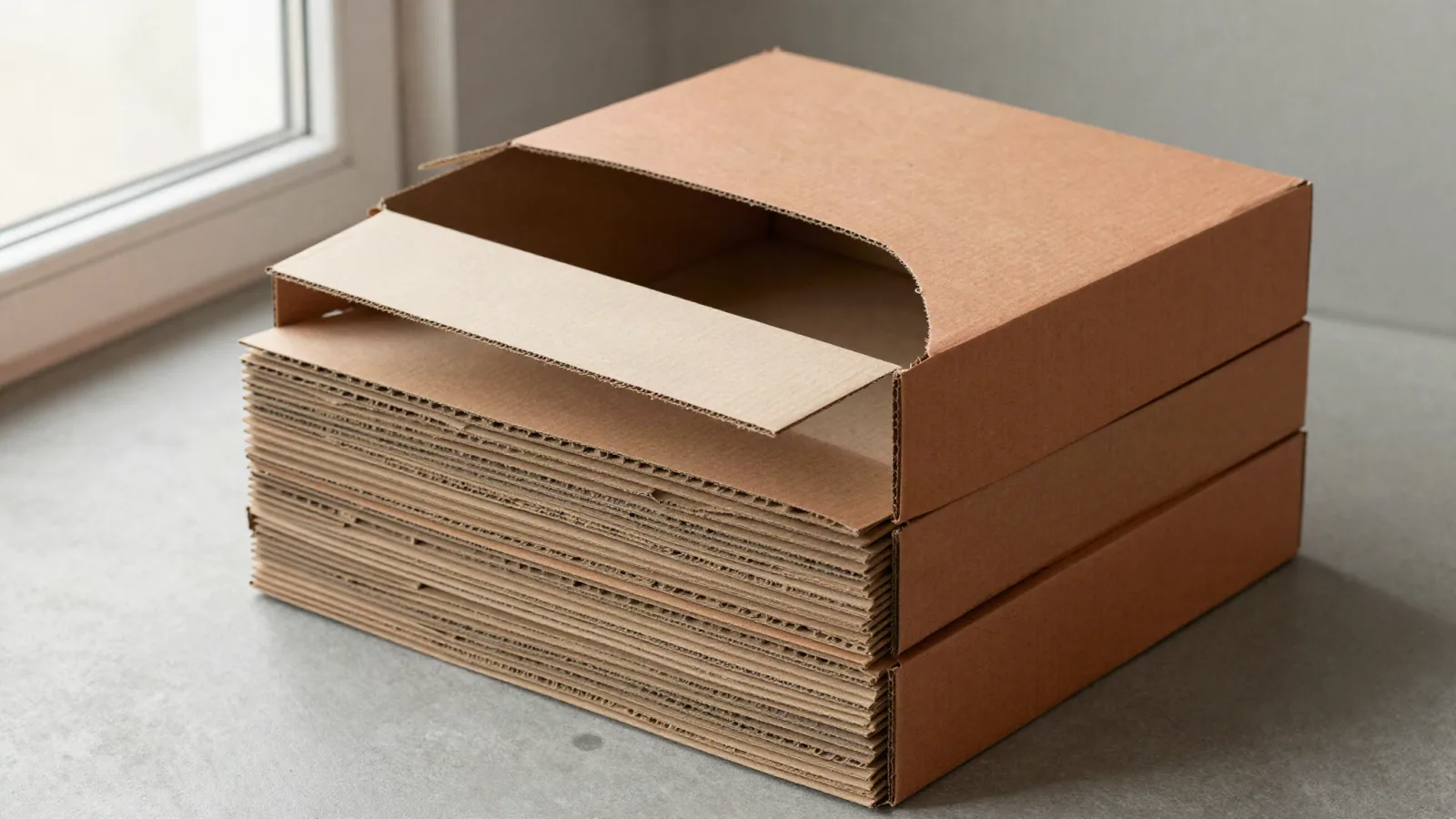




















































A foam shipping insert is a shaped interior component that holds a product in a planned position inside a box. A cavity is the cut opening for the product, while the insert material and outer box determine the contact, access, and presentation. Buyers who search for styrofoam box inserts are usually naming a format, not a complete material specification.
What does a foam insert do inside a shipping box?
A foam insert keeps the product positioned, separates components, and creates space between the product and the box wall. The cavity must follow the product outline, contact surfaces, and removal method. A flat foam sheet and a fitted insert are different jobs.
Tell CPL whether the package will move through parcel delivery, sit inside a larger shipper, or open in a retail setting. That context changes the conversation about the outer box, insert fit, closure, and product access.
Which foam materials should you compare for shipping?
Custom Packaging Lane lists PU foam, EPE foam, and EVA foam as insert options. PU foam is commonly used where a softer surface feel matters, EPE is a closed-cell polyethylene foam used for organized cushioning, and EVA is a denser closed-cell foam used where a firmer feel and defined cavity edges matter. Confirm the selected material in the proof.
| Listed material | Material characteristic | Fit question |
|---|---|---|
| PU foam | Soft surface feel and shaped cavity use | Will the contact surface and removal method work? |
| EPE foam | Closed-cell polyethylene structure | Does the layout need separate areas or a continuous bed? |
| EVA foam | Denser closed-cell structure and firmer feel | Which faces and edges need dedicated support? |
Material names do not replace a product brief. Give the product shape, dimensions, surface, accessory count, cavity position, and access requirement. If the product or an accessory may touch food, ask us about food-contact options.
What do styrofoam box inserts mean on a packaging brief?
Styrofoam is a broad search term, so a useful brief must name the proposed material, density, cut pattern, and box construction. Custom Packaging Lane's published insert list uses PU, EPE, and EVA foam. If you write styrofoam box inserts in the request, ask for the proposed material by name before approving the proof.
Do not leave the box out of the specification. A protective insert that fits one box may not fit another box if the interior dimensions, closure, or wall construction change.
Which box products can carry a foam shipping insert?
Start with custom foam box inserts for the interior component. Use custom shipping boxes for the outer shipping structure and compare custom rigid boxes with inserts when presentation is part of the package. Custom folding shipping boxes and custom cardboard boxes with inserts are additional directions in the catalog.
Choose a category page only when the product matches the category. The linked product line is a starting point for the box conversation, not a promise that every box uses the same foam construction.
How should you specify a shipping insert?
Specify the shipping insert around the product and the handling problem. Include the outer box direction, product orientation, and removal method before the artwork is checked.
- Describe the product shape, dimensions, contact surfaces, and separated parts.
- Provide the outer box direction or select a box product to discuss.
- State whether the insert lifts out, stays attached, or exposes a pull point.
- Identify print, finish, and presentation requirements for the box.
- Give the order quantity and delivery destination for the quote.
Check the digital proof before production. Low-resolution art, RGB color conversion, missing bleed, and type too close to a score can create avoidable problems. The dieline is the flat cutting template that shows panels, scores, cuts, and placement. Free design support is available.
What order facts should you plan around?
The MOQ is 100 units. Pricing is from $0.49 per unit at volume, quoted to spec, with the quote tied to the foam material, cavity work, box structure, finish, and quantity. Production is typically 8 to 10 business days after proof approval, plus delivery. Free US shipping and free design support are available.
Use the $19.99 sample kit to compare material directions before proof approval. For the box, insert, and shipping brief together, see custom packaging solutions. The next useful step is a product outline with the box direction and access requirement.
Frequently Asked Questions
What is a foam insert used for in shipping packaging?
A foam insert holds a product in a shaped position inside a shipping box, separates components, and creates space between the product and box wall. The cavity depends on the product outline, contact surfaces, and removal method. A complete brief should include the outer box direction and handling context.
Does Custom Packaging Lane offer styrofoam box inserts?
Styrofoam is a broad search term rather than a complete material specification. Custom Packaging Lane's listed insert materials are PU foam, EPE foam, and EVA foam. If a buyer requests styrofoam box inserts, the buyer should ask for the proposed material, density, cut pattern, and box construction by name before approving the proof.
Which foam materials can be compared for a shipping insert?
Custom Packaging Lane lists PU, EPE, and EVA foam for shipping insert projects. PU is commonly used for a softer surface feel, EPE is a closed-cell polyethylene foam, and EVA is denser with a firmer feel. Compare the materials against the product surface, cavity shape, access needs, and box structure.
Can foam inserts be used with rigid shipping boxes?
Foam inserts can be specified with rigid boxes, and Custom Packaging Lane lists custom rigid boxes with inserts as a product direction. The cavity layout, insert footprint, lid clearance, closure, and product access should be checked together because a presentation-led rigid box differs from a general shipping box.
What is the minimum order for custom foam shipping inserts?
The minimum order quantity for custom foam shipping inserts is 100 units. Pricing is from $0.49 per unit at volume, quoted to spec, with the final quote based on material, cavity design, box structure, finish, and quantity. Production is typically 8 to 10 business days after proof approval, plus delivery.












