




























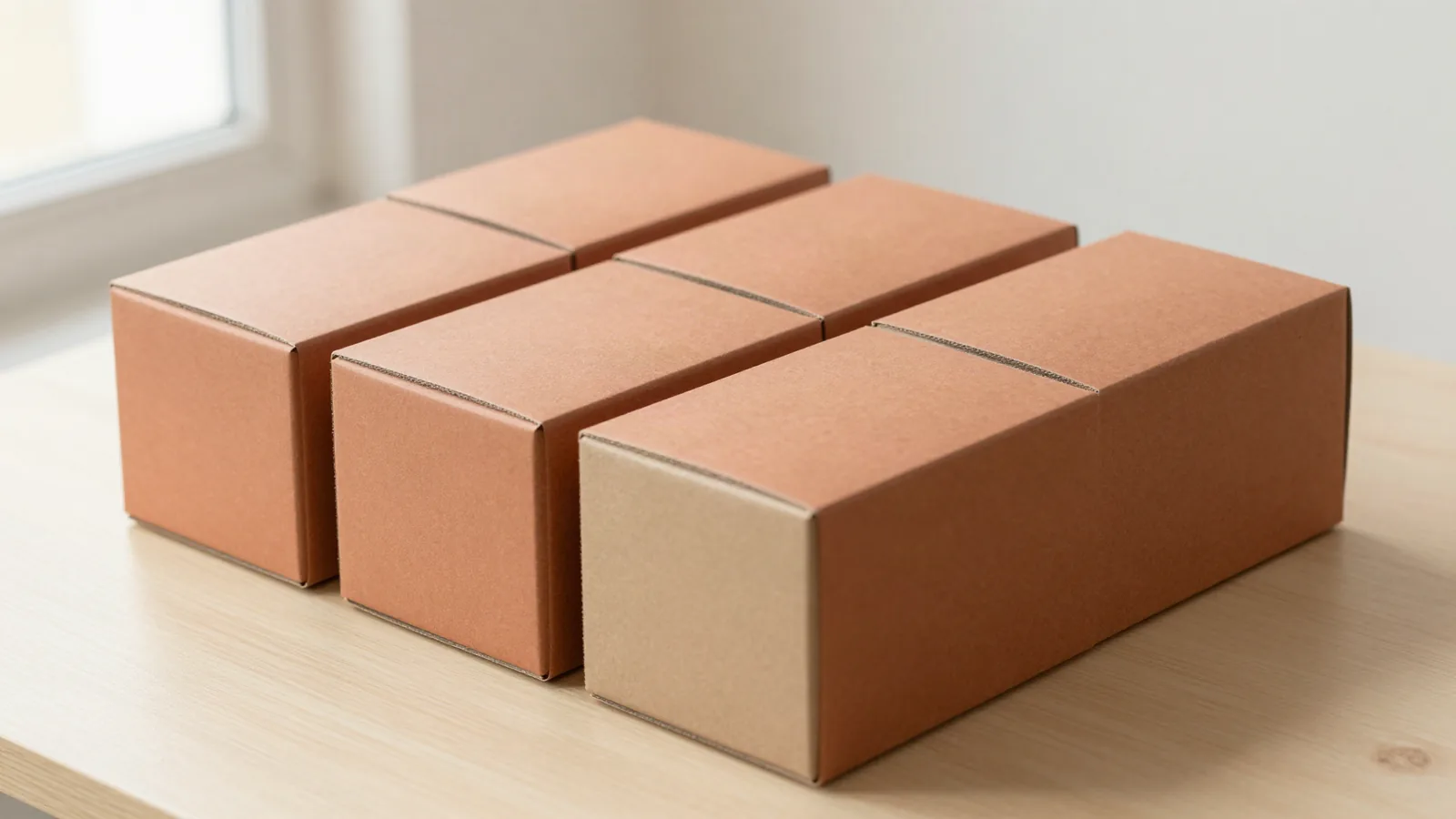




















































Glove packaging starts with the packed state. Folded pairs, rolled gloves, stacked counts, and gloves with a surface coating do not load into the same cavity. Record the product thickness, texture, pair count, display method, and whether the package hangs, sits on a shelf, or travels inside a shipping carton.
What should glove packaging protect and display?
The loading method should decide the first structure choice. A straight tuck end or reverse tuck end carton gives a familiar retail opening, while a sleeve can wrap a tray or folded pair. A pillow structure suits a lighter presentation, and a mailer can add a separate shipping layer.
Write the count and handling information where they stay visible after loading. A hanging format needs a header and hole that do not push the main copy into a crease. A package for several pairs also needs a check for compression, stack movement, and removal without snagging.
Which materials work for cartons, bags, and textile presentations?
Paperboard is the usual starting material for a printed glove carton because it gives the artwork defined panels. Typical industry references include SBS, C1S, or C2S paperboard at 12 to 24 pt and kraft board at 18 to 24 pt. Flexible bags may use 80 to 120 gsm non-woven polypropylene, while cotton canvas packaging commonly uses 8 to 12 oz fabric.
| Packaging need | Typical industry reference | Buyer check |
|---|---|---|
| Printed shelf carton | 12 to 24 pt SBS, C1S, or C2S board | Panel fit, creases, barcode contrast |
| Natural board presentation | 18 to 24 pt kraft board | Ink appearance, surface texture |
| Lightweight reusable bag | 80 to 120 gsm non-woven polypropylene | Seams, handles, closure |
| Textile gift presentation | 8 to 12 oz cotton canvas | Stitching, drawcord, decoration area |
A PET window is a clear plastic panel that shows glove color or texture without opening the package. Typical PET window material is 0.2 to 0.3 mm. Window patching takes panel area and adds a converting step, so keep the product name, count, and handling copy away from the opening.
Flexible constructions can also use mylar or foil laminates with PET, AL, and PE layers. Those layers change the barrier and sealing approach. Keep the material brief tied to the glove, its packaging layers, and the intended handling route.
How should I size glove packaging for a clean fit?
Measure the glove in its actual folded or rolled state, then record inside length, width, and depth. A dieline is the flat cutting template for the package, and the approved dieline plus physical sample should settle the final fit. Include clearance for a sheet, insert, header, or protective layer. About 1/16 in, or 1.5 mm, is a common packaging tolerance, subject to the structure and contents.
For a hanging package, reserve the header and hole before placing the main artwork. For a multi-pair pack, load the full count and check compression. Textured or coated gloves can catch on a closure, tab, seam, or window edge, so the physical sample must use the actual product.
Which print and finish choices suit glove buyers?
Offset CMYK suits detailed retail graphics. Digital printing can suit short runs or artwork tests. Flexo is common for corrugated outer packaging. Matte or gloss lamination changes glare and surface feel, while soft-touch changes the hand feel. Spot UV, foil stamping, embossing, and debossing can mark a logo or product name, but each effect needs clear space on a small panel.
Proof count, handling information, barcode contrast, fold positions, and window edges before decorative effects. Low-resolution art, RGB files converted for press, missing bleed, and type placed over a score are common prepress problems. The digital proof is the point to catch them.
Which catalog pages can help compare glove packaging?
Towel packaging gives a textile-pack presentation reference. Sock packaging helps compare folded soft goods, and private label packaging gives another branded-product format. For smaller-run planning, see custom packaging for small business. Keep the glove brief tied to the actual fold, count, and opening.
What should I test in a glove packaging sample?
Use the actual gloves and intended count for the sample check, because an empty package cannot show loading friction, compression, or removal problems.
- Load the actual glove or full pair count and check cavity fit.
- Open and close the package repeatedly, then inspect tabs, seams, glue zones, and window edges.
- Check the header, hole, product count, handling copy, and barcode area after loading.
- Test stackability and removal with the real folded or rolled product.
- Confirm the filled package before final artwork approval.
Send the filled dimensions and display method to Custom Packaging Lane for a quote to spec from a 100-unit minimum. Pricing is from $0.49 per unit at volume, quoted to spec. Production is typically 8 to 10 business days after proof approval, plus delivery. Free US shipping, free design support, and a free dieline are available, and the $19.99 sample kit is credited toward the first order.
Frequently Asked Questions
What is a practical starting structure for glove packaging?
A straight tuck end or reverse tuck end carton is a practical starting point for a folded glove retail pack because it gives defined panels and a familiar opening. Sleeves, pillow structures, or bags suit other loading methods. Confirm glove count, folded dimensions, display method, closure, and any outer shipping layer before choosing.
What board thickness is common for glove cartons?
Common glove-carton references are 12 to 24 pt SBS, C1S, or C2S paperboard and 18 to 24 pt kraft board. A larger pack, heavy count, deep crease, or tight stacking pattern can change the choice. Check the filled carton, because caliper alone does not show how the folds and closure will behave.
Should glove packaging include a window?
A glove package can use a 0.2 to 0.3 mm PET window to show color or texture without opening the pack. The window uses panel area and adds patching, so keep the count, product name, and handling copy clear of the opening. Confirm the fold, glue, and artwork layout on the proof and filled sample.
How should I measure gloves for a custom package?
Measure gloves after folding or rolling them for packing, not only when they are laid flat. Record inside length x width x depth, then add any insert, header, protective sheet, or clearance requirement. Test the actual gloves in the sample, especially when texture or coating could catch on the closure or window edge.
How can I check a glove package before production?
A glove packaging sample should use the actual product and full intended count. Check loading, opening, closure, removal, panel alignment, stackability, barcode readability, header strength, hole placement, and snag points around tabs, seams, or window edges. A filled sample shows problems that an empty carton cannot reveal.












