




























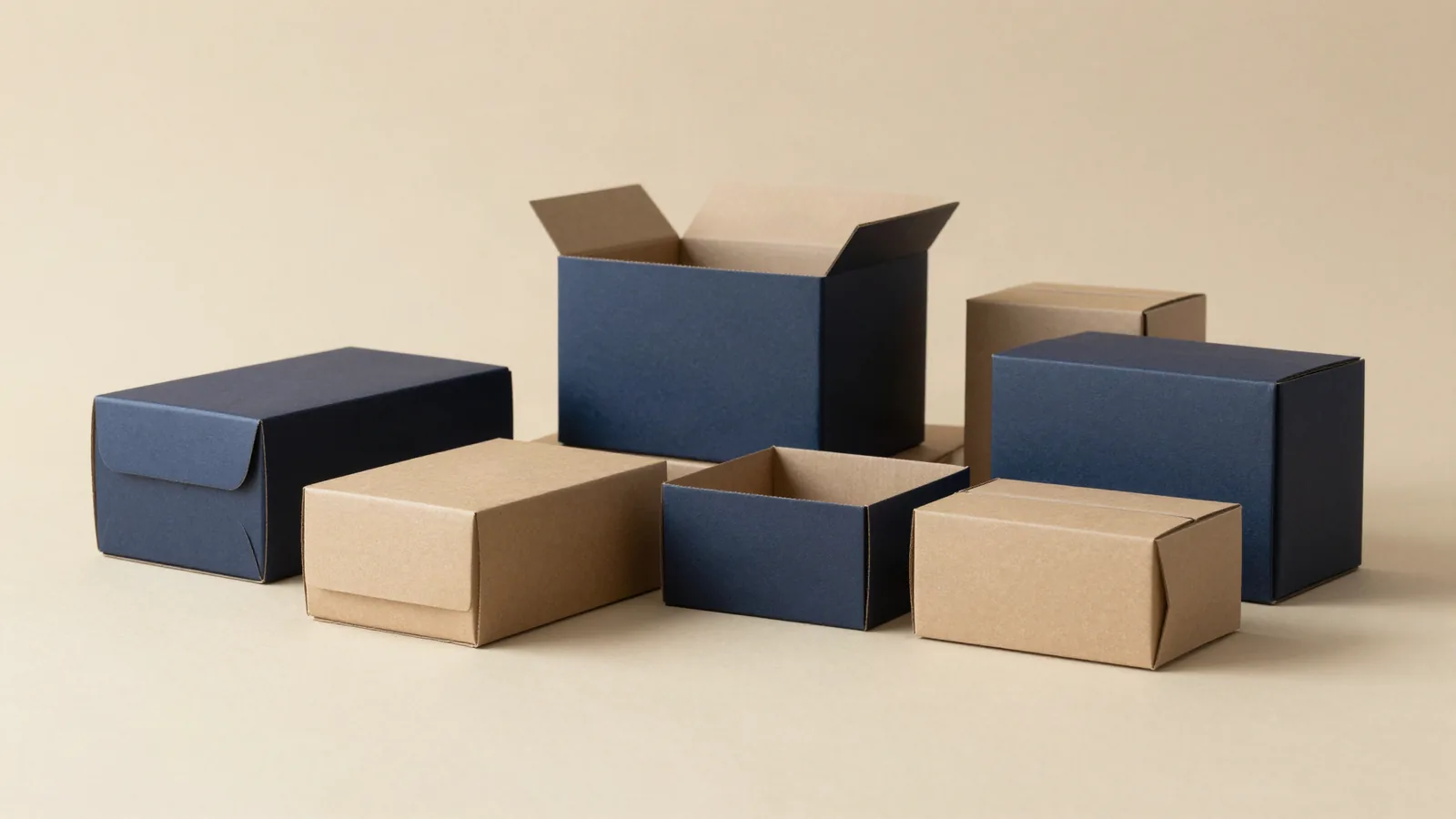




















































Custom health packaging starts with the product and the information a buyer must find. A dieline is the flat cutting template used to print, cut, score, and fold the package. Set the product form, packed dimensions, opening, information order, and delivery setting before artwork. The custom packaging solutions hub gives a broader format reference, but the quote still needs the physical details of the specific product.
How should you define a custom health packaging project?
A quote needs the packed length, width, depth, product form, and opening sequence before artwork. Name the format: carton, pouch, sleeve, mailer, rigid presentation box, or a set with an insert. Measure the product with its cap, applicator, wrap, tray, and bundled components. Box dimensions are normally written as length x width x depth, using inside measurements for the product cavity. A common production convention allows about 1/16 in, or 1.5 mm, tolerance for verification.
Write the information hierarchy before the panel layout. The first-read area may contain the brand, product name, variant, quantity or format, owner-supplied directions, storage language, and contact information. Keep those statements separate from the package structure. If the product may touch the board, a window, or an insert, ask us about food-contact options for that product.
Which materials are commonly used for health packaging?
SBS, C1S, and C2S paperboard give a printable folding-carton surface. Kraft board keeps more paper tone in the panel. Corrugated flute changes outside protection and stacking behavior. PET window film gives a clear product view. These are general trade references, not a fixed prescription for every health product.
| Packaging role | Common material reference | Practical use |
|---|---|---|
| Information-led folding carton | SBS, C1S, or C2S, 12 to 24 pt | Product name, variant, directions, and storage copy |
| Natural-look carton | Kraft board, 18 to 24 pt | Paper tone with controlled ink contrast |
| Mail-ready outer carton | Corrugated E, B, or C flute, 32 ECT | Outer protection with a shipping-oriented graphic |
| Visible product window | PET window film, 0.2 to 0.3 mm | Product view through a closed panel |
Which structure makes a health package easy to open?
A straight tuck end or reverse tuck end carton gives a familiar top-opening sequence. An auto-lock bottom or crash-lock base changes how the pack is assembled at the table. A sleeve reveals a tray or inner carton. A drawer or slide makes access part of the presentation. A two-piece rigid box or magnetic flap separates outer identity from the inner arrangement. Perforated packaging adds a visible tear path when the opening needs to repeat.
Perforation is a cut line with small uncut bridges that controls where a panel tears. It needs to align with the copy, closure, product removal path, and the way the package is held. A tear line that crosses a use direction or product name creates a poor opening sequence even when the carton itself fits.
How should health packaging print keep information readable?
Offset CMYK is commonly used for detailed folding-carton graphics. Digital printing is commonly considered for short runs or changing variants, while flexo is associated with corrugated surfaces. Build the panel order on the dieline, then keep small type away from scores, glue areas, and window patches. RGB artwork can shift when it is converted for press, so review the proof in the intended color mode.
Matte or gloss lamination changes glare. Soft-touch adds a tactile layer. Spot UV isolates a selected mark or pattern. Foil stamping, embossing, and debossing add a physical cue, with clear space around instructions and product copy. The finish should support reading, not force the copy into a smaller panel.
When should a health package use a window or perforation?
Use a window when product visibility answers a question copy cannot. PET film commonly falls around 0.2 to 0.3 mm, and the patch location needs to agree with the product position and the remaining board around the cutout. Use perforation when the user needs a visible tear path or a direct opening sequence. The two features solve different problems and should not be treated as interchangeable.
Which catalog formats can inform a health packaging quote?
Private label packaging is a useful reference for a brand-led presentation. Perforated packaging helps frame the tear path. Towel packaging and wax packaging show how a different product footprint can change the carton, insert, and opening plan. These pages are format references, not a claim that one structure fits every health product.
What should be checked before the health packaging proof?
Use the actual product or a dimensional match when checking the sample. Confirm the cavity, cap clearance, closure, insert, window or perforation, panel order, and loading sequence. Send the product dimensions, components, packed orientation, information hierarchy, artwork status, preferred format, board, print, finish, window, perforation, and delivery destination in the quote request.
- Product dimensions, closure details, components, and packed orientation.
- Brand, product name, variant, quantity or format, directions, storage language, and contact copy.
- Carton, pouch, sleeve, mailer, rigid, insert, or perforation direction.
- Material, print, finish, window, and delivery requirements.
Custom Packaging Lane quotes custom health packaging from a 100-unit minimum, with pricing from $0.49 per unit at volume, quoted to spec. Production is typically 8 to 10 business days after proof approval, plus delivery. The quote includes free US shipping, free design support, and a free dieline. Order the $19.99 sample kit, credited to the first order, when the product fit or opening needs a physical check.
Frequently Asked Questions
How can custom health packaging stay clear without product claims?
Custom health packaging should put the brand, product name, variant, quantity or format, owner-supplied use direction, owner-supplied storage language, and contact information in a clear order. The product owner should approve the wording. The package plan can organize panels and create the dieline without adding unsupported statements about the product.
What paperboard thickness is common for a health packaging carton?
SBS, C1S, and C2S paperboard are commonly referenced from 12 to 24 pt for folding cartons. Kraft board is commonly referenced from 18 to 24 pt when the board tone belongs in the design. The final caliper should be checked against panel size, scores, closure, insert position, and the way the carton will be packed.
Can custom health packaging include a clear product window?
A clear product window can be added when visibility belongs in the package presentation. PET window film is commonly referenced around 0.2 to 0.3 mm. The cutout must leave board around the opening and stay clear of scores, glue areas, required copy, and the product removal path. Confirm the view on a physical sample.
When is perforated health packaging useful?
Perforated health packaging is useful when the person using the package needs a visible, repeatable tear path. The perforation should align with the panel copy, closure, product position, and removal path. Share where the tear should start and stop, then check that product directions and other required copy remain readable after the panel opens.
What belongs in a custom health packaging quote request?
A custom health packaging quote request should include the product footprint, caps or applicators, bundled components, orientation, closure, format, panel copy, artwork status, board, print coverage, finish, window or perforation need, and delivery destination. If the product may touch the package, ask about food-contact options for that product.












