




























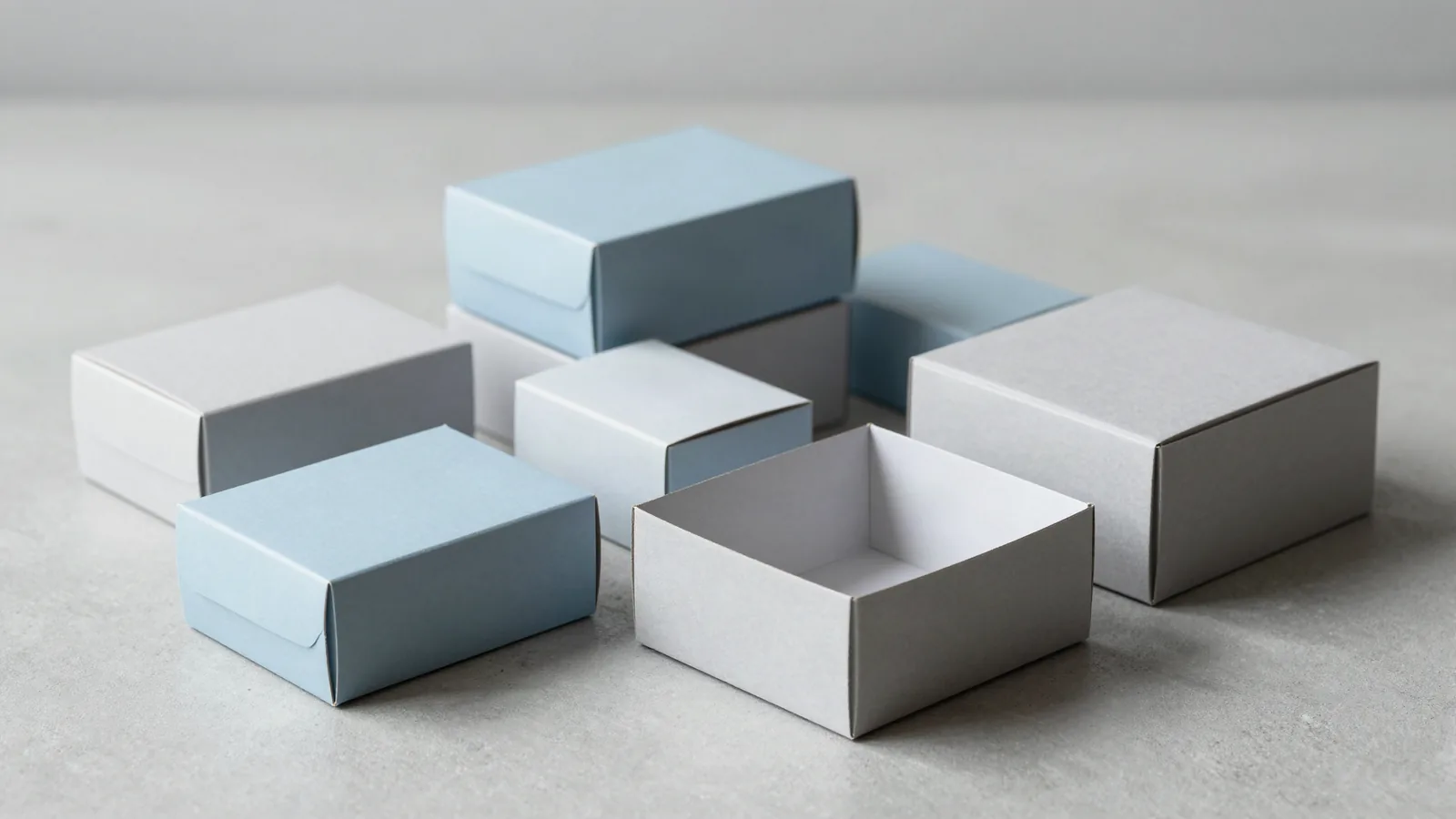




















































Holster packaging is a sleeve or partial-wrap format that holds a product while leaving a planned face, edge, or access point exposed. The package can be paperboard, fabric, or a combination of an outer wrap and an inner holder. A dieline is the flat cutting, scoring, and glue map for the package. Start with the loaded product's orientation, not an empty sleeve.
What does a holster package need to do?
The opening, visible face, and loading direction decide whether a holster works in the hand. A snug sleeve can hold alignment. A tight opening can block removal, while a loose one can let the product turn. Decide whether access uses a sleeve, partial wrap, tuck closure, or perforated panel, then check the removal path with the real item.
For quantity and format planning across structures, see the wholesale custom packaging guide.
Which materials are common in holster packaging?
Paperboard gives the printed holster a flat face, while fabric gives the carrier more flexibility around a soft item. SBS, C1S, or C2S paperboard is commonly referenced at 12 to 24 pt. Kraft board is commonly referenced at 18 to 24 pt. Non-woven polypropylene is commonly specified around 80 to 120 gsm, and cotton canvas around 8 to 12 oz. These are typical trade ranges, so test the loaded package before settling the material.
| Holster direction | Common structure | Buyer decision |
|---|---|---|
| Printed outer wrap | Sleeve around an inner tray, carton, or product holder | Which face remains visible and how does the sleeve stay aligned? |
| Accessible retail format | Perforated panel, sleeve, or tuck carton | Should access be resealable, tear-open, or fully removable? |
| Soft product carrier | Non-woven polypropylene or cotton canvas component | What support, seam, and loading direction does the product need? |
Which structure makes the product easy to see and remove?
A sleeve is the simplest holster comparison: it wraps a tray, inner carton, or holder while one face stays exposed. A straight tuck end or reverse tuck end carton encloses more of the item. A pillow format cradles a smaller product with end closures, and a gable format adds a handled presentation. Choose the opening after you watch the product load and come back out.
Perforated packaging is a relevant reference when controlled opening or access is part of the concept. Soft goods can be compared through towel packaging and sock packaging, where visibility and fold direction affect the presentation. A footwear format can be checked through shoe box packaging. For a branded collection or reseller program, private-label packaging shows why the front panel, identifier, and pack-out need to be planned together.
How should a holster package be measured?
Length x width x depth should describe the product in its final folded, closed, or assembled state, with inside measurements called out separately from the outside footprint. Mark the visible face, support points, opening, insert, and inner tray. About 1/16 in, or 1.5 mm, is a common production tolerance reference. A loaded test decides whether the sleeve binds.
How should the display face be printed?
Print the display face after loading direction is settled, because a centered logo can land on a side panel when the sleeve rotates. Offset CMYK suits detailed paperboard artwork, while digital printing can suit a short run or artwork test. Matte or gloss lamination changes surface appearance. Spot UV, foil stamping, embossing, and debossing create localized texture. Mark folds, glue, perforations, access cuts, and windows on the dieline.
What should be tested before approval?
A physical test should use the real product and every included component. Load it, close it, check the front-facing position, then run the opening and removal motion. Look for sleeve alignment, closure, insert retention, scuff contact, seam behavior, board caliper or fabric weight, print coverage, finish, insert, and outside dimensions. Ask us about food-contact options for your product. Child-resistant features can be built into the structure. A separate regulatory assessment still sits outside the package design.
What belongs in a holster packaging brief?
The brief should state the product's final dimensions and weight, visible face, support points, opening preference, closure, display orientation, insert or carrier needs, artwork status, and finish direction. Add photos or a physical reference when the item has an unusual profile. Those inputs let the quote account for structure, material, fit, access, and decoration as one package.
Custom Packaging Lane quotes holster packaging to spec from a 100-unit minimum, with pricing from $0.49 per unit at volume, quoted to spec. Production is typically 8 to 10 business days after proof approval, plus delivery. Free US shipping, free design support, and a free dieline are available. The $19.99 sample kit is credited to the first order. Request the physical sample option before approval if the loaded fit is hard to judge on screen.
Frequently Asked Questions
Is holster packaging always a sleeve?
Holster packaging is not limited to a sleeve. A holster can use a partial wrap, tuck carton, perforated panel, insert, tray, or soft carrier when the product must stay supported and partly exposed. Define the visible face, support points, loading direction, opening, and removal path before choosing the construction.
Can a holster use a perforated opening?
A holster can use a perforated opening when the tear path gives access without losing the support the product needs. Load the real item, open the perforation along the intended line, and check the remaining panel, print clearance, board direction, and removal motion. Add a resealing requirement to the brief if the package must close again.
Which fabric weights suit a soft carrier?
A soft holster carrier commonly uses non-woven polypropylene around 80 to 120 gsm or cotton canvas around 8 to 12 oz. The fabric weight is only one part of the fit. Seam placement, product weight, loading direction, support points, and closure change how the carrier behaves. Test it with the actual product rather than an empty sample.
How do I check an insert inside a holster?
Check the insert with the product loaded, not on its own. The insert should hold the product at the intended height and orientation, leave the opening usable, and keep the package from binding when the sleeve or wrap closes. Mark the insert footprint, support points, clearance, and any contact area on the dieline.
What should stay clear of the fold lines?
Keep small type, barcodes, glue tabs, perforations, access cuts, and the main display mark clear of scores unless the construction has been checked for them. A fold can change reading angle and surface tension, while glue can cover artwork or interfere with a finish. Mark every restricted area before the proof is approved.












