


























































Corrugated boxes are made from linerboard and a fluted corrugating medium. Linerboard is the flat outer sheet. The corrugating medium is formed into waves, then bonded between liners with adhesive. That layered board can be printed, cut, scored, folded, glued, or locked into a mailer, shipping carton, display box, or another structure. The board choice starts with the product and the way the finished package will be handled.
What materials are used to make corrugated boxes?
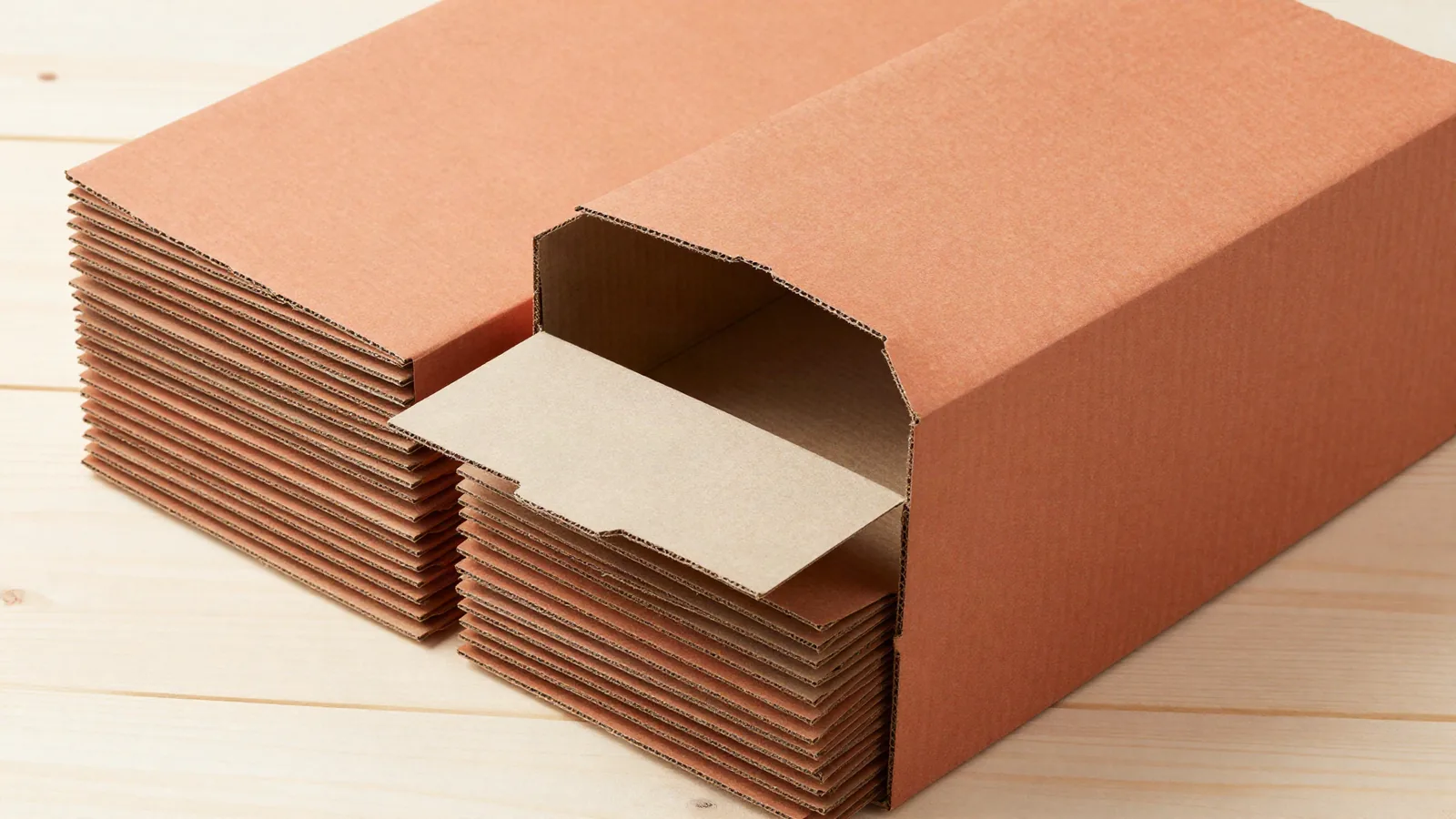
A corrugated board sheet has flat liner faces and a shaped flute between them. A flute is the wavy layer that creates space and board build. The liner supplies the outside print surface and helps form the box panels. Adhesive holds the layers together. The finished board is then converted into a flat blank, which is the cut sheet that becomes a box after folding.
The selected liner, flute, board build, and box dimensions work together. A printed retail format may need a finer surface and tighter folds. A delivery carton may need a different board build and panel layout. The correct choice belongs in the material discussion and the digital proof.
How do E, B, and AB flute types differ?
E, B, and AB flute types differ by the profile and layers used to build the corrugated board. E flute has a finer profile and suits compact folds and detailed printed surfaces. B flute has a more pronounced profile and gives the blank more board build for handling. AB is a combined flute construction used when the brief calls for a heavier board build.
| Flute type | Board profile | Practical planning focus |
|---|---|---|
| E flute | Finer corrugated profile | Printed detail, compact folds, and presentation panels |
| B flute | More pronounced corrugated profile | Board build, handling, and general carton structure |
| AB flute | Combined flute construction | Heavier board build and stacking discussion |
These descriptions are a starting point, not a blanket performance promise. Liner selection, box footprint, scores, cutouts, print coverage, and the finished structure change how the board behaves. Ask for the construction that fits the product instead of choosing a flute from a label alone.
What does a corrugator do?
A corrugator is the machine line that forms the flute and bonds it to linerboard. The medium passes through forming rolls, adhesive is applied, and the shaped layer meets a liner. Additional liner and adhesive create the selected board construction. The board then leaves the line as sheets or a continuous web for the next conversion step.
Heat, moisture, adhesive coverage, and alignment affect the board before it ever becomes a box. A poor sheet can create problems later at the score, fold, or glue tab. That is why the material choice and structure need to be settled before the blank is prepared.
How is a sheet turned into a box blank?
Conversion turns the flat corrugated sheet into a box blank with cut lines, scores, slots, glue tabs, and printed panels. The cutting form follows the approved dieline, which is the flat template for the package. Scores create controlled fold lines. Slots remove board where flaps need to pass. Glue tabs join panels when the format uses a glued seam.
Print can be applied before or during conversion, depending on the construction and process. Artwork must keep important copy away from scores, slots, cut edges, and glue areas. A digital proof shows how the flat panels are expected to read after folding.
How does a box blank become a finished carton?
A box blank becomes a finished carton when its scores are folded in the intended sequence and its panels are locked or joined. A mailer may use folded locking panels. A shipping carton may use flaps and a glued seam. A display box may add a window cut or a different opening path. The blank layout determines the final shape, so the product, opening, and panel orientation belong in the brief.
Which CPL corrugated formats can I compare?
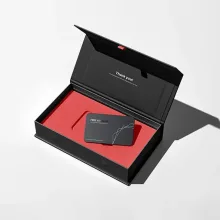
Use custom corrugated mailer boxes when the structure needs a folded opening for delivery. Corrugated boxes are the broad reference for board and format discussions. For presentation-led structures, compare cake corrugated boxes, window soap boxes, and window display boxes. Windows, openings, printed panels, and product position all affect the conversion plan.
What should I send for a corrugated box quote?
Send the product description, finished dimensions, opening style, quantity, artwork status, preferred flute if known, liner or finish direction, window or insert needs, and destination. Include how the box will be handled and whether it will ship by itself or sit inside another package. Review the dieline and digital proof before approval.
- Product and packed dimensions
- Box format and opening path
- Flute or board question
- Printed panels, windows, and finish notes
- Quantity and destination
What are CPL's corrugated order terms?
CPL corrugated orders start at 100 units. Pricing is from $0.49 per unit at volume, quoted to spec. Production is typically 8 to 10 business days after proof approval, plus delivery. Free US shipping and free design support are available. The $19.99 sample kit lets you compare real stocks, finishes, and print before approval, and it is credited toward the first order. For a broader structure discussion, visit custom packaging solutions.
Frequently Asked Questions
What is corrugated board made from?
Corrugated board is made from flat linerboard and a fluted corrugating medium. The medium is formed into waves, bonded to a liner with adhesive, and paired with additional liner when the selected board construction calls for it. The finished sheet is then printed or converted into a blank with cuts, scores, slots, folds, and glue tabs.
Which flute should I choose for a printed corrugated box?
For a printed corrugated box, E flute is associated with a finer profile and compact folds, while B flute has a more pronounced profile for board build and handling. AB is a combined flute construction for a heavier board build discussion. The product, box footprint, opening, printed panels, and handling route should guide the final choice.
What does a corrugator do?
A corrugator forms the fluted medium and bonds it to linerboard with adhesive. Forming rolls create the wave profile, then the layers are aligned into the selected board construction. The finished sheet moves to printing or conversion, where it becomes a cut, scored, folded, glued, or locking box blank.
How does a flat corrugated blank become a carton?
A flat corrugated blank becomes a carton when its scores are folded in sequence and its panels are locked or joined. Slots create flap openings, scores control the folds, and glue tabs join panels when the structure uses a glued seam. The approved dieline determines how the blank becomes the finished box.
What information does CPL need for a corrugated quote?
CPL needs the product, packed dimensions, box format, opening style, quantity, artwork status, flute question, finish direction, window or insert needs, and destination. The minimum order is 100 units. Pricing is from $0.49 per unit at volume, quoted to spec. Production is typically 8 to 10 business days after proof approval, plus delivery.