











































Give box dimensions as length x width x height, written as L x W x H, then label the unit, orientation, and whether the measurements are inside or outside. Custom Packaging Lane's 562-product spec sheet uses this sequence across its product records. L x W x H is a communication convention, not a claim that every package has one stock shape.
A complete dimension note tells the reader what was measured and how the package sits. Without that context, the same three numbers can describe a product, an inner cavity, or an assembled outside footprint.
What order should you use for box dimensions?
Use length first, width second, and height third. Length and width establish the base in the chosen orientation. Height is the perpendicular direction from the base toward the top. Write the unit beside the line and state which face is the front or top.
| Field | What it describes | What to add |
|---|---|---|
| Length | First base direction in the package orientation | Identify the face that establishes the direction |
| Width | Second base direction across the package | State inside usable space or outside size |
| Height | Perpendicular direction from base to top | Say whether the package stands or lies flat |
| Unit | Measurement system used for every value | Use the same unit for all three dimensions |
The table is a communication format, not a substitute for a physical fit check. A supplier may engineer the package from inside product space while a warehouse or shipping record uses the assembled outside. Label both when the project needs both.
How do you measure a box for a packaging quote?
Measure the product in the condition in which it will enter the package, then write the values in L x W x H order. Include folded, capped, wrapped, or inserted parts that change the packed shape. State whether the measurement is for the product, the inside box space, or the outside package.
- Set the product in its intended packing orientation.
- Mark the front, top, and opening direction.
- Measure length, width, and height in one unit.
- Label each set as product, inside, or outside.
- List any insert, tray, sleeve, gusset, or closure.
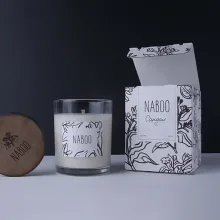
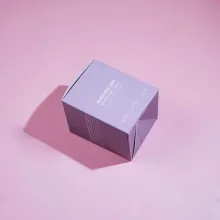
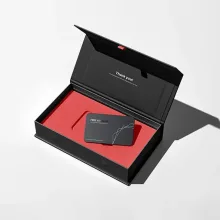
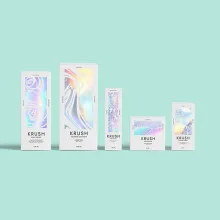
Do not use a product name as a substitute for measurements. A photograph can show orientation, but it cannot replace the dimensions needed to build the package around the product. If a measurement is approximate, mark it as approximate and identify which value is fixed.
Why must inside and outside box size be labeled?
Inside dimensions describe usable space for the product, while outside dimensions describe the assembled package footprint. Board thickness, folds, flaps, laminations, inserts, and closure features can make the outside larger than the inside. If shipping, storage, or shelf planning matters, provide both sets or ask which set the quote needs.
Keep the product size on its own line. Keep the finished box size on another. Mixing them can create a neat-looking request that still produces the wrong cavity or an inaccurate storage footprint.
What orientation details should go with L x W x H?
State which face is up, where the opening sits, and whether the product is upright, flat, side-loaded, or nested. For a bottle-oriented format, wine box packaging shows why product position and opening direction belong in the note. For footwear, shoe box packaging is a useful reference for lengthwise orientation and lid clearance. A metal container such as an embossed tin box also shows why the product and finished package should be measured separately.
What should a complete dimension note include?
A complete note includes L x W x H values, unit, orientation, product condition, inside or outside designation, quantity, destination, artwork status, and structural details. Mention any insert, tray, sleeve, window, or closure that affects fit. Custom Packaging Lane uses a 100-unit MOQ, and pricing is from $0.49 per unit at volume, quoted to spec.
Free design support is available, along with free US shipping. Production is typically 8 to 10 business days after proof approval, plus delivery. The custom packaging solutions page can help organize an unclear request before the proof stage.
Can a sample help confirm box dimensions?
Yes. A physical package can show whether the product sits in the expected orientation, whether the opening is usable, and whether the finished outside size matches the planning need. The $19.99 sample kit can help you compare construction and surface direction before approval. Use the sample to check the actual pack-out, not just the label on the quote.
Frequently Asked Questions
Does the largest side go first in L x W x H?
No. The largest side does not automatically go first in L x W x H. Length is the first base direction in the chosen package orientation, width is the second base direction, and height is the vertical direction. State the front, top, or opening direction beside the measurements so the order is clear.
What units should I use when giving box dimensions?
Use one measurement unit across length, width, and height, then name that unit beside the dimension line. A complete Custom Packaging Lane quote note also identifies the orientation and whether the values describe the product, inside usable space, or assembled outside size. Mixing units makes the three values difficult to interpret.
How can I show package orientation in a box quote?
Show orientation with a short note that names the top, front, and opening direction. Add whether the product is upright, flat, side-loaded, or nested. A sketch or photograph can support the note, but the quote still needs L x W x H measurements and an inside or outside designation.
Can I submit product size and finished box size separately?
Yes. Product size and finished box size should be separate lines in a packaging quote. Product size describes what enters the package. Inside box size describes usable cavity, while outside box size describes the assembled footprint after board, folds, inserts, and closures are included.
What terms apply to a dimension-based custom box quote?
Custom Packaging Lane uses a 100-unit MOQ and pricing from $0.49 per unit at volume, quoted to spec. Free design support and free US shipping are available. Production is typically 8 to 10 business days after proof approval, plus delivery. The sample kit is $19.99 for an early physical check.